
Competitive players
They want their actions to appear on screen without unnecessary delay, so they pay attention to Game Mode with the signal they use. RTINGS explains that image processing can affect input lag.


Start by checking the measured input lag in Game Mode for the signal you’ll use during the tournament. Then assess reflections and brightness where the TV will be placed. OLED and backlit TVs are both worth comparing, but check the test results and features of the exact model: a quoted Hz rating alone doesn’t tell you how quickly a game responds.
They want their actions to appear on screen without unnecessary delay, so they pay attention to Game Mode with the signal they use. RTINGS explains that image processing can affect input lag.
They need to consider reflections, brightness and the position of windows or lights in relation to the screen. RTINGS identifies reflection handling as an important factor when using a TV in a bright room.
They want players and spectators to be able to watch from different positions, making screen size and viewing angle important. RTINGS tested the viewing angle of a US S95H model; those results don’t automatically apply to every Dutch version.
For a tournament TV, consider both the signal you’ll use and the light in the lounge, as well as where people will be watching from. Decide which concern matters most for your setup.
A good fit if: fast responses, fewer visible reflections and viewing from different positions at the same time are important.
Trade-off: RTINGS assessed a US S95H model; check the Dutch version separately. Samsung lists Glare Free for the QE65S95HFTXXN.
A good fit if: the lounge is often brightly lit and you want to compare a TV with locally controlled backlighting.
Trade-off: TCL lists a native refresh rate of 144 Hz and local dimming zones for the Dutch 55C6K. Check reflections and input lag for the exact model separately.
A good fit if: you use a suitable gaming PC as well as a console, and your source can make use of the higher supported refresh rate.
Trade-off: LG lists support for up to 165 Hz in 4K for the Dutch OLED55C68LA; that doesn’t mean every console or game can deliver that speed. Also follow the OLED screen care instructions.
A good fit if: visibility for a larger audience matters more than a compact gaming setup.
Trade-off: RTINGS assessed the Sony BRAVIA 9 II series for bright rooms; that assessment doesn’t tell you how low its input lag is. Sony offers the series in the Netherlands, including a 65-inch model.
| Priority | What to look for | Who is this important to? |
|---|---|---|
| Responsive controls | Compare input lag with the signal you want to use, and check Game Mode, resolution and the source’s refresh rate. RTINGS stresses that image processing can affect input lag. | In competitive fighting games, I want my actions to appear on screen quickly. Responsiveness is therefore the top priority for around 29% of consumers. |
| Picture in bright conditions and reflections | Assess the TV in its intended position in relation to windows and lights. Compare the exact model’s brightness and reflection handling; according to RTINGS, both matter in a bright room. | If the lounge is bright, I want to see the game clearly and minimise distracting reflections. Visibility in bright conditions is the main concern for around 29% of consumers. |
| Visibility for players and spectators | Map out seating and standing positions, then compare the chosen model’s viewing angle with the screen size you need. | When several people are watching from different positions, I want the screen to remain easy to view for everyone. Viewing for an audience is the top priority for around 24% of consumers. |
| Cost and setup | Count your gaming sources and the HDMI connections you’ll need. Check which output your console and game support, and review the requirements for placement or wall mounting. PlayStation says 120Hz output only works with a compatible TV and game. | I want a practical tournament setup without paying for features my source can’t use. Setup and cost are therefore the main concern for around 18% of consumers. |
A quoted refresh rate isn’t a measurement of input lag. Actual output also depends on the source and game; PlayStation says 120Hz output requires support from both the TV and the game.
Compare input lag with the signal you’ll use and check the console’s video output. RTINGS distinguishes between Game Mode and other image processing in its measurements.
A bright picture won’t automatically stop a lamp or window reflecting directly on the screen. RTINGS notes that both brightness and reflection handling matter in a bright room.
Check the position of windows and lights, and compare independent brightness and reflection tests for the exact model.
A commercial guarantee doesn’t replace your statutory right to a product that is of satisfactory quality. The Dutch government states that the Netherlands has no fixed statutory guarantee period.
Read the terms of any additional guarantee and contact the seller if there’s a problem.
The Dutch S95H range is worth comparing if you’re considering an OLED TV with an anti-reflection finish.
The Dutch OLED C6 range is an option to compare if you’ll be using a console and a compatible gaming PC.
The Dutch C6K range includes a QD-Mini-LED model worth comparing for a bright lounge.
The BRAVIA 9 II is another large-screen option if visibility in a bright room is a factor.
This selection includes OLED and Mini LED TVs to compare for gaming and tournament setups in a bright lounge. For each model, check that the screen size, connections and supported signals are suitable for your gaming sources.
 No image available
A good option if you’re looking for a 48-inch OLED TV and this size suits your viewing distance and setup.
The product name lists 4K, 120 Hz native, VRR up to 165 Hz, HDMI 2.1, G-SYNC Compatible and FreeSync Premium. Check that your source supports these features; the listed figures aren’t measurements of input lag.
 No image available
A good option if you want to compare a 55-inch Mini LED TV for a bright lounge and the size suits your viewing positions.
The product name lists 4K, 120 Hz and VRR up to 144 Hz, with HDMI 2.1. Check which connections you need and whether your source supports the output you want.
 No image available
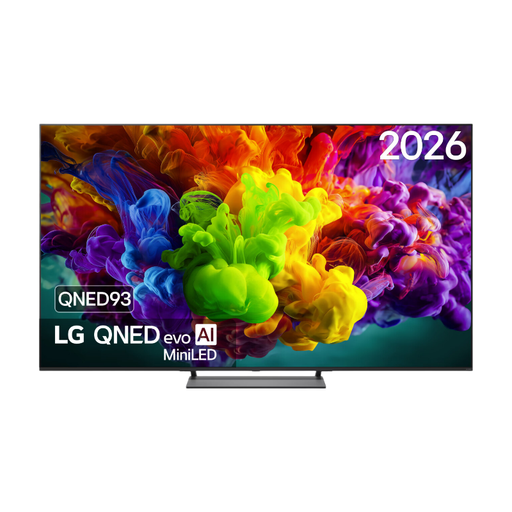
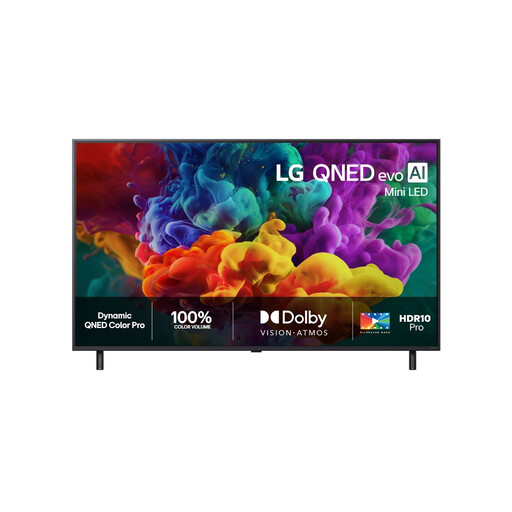
A good option if you want to include a Mini LED 4K model in your comparison for gaming in a bright room.
The product name lists QNED Evo, Mini LED and 4K. For the version you choose, check the screen size, connections and gaming features your sources need.
 No image available
A good option if you want to compare a 50-inch Mini LED model and that size works for players and spectators.
The product name lists 4K and 144 Hz. Check that your gaming source supports the refresh rate you want, and compare input lag with the signal you’ll use.
 No image available
A good option if you’re considering a 55-inch OLED TV and the size suits the viewing distance and positions in your lounge.
The product name lists OLED and 4K. Before choosing this TV for tournaments, check this model’s gaming features, connections and measured input lag.
Not necessarily. PlayStation says 120Hz output only works with a TV and game that support it. Check the current output signal in your PS5 settings; a higher TV specification won’t automatically make a game run faster.
Use Game Mode and check it again after connecting the tournament source. PlayStation explains that ALLM can automatically switch a compatible TV to a low-latency mode. RTINGS distinguishes between Game Mode and other image processing in its input lag tests.
Follow the screen care instructions for the exact model, and avoid leaving static information on screen for longer than necessary. LG describes Pixel Cleaning on its OLED evo TVs as a measure that helps reduce the risk of image retention and burn-in; it doesn’t guarantee that the risk will disappear.
According to the Dutch government, for a qualifying distance purchase from a business, you’ll generally have 14 days to change your mind. You’re also entitled to a product that is of satisfactory quality; the Netherlands has no fixed statutory guarantee period. If there’s a problem, contact the seller.