Who is this guide for?

Sofa gamers sitting close to the screen

Measure the viewing distance and the TV’s overall dimensions before choosing a screen size. The Consumentenbond recommends a guideline range of 32–43 inches at a viewing distance of 200 cm, and 40–50 inches at 250 cm.

Players sitting in different positions

If you’re not both sitting directly in front of the TV, compare how the picture looks from the seats at either end of the sofa. RTINGS.com highlights viewing angle as something to consider when you’re sitting spread out.

Players who care about timing

If precise timing for jumps matters to you, compare Game Mode and input lag for the output your console and game actually use. PlayStation and Nintendo describe their consoles’ output capabilities, which depend on compatible TVs and games.

What should you look for?

Compact OLED TV

Suitable for: sitting close to the screen and playing from different angles, especially in a dimly lit room.

Keep in mind: check reflections on the exact version and make sure its overall dimensions will fit.

Compact LCD or QLED TV

Suitable for: situations where cost or gaming in daylight are important factors, provided the viewing angle and Game Mode on the specific model meet your needs.

Keep in mind: a QLED label alone doesn’t prove that the picture will remain clear from both ends of the sofa.

A larger screen

Suitable for: rooms where the measured viewing distance and available furniture or wall width leave enough space.

Keep in mind: a larger screen needs more space. The Consumentenbond’s size guidelines aren’t a hard limit for every living room.

What to consider What should you check? Who is this important for?
Size and placement Measure the viewing distance, available width and overall dimensions, including the stand. Use viewing-distance guidelines as a starting point. If I’m looking for a TV for a narrow room, I want to know whether it will fit on the stand and be comfortable to view from the sofa. Around 28% of consumers put placement first.
Viewing angle Compare horizontal viewing-angle reviews for the exact model and check the picture from both seats. If we’re sitting at different ends of the sofa, I want both players to be able to see the game clearly. Around 22% of consumers prioritise visibility from both seats.
Response and refresh rate Look up input lag in Game Mode at your intended resolution and refresh rate. Also check support from your console, game and TV. If I care about jumps and timing in platform games, I want to compare input lag for my own console and game. Around 22% of consumers make responsive controls their top priority.
Light and reflections Look out for windows and lamps reflected in the screen, and compare reflection test results for the exact screen size. If we play during the day with light falling on the screen, I want to know whether reflections will get in the way of the game. Around 17% of consumers prioritise visibility in bright conditions.
Cost and features Compare the features of the exact model with those used by your console and games. Also check the EU energy label and any installation costs. If I’m mainly concerned about the total cost, I don’t want to pay for features my games won’t use. Around 11% of consumers put cost first.

Common buying mistakes

  • Measuring only the screen diagonal

    Even with a suitable screen size, the TV may be too wide for your stand. The actual viewing distance also affects how comfortable the screen is to watch from the sofa.

    Measure the available width, the distance from the sofa and the overall dimensions, including the stand, before choosing a size.

  • Assuming the panel type guarantees a wide viewing angle

    A player sitting off-centre may see a different picture; the panel name alone doesn’t tell you how the exact model performs.

    Compare the viewing angle of the specific model and check the picture from both seating positions.

  • Assuming the highest Hz figure is automatically better

    The output you can use depends on the TV, console, game and settings. A higher refresh rate won’t help if the signal you’re using doesn’t support it.

    Check your console and game’s output, and compare input lag in Game Mode.

  • Overlooking daylight

    A TV that looks great in a dimly lit room may suffer from reflections in a bright room. RTINGS.com highlights this issue with the 42-inch LG C6 it reviewed; that assessment doesn’t automatically apply to other sizes or models.

    Check the light in the intended location and look for a reflection rating for the exact screen size.

Brands to compare

LG

The Dutch OLED42C67LA is a compact C6 version worth comparing if you’re considering OLED and gaming features.

  • LG lists a maximum refresh rate of 165 Hz at 4K for this model.
  • That’s a manufacturer specification, not a guarantee that a platform game will run at that rate. RTINGS.com notes reflections on the 42-inch US C6 version it reviewed; don’t assume regional model codes perform identically without evidence.

Philips

The 42OLED810/12 combines a 42-inch OLED screen with Ambilight; the 42OLED811/12 is a separate version.

  • Philips lists VRR and 144 Hz for the 42OLED810/12 and describes its viewing angle.
  • These are manufacturer specifications. Check the connections and independent gaming performance for each model; Ambilight is no substitute for a suitable viewing angle.

Samsung

The QE42S90HAEXXN is a 42-inch OLED version to include in your comparison.

  • Samsung lists Glare Free and an energy rating of G for this version.
  • These are manufacturer specifications for this specific model; they aren’t independent measurements of reflections or input lag.

TCL

The 43P7KX1 is a compact LCD LED option to consider alongside OLED models.

  • The Consumentenbond lists three HDMI inputs and the overall dimensions, including the stand, for the 43P7KX1.
  • The 144 Hz specification TCL lists for the C7K series doesn’t automatically apply to the 43P7KX1; TCL lists C7K series models from 50 inches upwards.

Sony

The XR42A90KAEP from the A90K series is a 42-inch OLED version worth comparing.

  • Sony lists support for 120 fps on a 42-inch version.
  • Check support for the exact model, console and game before taking that refresh rate into account.

Joybuy TVs for this setup

This selection includes compact OLED and LCD/QLED TVs to compare for couch co-op in a narrow living room.

LG OLED42C68LA 42-inch 4K OLED TV

LG OLED42C68LA 42-inch 4K OLED TV

A compact OLED option to compare with your available space and viewing distance.

42 inches; 4K; OLED.

View at Joybuy

METZ 43MQF7500Z 43-inch 4K QLED TV

METZ 43MQF7500Z 43-inch 4K QLED TV

A 43-inch QLED option to compare with your viewing distance and available width.

43 inches (109 cm); 4K UHD; QLED; VRR; HDMI 2.1.

View at Joybuy

TCL 43T6C 43-inch 4K QLED TV, 120 Hz

TCL 43T6C 43-inch 4K QLED TV, 120 Hz

A 43-inch TV to compare with your room dimensions and console output.

43 inches; 4K; QLED; 120 Hz.

View at Joybuy
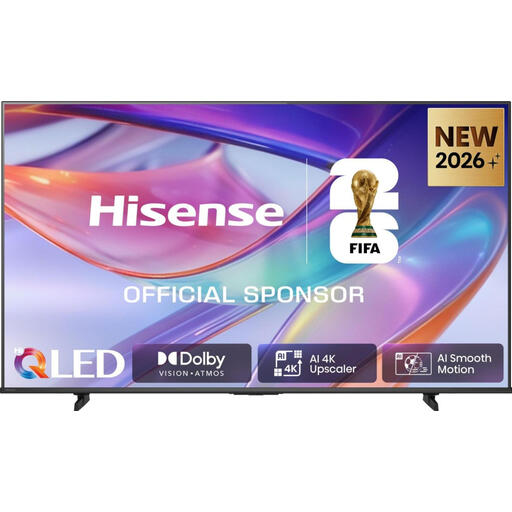
Hisense 43E7S 43-inch 4K QLED TV, 120 Hz

Hisense 43E7S 43-inch 4K QLED TV, 120 Hz

A compact QLED version to assess for size and the features your console uses.

43 inches; 4K; QLED; 120 Hz.

View at Joybuy

CHiQ U43QM10E 43-inch 4K QLED TV

CHiQ U43QM10E 43-inch 4K QLED TV

A 43-inch option to compare with your seating distance and the position of both players.

43 inches; 4K UHD; QLED; VRR; ALLM.

View at Joybuy

Frequently asked questions

Do I need a 120 Hz TV for couch co-op?

Not necessarily: it depends on the console, game and TV. PlayStation describes 120 Hz output for compatible TVs and games on PS5; Nintendo lists up to 120 fps for Switch 2 with compatible games and TVs, but up to 60 fps at 4K output. Compare input lag in Game Mode too.

How should I set up a TV for platform games?

Use Game Mode or, if supported by your console and TV, ALLM. On PS5, go to Screen and Video to check which output and HDMI capabilities are recognised, then test with the game you play.

What should I consider when placing and using an OLED TV?

As well as the screen diagonal, measure the width including the stand. If an image will remain static for a long time, check what image retention protection the manufacturer describes for the exact OLED model; this isn’t a guarantee against all image retention.

What cooling-off period and warranty apply when buying online in the Netherlands?

ACM ConsuWijzer says that, for a television bought online, you’ll generally have a statutory cooling-off period of up to 14 days after delivery. You also have a statutory guarantee if a product doesn’t perform as you could reasonably expect under normal use; the Dutch Government says there is no fixed, general warranty period for this. Check the terms for returning a large TV before you buy.

Does a TV need an energy label in the Netherlands?

Televisions covered by the applicable EU energy-labelling rules must have an energy label. The European Commission provides model information through EPREL to help you compare energy labels; the label doesn’t dictate which performance level you should choose.
