Choose a TV that keeps the game easy to read from the seats at either end of the sofa. Assess the viewing angle, reflections and screen size in your actual set-up. Then check input lag in Game Mode and match extra features to the console and games you use. A high refresh rate isn’t automatically necessary for playing cooking games together.
Who is this advice for?
Players spread across the sofa
You often sit to one side and want colours and game information to remain easy to follow. Compare TVs from the seats at either end of the sofa; RTINGS.com and the Consumentenbond both highlight viewing angle as a consideration when people sit across a wide area in front of the screen.
Groups sitting further from the TV
You play together from different spots and want to be able to read small on-screen prompts. Measure the distance from the furthest playing position and check the game interface from there; the Consumentenbond recommends measuring your viewing distance at home.
Players using different consoles
You use the TV with more than one console or for different games, and want to know which features will actually be useful. Nintendo’s information about the Switch and Switch 2 helps clarify what those consoles can output; also check what the game supports.
What should you look for when buying?
Start by considering where everyone will be sitting and how easy the picture is to see from there. Then compare responsiveness and extra gaming features with the console and games you use.
OLED TV
Choose this when: players sit spread across a wide area and a broad viewing angle matters. The Consumentenbond generally describes OLED TVs as having a wider viewing angle.
The trade-off: the overall screen technology doesn’t tell you how a specific model will look from your side seat. Check reflections and the exact model too.
LCD TV, including QLED and mini-LED
Choose this when: you also want to compare the characteristics of LCD models and the lighting conditions in your room.
The trade-off: LCD panels vary. IPS and VA panels can involve a compromise between viewing angle and contrast. The panel name alone doesn’t tell you how a particular model performs from the side.
| What to consider |
What should you check? |
Who should pay extra attention? |
| Picture from the side |
Compare the viewing angle of the exact model and check the picture from the seat you plan to use at the end of the sofa. Also consider contrast. |
If I’m sitting at an angle to the TV, I want to be able to follow game information and colours clearly; around 36% of consumers give the view from a side seat the highest priority. |
| Easy for everyone to read |
Measure the distance from the furthest seat and check the game’s small prompts and interface from there. |
When we play from different spots, I want everyone to be able to read the game information; around 29% of consumers put readability first. |
| Responsiveness and console features |
Compare input lag in Game Mode for the signal you use, and check which features are supported by your console and game. |
If timing matters in my games, I want a responsive TV and don’t want to count features my console can’t use; around 21% of consumers give this combination the highest priority. |
| Visibility in daylight |
Assess reflections and visibility from your side seat at the time you usually play. |
In a bright gaming room, I want to check for distracting reflections before choosing a model; around 14% of consumers put visibility in daylight first. |
Common buying mistakes
-
Focusing only on OLED or 144 Hz
A panel name or refresh rate alone won’t tell you what the picture looks like from where you sit.
Check viewing-angle measurements for the exact model and view the game from the seat furthest to the side.
-
Paying for features your console can’t use
The console’s output and the game’s support both affect the resolution and frame rate you’ll actually get.
Make a note of your console and games, then check the combination you want before factoring in 4K/120Hz, VRR or other gaming features.
-
Confusing an extended warranty with your statutory rights
An extended warranty isn’t your only protection if a product develops a fault.
The Rijksoverheid explains that the seller must provide a solution if there’s a problem with a product. Check what extra rights a paid-for warranty adds.
Brands to compare
LG
The OLED evo C6 range includes the OLED55C68LA, a 55-inch OLED model with gaming features, according to LG.
- The manufacturer lists a 55-inch screen and gaming features for the OLED55C68LA.
- These details aren’t independent measurements of viewing angle or input lag. Check the exact model from your side seat.
Philips
The OLED810 range includes the 42OLED810/12, a smaller size to consider if space is limited.
- Philips confirms that this variant is OLED and has a 42-inch screen.
- Screen size alone doesn’t tell you whether small game information will be readable from the furthest seat.
TCL
The 55C7K is a 55-inch QD-mini-LED/LCD model to compare with OLED options.
- TCL lists a native refresh rate of 144 Hz for this model.
- This manufacturer specification doesn’t tell you how clear the picture is from a side seat or how useful the feature will be with your console.
Samsung
The QE55S90FAEXXN is a 55-inch OLED model to compare for its screen and connections.
- The Dutch product information confirms the model identity and screen type.
- This information isn’t an independent test of viewing angle or input lag; check results for this exact variant.
Sony
The BRAVIA 8 II is available as a 55-inch QD-OLED variant, model K55XR8M25BP.CEI.
- Sony confirms the screen technology and size for this Dutch variant.
- The product description doesn’t show what the picture looks like from your side seat. Check the exact model from the positions where you’ll play.
Joybuy TVs for gaming together
These Joybuy TVs are OLED options to compare for a shared gaming set-up. Check the viewing angle and readability of each model from the seats where you’ll be sitting.
 No image available
OLED77G68LW
This OLED TV is worth considering when comparing picture quality from a side seat; the screen technology alone doesn’t tell you how this specific model performs.
Joybuy
 No image available
LG OLED65C68LA 65 inch
This OLED model is worth checking from the seats at either end of the sofa; general OLED characteristics don’t tell you how this variant performs from those positions.
The product title lists 4K, α11 AI Processor 4K Gen3, native 120 Hz, VRR up to 165 Hz, Dolby Vision, Dolby Atmos, webOS 26, G-SYNC Compatible and FreeSync Premium.
Joybuy
No image available
LG OLED55C68LA 55 inch
This OLED model is an option to compare against your actual viewing distance and seating positions; the model specifications don’t determine the viewing angle in your set-up.
The product title lists 4K, α11 AI Processor 4K Gen3, native 120 Hz, VRR up to 165 Hz, Dolby Vision, Dolby Atmos, webOS 26, G-SYNC Compatible and FreeSync Premium.
Joybuy
 No image available
Samsung S85F Series GQ55S85FAU 55 inch
This OLED TV is worth comparing for shared viewing, but check the actual picture from your side seat before choosing.
The product title lists an OLED screen and 4K resolution.
Joybuy
 No image available
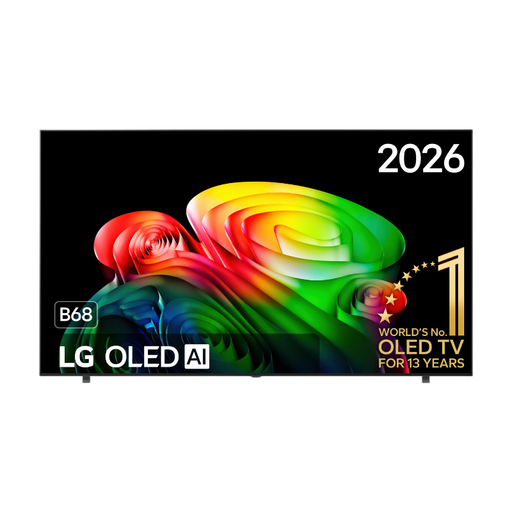
LG OLED77B68LA 77 inch
This OLED model is worth considering for a multi-player set-up; assess whether it’s suitable for your room and the furthest seat.
The product title lists 4K, α8 AI Processor 4K Gen3, 120 Hz, VRR 144 Hz, Dolby Vision, Dolby Atmos, webOS 26, G-SYNC Compatible and FreeSync Premium.
Joybuy
Frequently asked questions
Do I need 120 Hz to play cooking games together on a Switch?
Not necessarily. The original Switch OLED outputs up to 1080p/60 fps in TV mode. Nintendo says the Switch 2 outputs up to 60 fps at 4K; capabilities also depend on the game. So choose extra TV features based on your console and the game you play.
How should I position the TV for a player sitting to one side?
Check the picture from both seats at either end of the sofa and measure the distance to the furthest player. Don’t choose a screen size based only on the middle of the sofa; the Consumentenbond recommends measuring your viewing distance at home, and the game interface still needs to be easy to read.
How do I care for an OLED screen?
Follow the instructions for your exact model when cleaning the screen and using any pixel care features. LG describes these features for its OLED TVs; don’t assume that the controls or recommendations are the same for every brand.
What are my rights when buying a TV online in the Netherlands?
When you buy at a distance, you usually have 14 days to change your mind, according to the Rijksoverheid. You’re also entitled to a product that works as it should; if there’s a problem, the seller must provide a solution. An optional paid warranty doesn’t replace your statutory rights.
What energy rules apply to a new TV?
European energy labelling and ecodesign rules apply to electronic displays, including TVs. The European Commission sets out the relevant product rules; check the energy label for the exact model.


