
Players sitting to the side
Playing together on one TV, with at least one player viewing the screen from an angle. So check the picture from the outermost seat too, as recommended by Consumentenbond and RTINGS.com for a wide seating arrangement.


For local basketball games with players spread along the bench, it's worth checking the picture from the outermost seat first: a high refresh rate won't make up for a limited viewing angle. OLED is one option to compare for wide seating arrangements; an LCD TV may better suit other preferences, but check the viewing angle and reflections for the exact model. Also compare input lag in Game Mode and check that the TV, console and game all support the refresh rate you want.
Playing together on one TV, with at least one player viewing the screen from an angle. So check the picture from the outermost seat too, as recommended by Consumentenbond and RTINGS.com for a wide seating arrangement.
Looking for responsive controls and a clear view of fast-moving play. Compare input lag in Game Mode and also look at motion blur; RTINGS.com treats these as separate things to consider.
Need to factor in reflections and long periods of use with fixed game elements. RTINGS.com notes that permanent image retention is mainly a concern when the same static interface is displayed for exceptionally long periods.
A good fit if: players sit well off-centre and the picture from an angle is a priority; still compare the exact model and consider reflections in your own room.
Bear in mind: permanent image retention is still a consideration if you use the same fixed game interface for exceptionally long periods. An accelerated test doesn't predict how a TV will perform with normal, varied use.
A good fit if: an LCD model better meets your other buying requirements; check the viewing angle of that exact version.
Bear in mind: RTINGS.com notes that IPS LCD panels generally offer a wider viewing angle and lower contrast, while VA panels offer higher contrast but a narrower viewing angle. The characteristics of a panel type are no substitute for an assessment of the specific model.
| Concern | What to look for | Who should prioritise this? |
|---|---|---|
| Picture from a side seat | Compare the horizontal viewing angle of the exact model; check the screen from the outermost seat where you'll play. | If I'm sitting at an angle to the TV, I want to be able to see the game clearly. Around 36% of consumers put viewing angle first. |
| Responsive controls and fast movement | Compare input lag in Game Mode and check motion measurements using the same intended settings. For 120fps, also check the console, connection and game. | If responsive controls and a clear view of fast action are my priorities, I'll compare both response and motion handling. Around 29% of consumers prioritise responsiveness. |
| Reflections and placement | Check reflections from the seats where you'll play, using the lighting you have at home; assess reflections separately from the viewing angle. | If I'm playing with windows or lights in the room, I want to see whether reflections will be distracting from my seat. Around 21% of consumers give reflections top priority. |
| Cost and long-term use | Check installation terms and the energy label. Image retention is mainly worth considering with OLED if the screen displays static images for exceptionally long periods. | If keeping costs manageable or long-term use matters most to me, I'll factor in those requirements alongside picture quality. Around 14% of consumers prioritise this balance of use and cost. |
A high refresh rate doesn't tell you how good the picture will look from a side seat. Nor will a game automatically use the TV's maximum refresh rate.
First, check the screen from the outermost seat. Then check input lag and whether the console and game can output the video signal you want; Sony Netherlands notes that PS5 games can differ in their output.
The term QLED alone doesn't tell you how a specific model's picture changes when viewed from an angle. With LCD TVs, the panel type and specific version both matter.
Look for a viewing-angle measurement for the exact model, or check the screen from your own seat. RTINGS.com generally describes a difference between IPS and VA, but that doesn't replace an assessment of the specific model.
An accelerated test with a static image displayed for a long time isn't the same as varied gaming at home. RTINGS.com identifies image retention as mainly a concern when the same fixed interface is used for very long periods.
Factor this in if you play for exceptionally long hours with fixed game elements, and consider your own usage pattern. Don't use such a test to infer a TV's lifespan under normal use.
The OLED55C56LB is a specific 55-inch OLED model to compare if several players sit in different positions. LG highlights contrast and a brightness-boosting feature for its OLED TVs.
According to Philips, the 55OLED810/12 combines OLED with Ambilight and a stated VRR rate of 144 Hz.
The QE55S90FAEXXN is a 55-inch OLED S90F model to compare with other OLED versions.
TCL offers LCD and QLED options to compare with OLED when other buying requirements also matter.
The BRAVIA 6 series includes OLED versions in different sizes. On its series page, Sony highlights visible 4K detail from different angles.
These models represent OLED and LCD/QLED options for gaming. Compare the picture from a side seat and check the features of the version you're considering.
 No image available
This OLED TV is one option for a spread-out seating arrangement; assess this model's viewing angle separately.
65 inches; 4K; 120Hz native; VRR up to 165Hz.
Image retention remains a consideration if you use the same fixed game interface for exceptionally long periods.
No image available
This OLED TV is one option for a spread-out seating arrangement; assess this model's viewing angle separately.
55 inches; 4K; 120Hz native; VRR up to 165Hz.
Image retention remains a consideration if you use the same fixed game interface for exceptionally long periods.
 No image available
This QLED TV offers an LCD option to compare with OLED; check the panel type and viewing angle of this version.
65 inches; 4K; 144 Hz VRR.
 No image available
This model offers an LCD option to compare with OLED; assess the viewing angle from your seat and check that it has the gaming features you want.
50 inches; 4K; 144 Hz.
 No image available
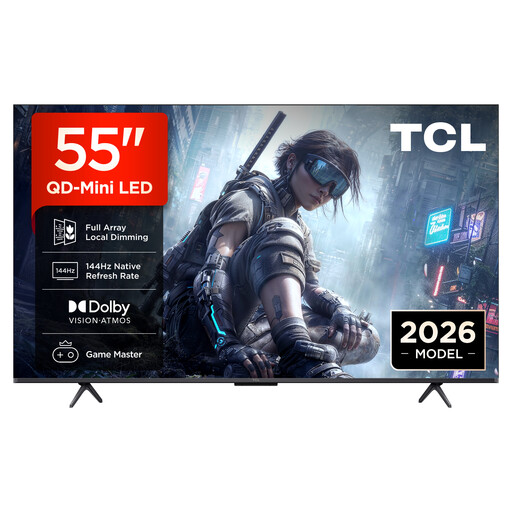
This QLED TV offers an LCD option to compare with OLED; check the panel type and viewing angle of this version.
55 inches; 4K; 144 Hz VRR.
No. A maximum refresh rate of 144 Hz doesn't guarantee that a game will output 120 fps. Check that the TV accepts the required signal, that the console is configured correctly and that the specific game supports that output; Sony Netherlands lists these requirements for using 120 Hz on PS5.
Compare the picture from the centre and every seat where you'll play, using the lighting you have at home. Look at colour, brightness, dark areas and reflections. For gaming, use the appropriate Game Mode and compare input-lag measurements in that mode.
Before you buy, ask what delivery, installation or wall mounting includes and how much it costs. An additional manufacturer's or retailer's warranty doesn't replace your statutory rights in the Netherlands: according to ACM ConsuWijzer, the seller must offer an appropriate solution if a product breaks down too soon during normal use.
Yes. Under ACM ConsuWijzer guidance, online product purchases are generally covered by a statutory cooling-off period that ends 14 days after delivery. Check the relevant returns terms before ordering; the cooling-off period is separate from your statutory rights if the product is faulty.
For new TV models covered by EU energy labelling rules, the energy label must also be clearly displayed online. The European Union's Your Europe website explains this information requirement; second-hand products are subject to a separate exemption.