
Players gathered around the dining table
You play together on one TV and want everyone to be able to follow the court and score from their own seat. So start by considering your seating arrangement and screen size.


Start with a screen size that suits your kitchen-diner and is easy to see from every seat. Then consider reflections and gaming mode. 120 Hz output and VRR are only relevant if your console and game support them too, so a higher panel refresh rate alone does not guarantee a higher frame rate.
You play together on one TV and want everyone to be able to follow the court and score from their own seat. So start by considering your seating arrangement and screen size.
You want responsive controls and smooth motion, so check that your TV, console and game support the output you’re looking for. PlayStation states that 120 Hz output requires support from both the TV and the game.
You often play during the day and want to know how much windows and lights reflect on the screen from your seats. So assess the model from your usual seating positions.
A good fit if: space is limited or players sit close to the TV.
The trade-off: players and the score may look smaller from further away.
A good fit if: several players sit further from the screen and you have room for a larger model.
The trade-off: a larger screen or a particular panel type does not guarantee a reflection-free picture. Check the model in your own lighting conditions.
A good fit if: contrast and viewing from an angle are important to you.
The trade-off: check the status of the exact model; prolonged static images may require care to avoid image retention.
| What to consider | What to look for | Who is this most important for? |
|---|---|---|
| Viewing from different seats | Measure the screen position and viewing distances. Check the picture from the seat with the most oblique viewing angle too. | If everyone needs to follow the court and score from their own seat, assess the screen size and viewing angle in your actual setup. Around 25% of consumers prioritise visibility from multiple seats. |
| Gaming response and motion | Check the gaming mode, the HDMI input you’ll use, and the output supported by both your console and game. | If you want quick actions to respond immediately, check which features your equipment can actually use. Around 31% of consumers prioritise gaming response. |
| Picture in daylight | Consider the position of windows and lights in relation to the screen and seats. Assess the exact model in similar lighting conditions. | If you play during the day, you’ll want to assess distracting reflections from the seats where you play. Around 25% of consumers prioritise visibility in daylight. |
| Space and energy use | Check the dimensions, including the stand, the space needed for placement and the energy label for the exact model. | If the TV needs to fit in a particular space and energy use matters to you, compare the dimensions and energy label for the exact model. Around 19% of consumers prioritise space and running costs. |
A TV specification of 120 or 144 Hz does not automatically mean that the game you’re playing will run at that frame rate. PlayStation says that 120 Hz output requires support from both the TV and the game.
Before taking the panel refresh rate into account, check the output supported by your own equipment and the HDMI input you’ll use. Once connected, check which output signal is active.
In a kitchen-diner, players may sit at an angle, and windows or lights may reflect differently on the screen than they do in a shop. An anti-reflection claim does not necessarily predict how the picture will look at home.
Assess the exact model from the furthest seat you’ll play from, using lighting similar to that in your kitchen-diner.
A range may include several screen sizes and versions. A similar range name does not prove that two models are the same version.
Compare the full model number and specifications of the exact version before making your choice.
The 43PUS9060/12 is a compact option to consider if space is limited.
The 55-inch BRAVIA 5 is a larger mini-LED option to compare if you have room for a bigger screen.
According to TCL, the P8K range includes a 55-inch QLED version for those looking for more screen space.
The 43-inch QN90F is a compact Neo QLED and mini-LED option to compare.
OLED is an option to compare when contrast and viewing from an angle matter. Compare a version in your preferred screen size.
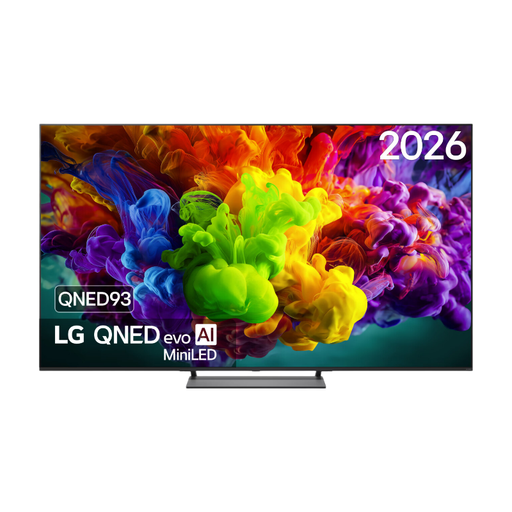
This Joybuy selection includes OLED, QNED, QD mini-LED and QLED TVs in a range of screen sizes to compare for gaming together in your kitchen-diner.
 No image available
Worth comparing if OLED and a 55-inch screen suit your setup.
55-inch, 4K OLED evo; 120 Hz native and VRR up to 165 Hz. VRR and high refresh rates depend on support from the connected equipment and game.
 No image available
A 55-inch mini-LED option to consider if several players will be watching together on a larger screen.
55-inch, 4K Mini LED; 120 Hz native, VRR up to 144 Hz and ALLM. Check that your console, game and chosen input support the features you want.
 No image available
Worth comparing if you have enough space for a 65-inch screen and several players will be watching from different distances.
65-inch, 4K QD-Mini LED; native 144 Hz VRR, ALLM and HDMI 2.1. The available output also depends on the connected equipment and game.
 No image available
A 50-inch option to compare if you’d like a larger screen but need to keep available space in mind.
50-inch, 4K QD-Mini LED; native 144 Hz, ALLM and FreeSync Premium Pro. Check which features your console and game support.
 No image available
A QLED gaming TV to compare if you’re looking for a more compact screen. Check the exact screen size and whether it suits your viewing distance.
The product name includes QLED and model code 43E7S PRO. The product description lists native 144 Hz and FreeSync Premium Pro.
No. First check which output your console and game support. PlayStation states that 120 Hz output requires a TV and game that both support it; a 144 Hz panel specification alone does not prove that a game will output 144 frames per second.
On a PS5, go to Settings > Screen and Video > Video Output to view information about the connected HDMI device, including resolution, VRR and HDR. According to PlayStation, ALLM only switches automatically to a low-latency mode if the TV supports it.
Yes. Use the energy label to compare the energy use of specific TV models. The Dutch government states that TVs are among the appliances that must have an energy label; the label does not tell you how quickly a game responds to your controls.
According to the Dutch government, when you buy a new TV of a similar type, you can return your old one to the shop or online retailer; the retailer must take back the old appliance. You can also take it to your local council’s recycling centre.
ACM ConsuWijzer says that when you buy a new TV online, you generally have a 14-day cooling-off period from the day after delivery. Your statutory guarantee is separate from any manufacturer’s guarantee. If a TV does not perform as you could reasonably expect under normal use, contact the seller to find a solution.