
Gamer with a small desk
You want to know whether the case, cables and space for ventilation will fit in your room. HP lists the OMEN 16L case dimensions as 337 × 155 × 308 mm; Lenovo describes the Tower 5 series as a 30-litre tower.


Start by checking the system requirements for the games you want to play, then make sure the complete setup will fit in your room. A compact desktop can be useful if you have limited desk space; a larger tower is worth considering if you have room for it and value the option to upgrade later. Case size alone tells you nothing definitive about noise or gaming performance.
You want to know whether the case, cables and space for ventilation will fit in your room. HP lists the OMEN 16L case dimensions as 337 × 155 × 308 mm; Lenovo describes the Tower 5 series as a 30-litre tower.
Start with the games you actually play and compare their published system requirements with the exact PC configuration. The genre alone doesn’t tell you what hardware you need.
You use your PC for studying and gaming, and want to know in advance how much memory and storage it comes with and which peripherals are included. This varies by model; for example, the Lenovo configuration reviewed doesn’t include a keyboard or mouse.
Suitable for: a small workspace, provided the exact configuration meets your games’ requirements.
Bear in mind: check the connections, ventilation clearance and options for future upgrades. Dimensions don’t measure noise levels.
Suitable for: a room with enough space, if future upgrades or extra storage matter to you.
Bear in mind: a larger case takes up more space; its size alone doesn’t prove that the PC is quieter.
Suitable for: a specific gaming setup whose final components you can check against the system requirements.
Bear in mind: a basic configuration with integrated graphics isn’t the same as a system with a dedicated graphics card. Check your games’ requirements before choosing.
| Buying concern | What to look for when buying | Who should consider this? |
|---|---|---|
| Suitability for your games | Compare the CPU, graphics solution, RAM and available storage of the exact configuration with the requirements of each game that matters to you. | If my main concern is avoiding a game that isn’t suited to my PC, I compare the exact components with its requirements. Around 31% of consumers put game compatibility first. |
| Space and placement | Measure the space for the case and cables; check its dimensions and connections, and make sure the vents can remain unobstructed. | With a small desk, I want to know in advance whether the case will fit and have room to draw in and expel air. Around 31% of consumers put space and potential fan noise first. |
| Total cost | Check which components, peripherals and software are included, and compare the complete setup you want. | If I still need peripherals, I want to know what the complete workspace will require. Around 23% of consumers put the total cost first. |
| Study use and future upgrades | Check the exact RAM and SSD configuration, connections and model-specific information about upgrades. | For studying and gaming, I want to know how much memory and storage the PC has and what upgrades are possible. Around 15% of consumers prioritise using their PC for both and upgrading it later. |
Games in the same genre can have different system requirements. The genre alone doesn’t tell you whether a PC is suitable.
Make a list of the games you want to play and compare their published requirements with the exact PC model.
Dimensions and noise levels while gaming are different things. A small case doesn’t tell you how loud the fans will be under load.
Measure your available space separately and check that the vents will remain unobstructed. If quiet operation is essential, look for noise measurements of the exact model under relevant conditions.
A PC configuration doesn’t necessarily tell you whether a keyboard and mouse are included, for example. This varies by version.
Check what’s included and make a note of which peripherals you already have before comparing configurations.
A configurable PC may be offered with integrated graphics, while the requirements for some games specify a dedicated graphics card.
Check the final graphics configuration and compare it with the system requirements of the games you want to play.
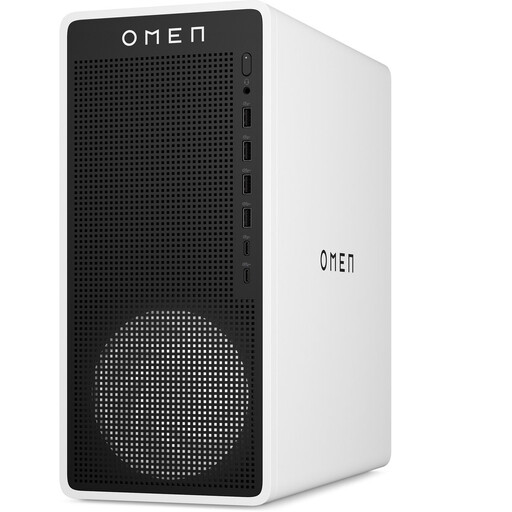
The OMEN 16L is a compact gaming desktop worth considering if desk space is a factor.
The Nitro N50-660 shows the memory and storage configuration available in a specific gaming desktop.
The Legion Tower 5 Gen 10 is a larger tower option to compare if you have enough space.
The MAG Infinite S3 series is worth considering if you’re comparing ready-to-use towers and options for future upgrades.
The Joybuy products below are gaming desktops with a range of configurations. Compare the exact components, ventilation clearance and any software requirements for each model with your games and room.
 No image available
The 16L case may suit you if desk space is limited; leave at least 10 cm of clearance around it and don’t place the PC in an enclosed cabinet.
This configuration lists a Core Ultra 7 265F, RTX 5050, 16 GB DDR5 and a 1 TB SSD.
 No image available
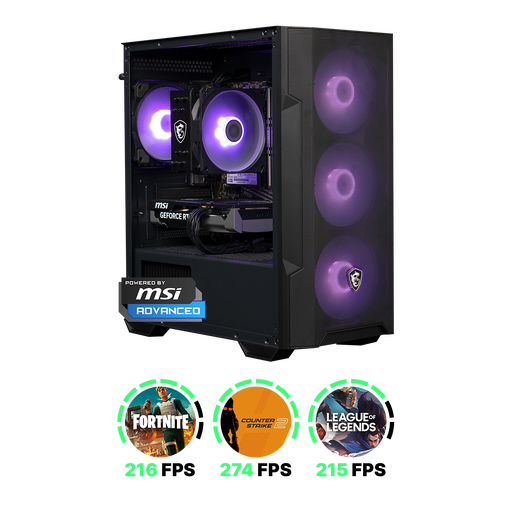
This gaming PC is worth comparing if you want to check the listed components against your games’ requirements.
The configuration lists a Ryzen 5 5500, RTX 5060, 16 GB DDR4 and a 500 GB NVMe SSD. Keep the vents clear and allow for sufficient airflow.
 No image available
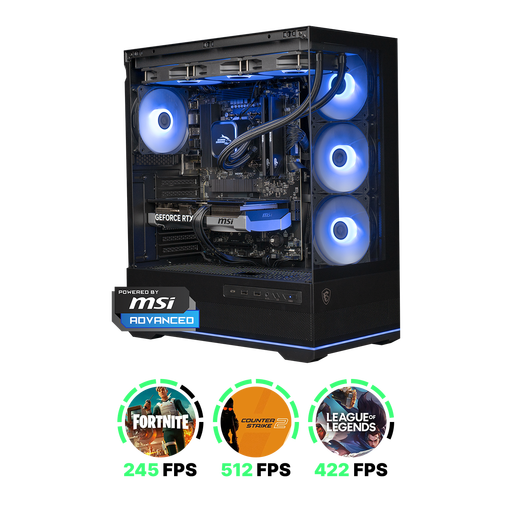
Compare this configuration with your games’ system requirements and the storage space you need for games and other files.
The listed components are a Ryzen 7 7800X3D, RTX 5070, 16 GB DDR5 and a 1 TB NVMe SSD.
 No image available
Check that the configuration and software requirements are suitable for the games and programmes you want to use.
The configuration lists a Ryzen 5 5500, RTX 5060, 16 GB DDR4 and a 480 GB SSD. According to the product title, Windows 11 is listed as not activated. Keep the vents clear.
 No image available
Compare this desktop configuration with your games’ requirements and your storage needs for studying and other files.
The configuration lists a Ryzen 7 5700X, RTX 5060 Ti 8 GB, 16 GB DDR4 and a 480 GB NVMe SSD. According to the product title, Windows 11 Home comes pre-installed but is not activated.
No. Compare the system requirements of the games you play with the exact configuration. For XCOM 2, publisher 2K recommends 8 GB RAM and 45 GB of available storage on Windows; the listed Windows 7 system requirement is a historical reference for the game, not a recommendation to buy a new PC with Windows 7 in 2026.
Measure the space for the case and cables, keep the vents clear and check the connections on the exact model. Also check whether a keyboard and mouse are included; Lenovo states that neither is included with the Tower 5 configuration reviewed.
Not automatically. According to the Dutch government, statutory consumer rights apply in the Netherlands, with no fixed statutory warranty period; a manufacturer’s warranty or additional cover is on top of these rights. Compare what an extra agreement actually adds, and contact the seller if a product is faulty.
According to the Dutch government, when you buy from a business online as a consumer, you generally have a 14-day cooling-off period, including for second-hand products. An online purchase from a private individual does not count as a distance sale under the same guidance; check the applicable terms and exceptions.
No, because Microsoft ended support for Windows 10 on 14 October 2025. If you plan to use a second-hand PC with Windows 11, check the processor, UEFI/Secure Boot and TPM 2.0, among other things; Windows 11’s minimum requirements aren’t the same as your games’ requirements.