
Tournament analyst who mainly reviews footage
Wants to search through recordings and see details clearly in a bright room. RTINGS identifies brightness and reflections as factors to consider when choosing a screen separately.


Choose a gaming PC based on what you do with your footage. Simply reviewing recordings doesn’t automatically call for a more powerful graphics card, while editing larger projects means paying more attention to memory, storage and support for your recording format. Assess the screen separately for brightness and reflections, too. A different desktop won’t solve glare in a bright room.
Wants to search through recordings and see details clearly in a bright room. RTINGS identifies brightness and reflections as factors to consider when choosing a screen separately.
Wants to edit recorded footage and needs to match their PC to the software they use, project size and file formats. Adobe recommends 32 GB of RAM or more for Premiere on Windows or an Intel Mac; that recommendation applies to this workflow.
Wants to keep match footage and therefore compares the storage capacity and upgrade options of the exact PC configuration.
First decide whether you’ll mainly be reviewing footage or editing it as well. Then check which screen and storage options suit your setup.
| Factor to consider | What to look for | Who is this most important for? |
|---|---|---|
| Screen visibility in a bright room | Check whether a monitor is included. If buying a screen separately, compare its SDR brightness and reflections under lighting similar to your room. | When I watch footage during the day, I want to see the details without distracting reflections. Around 33% of consumers put screen visibility first. |
| Memory and processing for editing | Compare the exact CPU, RAM and GPU configuration with your software and recording format requirements. Adobe recommends 32 GB of RAM or more for Premiere on Windows or an Intel Mac; this isn’t a general requirement for video playback. | When I edit highlights myself, I want the configuration to suit my software and files. Around 25% of consumers prioritise editing. |
| Storage for recordings | Work out what you need based on your own files and how long you plan to keep them. Check the SSD capacity and upgrade options for the exact configuration. | If I want to keep a lot of matches, space for my archive matters most. Around 17% of consumers give storage top priority. |
| Complete setup and aftercare | Compare the full configuration, including any separate monitor. Also read the seller’s warranty and returns terms. | I want to know in advance what I’ll need for my complete setup and who to contact if something goes wrong. Around 25% of consumers start by looking at the total cost and aftercare. |
Direct reflections can make it harder to see what’s on screen, even if the desktop meets your requirements.
Before choosing a PC, check which screen you’ll use and where the windows and lights are in relation to it.
Adobe’s memory recommendation applies to a specific Premiere workflow, while GPU acceleration relates to certain tasks. That doesn’t mean these recommendations are automatically necessary just for reviewing footage.
Start with the software and recording format you use, and whether you’ll actually be editing.
The Netherlands Authority for Consumers and Markets points out that the seller is responsible for the statutory guarantee if a product doesn’t meet reasonable expectations under normal use.
Keep your proof of purchase and contact the seller first if there’s a problem.
Worth comparing if you’re looking at ready-made gaming desktops with specified memory and storage.
The OMEN 35L range includes ready-built PCs that buyers can compare for gaming and editing.
The MPG Infinite Z3 X3D is an option to compare if you’re looking at the components and storage options of complete gaming desktops.
The Orion 5000 range is another option to consider when comparing complete gaming desktops.
These gaming desktops are worth comparing for reviewing tournament footage and, where stated in the product description, editing video. Assess the monitor separately to make sure it’s suitable for your room.
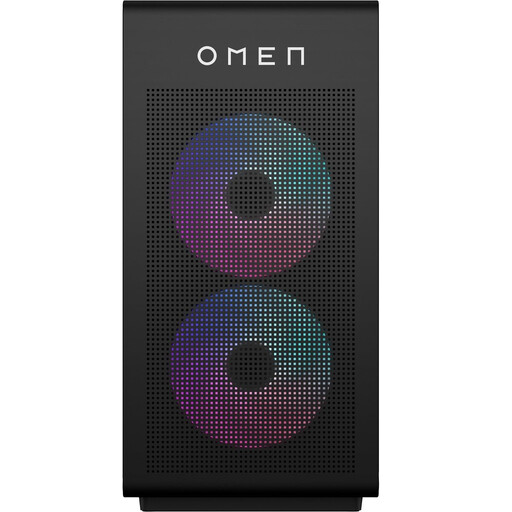 No image available
If you’re considering this desktop for reviewing footage, assess the PC configuration and your screen separately.
The listed configuration includes an Intel Core i7-14700F, RTX 5060, 16 GB DDR5 and a 1 TB SSD.
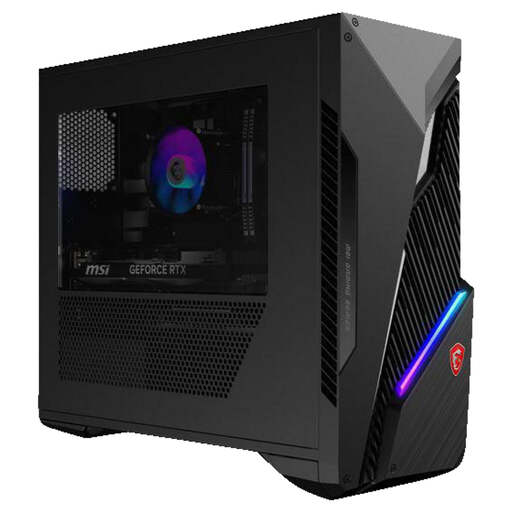 No image available
If you’re comparing this gaming PC for working with footage, make sure the configuration suits your software and recording format.
The listed configuration includes an Intel Core i7-14700F, RTX 5060 Ti, 16 GB of memory and 1 TB of storage. The configuration table lists available 2.5-inch bays for storage expansion.
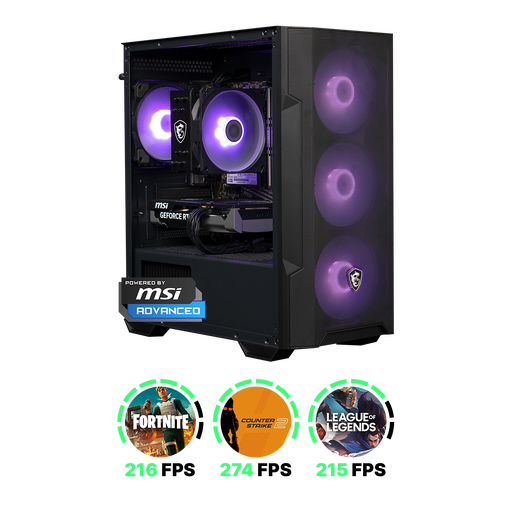 No image available
The product description mentions video and photo editing. Compare the listed configuration with the requirements of your own workflow.
The listed configuration includes a Ryzen 5 5500, RTX 5060, 16 GB DDR4 and a 500 GB NVMe SSD.
 No image available
The product description mentions video and photo editing. Check whether the configuration suits your software and files.
The listed specifications include a Ryzen 5 5500, RTX 5060, 16 GB DDR4 and a 480 GB SSD. Windows 11 is listed as not activated.
 No image available
If you’re considering this PC for reviewing footage, also check which screen you’re using and how it’s positioned in the room.
The listed specifications include a Ryzen 7 5700X, RTX 5060 Ti 8 GB, 16 GB DDR4 and a 480 GB NVMe PCIe SSD. Windows 11 Home is listed as pre-installed but not activated.
No, a graphics card won’t change your monitor’s reflections or brightness. For a bright room, assess the screen separately for SDR brightness and reflections, and consider where the windows and lights are positioned.
Check where the windows and lights are in relation to the screen, and compare the anti-reflection treatment of the specific monitor model. A matte finish won’t automatically prevent all distracting glare.
No, the 32 GB figure mentioned isn’t a general requirement for video playback. Adobe recommends 32 GB of RAM or more for Premiere on Windows or an Intel Mac; use this as a point of comparison if you actually use that editing workflow.
For distance purchases, the cooling-off period is usually 14 days, according to the Dutch government. Check whether an exception applies to your purchase. The seller also remains responsible for the statutory guarantee, according to the Netherlands Authority for Consumers and Markets, if the product doesn’t meet reasonable expectations under normal use.