Start by tackling reflections through screen placement and, if needed, window blinds: a faster PC won’t reduce the amount of daylight coming in. Then choose your PC based on your drawing software, game engine and games. Godot’s basic requirements apply to simple projects, while other software and more demanding games may have different requirements. For a desktop, check the full configuration and remember to allow for a suitable monitor.
Who is this guide for?
Tile-set creator by a bright window
You want to judge details and colours accurately while minimising distracting reflections as you draw. So consider the monitor and its position by the window separately from the PC. Arboportaal recommends sitting with your line of sight parallel to the window.
2D creator using several programmes
You draw tiles and use them in a game engine. Compare the requirements of the programmes and versions you actually use with the scale of your project. Godot describes its basic requirements as a starting point for simple projects.
Creator who also plays demanding games
You use the same PC for creating tile sets and playing games that may need more graphics power. Assess the full configuration against the games you play, not just the graphics card’s name.
What should you look for when choosing?
First, make sure you can see the screen clearly by the window; then choose PC components to suit your software, projects and games.
| What to consider |
What to look for |
Who should pay particular attention? |
| Reflections and screen visibility |
Check whether you can position the monitor with your line of sight parallel to the window, and whether you can use blinds. BenQ Netherlands explains that a matt screen can reduce reflections, but may also make the image look a little softer. |
If I want to judge small tiles and colours beside the window, I need to minimise distracting reflections without losing sight of how the screen looks overall. Around 36% of consumers prioritise reducing reflections. |
| Drawing software and game engine |
Make a note of the programmes and versions you use, then check the requirements for RAM, GPU support and storage against the full PC configuration. For Photoshop 27.x on Windows, Adobe lists 8 GB RAM as the minimum and 16 GB or more as the recommendation. |
If you draw tiles and then use them in your own game engine, you’ll want your entire workflow to suit the PC you choose. Around 29% of consumers prioritise their drawing workflow. |
| Gaming performance |
Compare the exact CPU and GPU configuration with the requirements of your games and your preferred screen resolution. If you’re connecting a separate monitor, check the display outputs too. |
If I want to play games with higher graphics requirements as well as do creative work, I look at the complete configuration rather than just one component. Around 21% of consumers prioritise gaming. |
| Space and complete set-up |
Measure the space for the case and monitor, and check exactly what comes with the PC. Look at upgrade options for the exact model. |
If you want your PC, monitor and available desk space to work well together, remember to include a separate screen in your decision. Around 14% of consumers prioritise their overall workspace. |
Common pitfalls
-
Thinking a faster graphics card will solve reflections
Your PC’s performance won’t change how daylight falls on your monitor. You may also need a separate screen or window blinds.
First, decide where to position the screen in relation to the window. Then compare the PC hardware with the requirements of your own programmes and games.
-
Assuming the requirements for a simple 2D project apply to all your software
Godot sets out its basic requirements for simple projects, while Adobe publishes separate requirements for Photoshop. So that information won’t necessarily apply to all your creative work and games.
Make a list of the programmes, versions and games you use, then check each one against the full configuration.
-
Assuming a product range name means there’s one fixed configuration
Models in the same PC range can have different specifications. An assumption about one component may not apply to the model you want to use or upgrade.
Check the full model code and specifications for the exact model before making your choice.
Brands to consider
HP
The Dutch OMEN range includes compact desktops such as the 16L, as well as other case sizes. HP positions the 16L as a compact option for a permanent workspace.
- The 16L may be worth considering if desktop space is limited.
- Check the full TG03 model code: configurations can vary within the range. A different PC won’t solve reflections on a separate screen.
Lenovo
Legion Tower desktops are worth considering if you want to play more demanding games as well as create tile sets, or are thinking about upgrades.
- Lenovo describes the Tower 5i Gen 10 as having a tool-free side panel and upgradeable memory and storage.
- These are manufacturer details for a specific product range, not an independent performance test. Check the configuration and upgrade options for the exact model.
Acer
The Predator Orion range includes towers in various sizes, including the more compact Orion 3000.
- The Orion 3000 is worth considering if the size of the case matters when choosing your workspace.
- The range includes several configurations. Check the specifications for the full model code rather than assuming them from the range name.
ASUS
The Dutch ROG desktop range includes towers and compact NUC models, so you can compare different sizes.
- ASUS lists cooling and upgrade options among the features of its desktop range.
- This manufacturer description won’t necessarily apply to every model. Check the ports and upgrade options for the full model code.
Gaming desktops on Joybuy
These gaming desktops are for anyone looking to combine tile-set creation with gaming. The monitor and its position by the window remain separate decisions.
 No image available
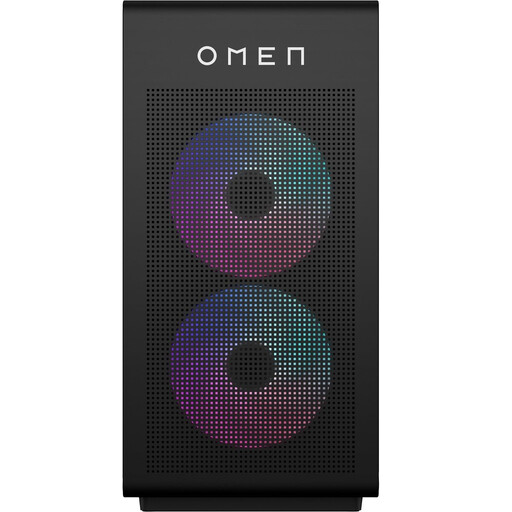
HP OMEN 35L Gaming Desktop GT16-0160nd C2FK7EA#ABH
For anyone looking to combine tile-set creation and gaming on one desktop.
Specifications: Intel Core i7-14700F, RTX 5060, 16 GB DDR5 memory and 1 TB SSD; with HDMI 2.1 and DisplayPort ports.
Leave at least 10 cm of clear space around the desktop and don’t place it in an enclosed cabinet.
View at Joybuy
 No image available
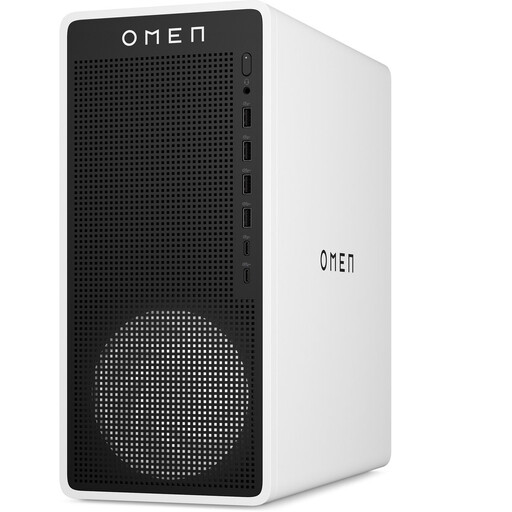
HP OMEN 16L Gaming Desktop TG03-0057nd C3YP0EA#ABH
A compact desktop option for anyone looking to combine tile-set creation and gaming.
Specifications: Intel Core Ultra 7 265F, RTX 5050, 16 GB DDR5 memory and 1 TB SSD. The memory is upgradeable to 32 GB; this model has HDMI 2.1 and DisplayPort 2.1 ports.
Leave at least 10 cm of clear space around the desktop and don’t place it in an enclosed cabinet.
View at Joybuy
 No image available
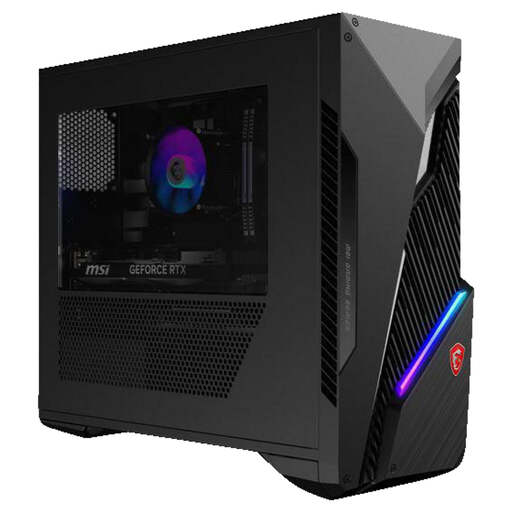
MSI MAG Infinite S3 14NVM7-3002EU
For anyone looking to use the same desktop for creative work and gaming.
Specifications: Intel Core i7-14700F, RTX 5060 Ti, 16 GB memory and 1 TB SSD. The description also mentions Wi-Fi 6E and an upgradeable design.
View at Joybuy
 No image available
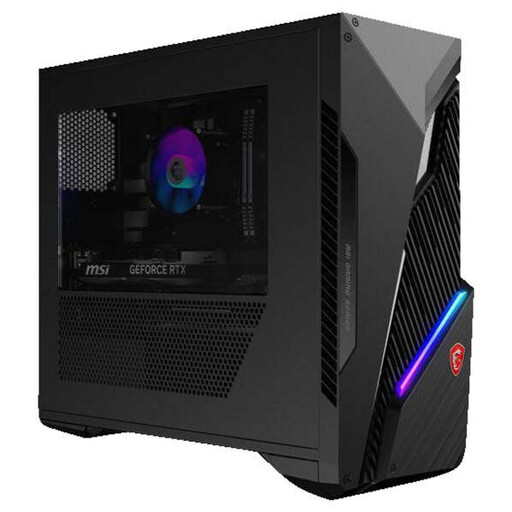
MSI MAG Infinite S3 14NVM5-2873EU
A desktop for combining tile-set creation and gaming.
Specifications: Intel Core i5-14400F, RTX 5060 Ti, 16 GB memory and a 1 TB M.2 SSD. The case is described as suitable for upgrades.
View at Joybuy
 No image available
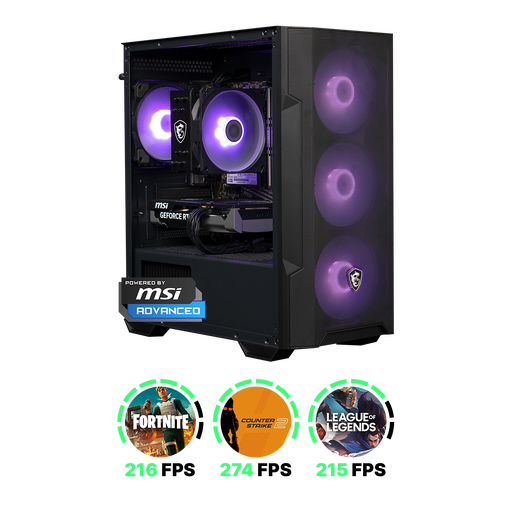
Shark Max Bite R500 Gaming PC, Powered by MSI
For anyone looking to combine tile-set creation and gaming on one desktop.
Specifications: Ryzen 5 5500, RTX 5060, 16 GB DDR4 memory, a 500 GB NVMe SSD and Windows 11 Home.
View at Joybuy
Frequently asked questions
Will a more powerful gaming PC solve the problem of a bright window?
No. If possible, position the screen with your line of sight parallel to the window, and use blinds if needed. Then consider whether the screen finish suits the light in your room; this is separate from the speed of the PC.
How much memory do I need to create tile sets?
It depends on your software and project. Godot describes its system requirements as a starting point for simple projects. For Photoshop 27.x on Windows, Adobe lists 8 GB RAM as the minimum and 16 GB or more as the recommendation; this isn’t a general requirement for everyone who creates tile sets.
What should I consider for a desktop beside a window?
Check whether you need a separate monitor, whether it can be connected to the PC and whether you can position it to avoid daylight reflecting on the screen. Leave enough space around the case you choose for ventilation too.
What cooling-off period and warranty apply when buying online as a consumer in the Netherlands?
For online purchases from a business, you’ll usually have a 14-day cooling-off period; check which exceptions apply. You’re also entitled to a product that works as it should. According to the Dutch government, there is no fixed statutory warranty period in the Netherlands; if there’s a fault, contact the seller. A manufacturer’s warranty or additional warranty doesn’t replace your statutory rights.


