
2D tile-set creator
You draw tiles, export them and test them in a game engine. So, first check that your software and chosen renderer will run on the PC. Godot and Aseprite explain the relevant software steps.


For 2D tile sets, choose a PC based on the requirements of your art and game software, the connections you need and the space available at your shared desk. A powerful dedicated graphics card isn’t necessarily required. A compact mini PC is a good fit when desk space is your priority, while a gaming tower may make more sense if you also want to play more demanding games or need room to upgrade. Godot’s minimum requirements apply to a simple project and don’t automatically tell you what other games require.
You draw tiles, export them and test them in a game engine. So, first check that your software and chosen renderer will run on the PC. Godot and Aseprite explain the relevant software steps.
You need to leave enough room for the PC, screen and input devices. Check the dimensions of the exact configuration, and make sure it has the ports and sound features your setup needs; ASUS Netherlands, HP Netherlands and Lenovo Netherlands describe different configurations.
You want to play games as well as work in 2D, or test more demanding projects. Compare the requirements of that specific software with the complete PC configuration; Godot’s minimum requirements are for a simple project.
Choose this option: when keeping your desk clear is your main priority and the configuration you choose is also suitable for your games.
Bear in mind: a small case doesn’t mean a PC is quiet. Configurations can vary in processor, graphics card and included memory.
Choose this option: if you want a complete desktop for tile-set work and gaming, and have room for a tower beside or under your desk.
Bear in mind: check that there’s enough space and ventilation where you plan to put the PC.
Choose this option: if gaming, memory or the option to upgrade later matters more to you than having the smallest possible setup.
Bear in mind: a larger case needs more space. Also check which peripherals are actually included.
| What to consider | What should you check? | Who is this important for? |
|---|---|---|
| Suitability for your workflow | Check the operating system, editor and engine requirements, RAM, storage, and your software’s export and import options. | If you draw tiles, export them and test them in an engine, you’ll want the PC to support your complete workflow. Around 33% of consumers prioritise this. |
| Space and desk use | Check the dimensions of the exact configuration, ventilation clearance, power supply, and accessible USB and display ports. If noise is a deciding factor, look for a sound measurement. | If you share your workspace, you’ll want the PC, screen and input devices to fit together. Around 27% of consumers prioritise the desk space available. |
| Gaming performance | Compare the requirements of the specific games, your preferred screen resolution and the graphics card in the complete configuration; don’t treat Godot’s minimum requirements as a gaming benchmark. | If you want to play particular games as well as create artwork, you’ll want to know whether the configuration is suitable for those games. Around 20% of consumers put gaming performance first. |
| Upgrade options and complete setup | Check for available memory and storage slots, and whether the screen, keyboard, mouse and other equipment you need are included. | If you want to make changes later or still need equipment for your workspace, you’ll want to assess the complete configuration. Around 20% of consumers prioritise upgrade options and the complete purchase. |
A simple Godot project can meet the minimum requirements with suitable integrated graphics; other games may have higher requirements.
First decide which editor, renderer and games you’ll use, then compare their requirements with the complete configuration.
A compact size alone tells you nothing about how noisy a PC is, and there are no comparable independent noise measurements for the configurations mentioned.
If noise matters at your shared desk, look for a measurement of the exact configuration under the workload that matters to you.
Configurations in the same range can differ. For example, the Lenovo configuration reviewed doesn’t list a keyboard or mouse.
Compare the full model or configuration code, and check which components are included with that particular configuration.
The ROG NUC range is worth considering if a small gaming PC is your main way to save space.
The OMEN 16L is a compact gaming tower to compare if you don’t need a mini PC.
The Legion Tower 5 Gen 10 is a larger option for those with room for a tower.
The Nitro 20 is another gaming desktop to compare by its full model code and configuration.
These Joybuy products are gaming desktops to compare for tile-set work, gaming and a shared workspace. Check the specifications of each configuration and make sure you have enough room for it.
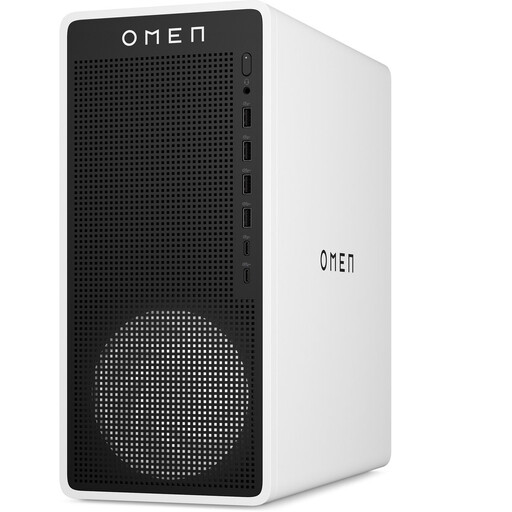 No image available
A gaming desktop to compare if you want to do tile-set work and gaming on a single PC.
The product information recommends leaving at least 10 cm of clearance all around and advises against placing it in an enclosed cabinet.
 No image available
A gaming PC to compare if you want to combine tile-set work and gaming on the same desktop.
The product name lists RTX 5060, R5, 16 GB and 500 GB. The product information states that the charger must be purchased separately.
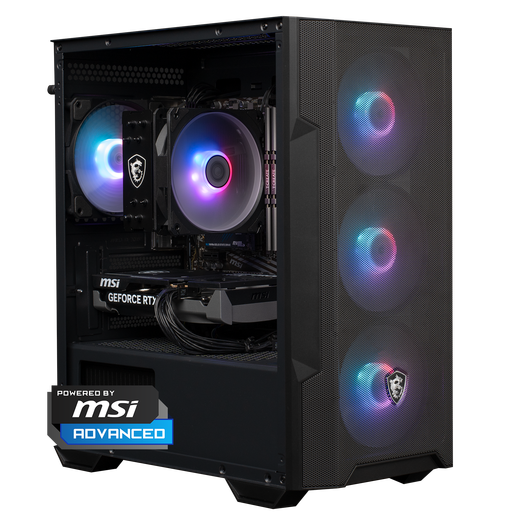 No image available
A gaming PC to compare if you want to use one desktop for tile-set work and games.
The product name lists RTX 5060, R5, 16 GB and 1 TB. The product information states that the charger must be purchased separately.
 No image available
A gaming desktop to compare for creating tile sets and gaming on the same PC.
The product name lists an RTX 5060, Ryzen 5, 16 GB RGB, a 480 GB SSD and Wi-Fi.
 No image available
A gaming desktop to compare if you also want to play games on the same PC as you use for tile-set work.
The product name lists an AMD Ryzen 7 5700X, GeForce RTX 5060 Ti 8GB, 16GB DDR4 RAM and 480GB NVMe PCIe SSD. The product information describes Windows 11 as an evaluation version.
No, not for a simple Godot 2D project alone: Godot’s minimum requirements also include integrated graphics, depending on the renderer. Other games or more complex projects may have higher requirements.
Check the export format and tile dimensions for the engine you use. Godot’s TileSet guide describes an image with tiles of equal size; Aseprite explains how to export a sprite sheet. A sprite sheet isn’t automatically a tile set configured for your engine.
Check that the PC has a suitable connection and that the tablet driver supports its operating system. According to the Krita guide, correct driver and protocol support is essential for features such as pen pressure.
No. According to the Dutch government, your statutory guarantee applies alongside any manufacturer’s or extended warranty, and there is no fixed statutory guarantee period in the Netherlands. If a product is faulty, contact the retailer.
Yes. According to the Dutch government, when you buy a new, similar device, a shop must take your old one back free of charge; this also applies to online purchases. The same rules don’t apply to business equipment.