
3D terrain creator
You create or render terrain in Blender, or build an interactive environment in Unreal, and want to compare RAM and GPU configurations. Blender Foundation and Epic Games publish recommendations for their software.


Start with the software: you don’t automatically need a gaming PC for elevation data and map analysis in QGIS, while Blender or Unreal projects give you more reason to compare RAM and video memory carefully. Then measure the space you have available. Compact cases can save room, but check that the memory configuration of the specific model suits your project.
You create or render terrain in Blender, or build an interactive environment in Unreal, and want to compare RAM and GPU configurations. Blender Foundation and Epic Games publish recommendations for their software.
You want to make room for a monitor and your studies in your student room, so you’re comparing the case dimensions with the installed memory. HP and Lenovo publish specifications for specific configurations.
You mainly work with elevation data, relief or 3D map views in QGIS and want to check first whether your mapping tasks require a new gaming PC. QGIS documents raster terrain analysis and 3D map views.
Choose this option: if you mainly analyse elevation data or create 3D map views.
Bear in mind: QGIS documentation doesn’t specify universal PC requirements. Test your dataset and workflows before buying a gaming PC.
Choose this option: if you model or render terrain in Blender.
Bear in mind: Blender Foundation recommends 32 GB RAM and 8 GB of video memory for Windows. These are recommendations, not a guarantee of how a particular scene will perform or how long it will take to render.
Choose this option: if your terrain map will be part of an interactive Unreal environment.
Bear in mind: Epic Games recommends 32 GB RAM, at least 8 GB of graphics memory and a DirectX 12-compatible graphics card. Your project and settings also matter.
| What to consider | What should you check? | Who is this important for? |
|---|---|---|
| Memory for 3D work | Compare the installed RAM and video memory separately with the recommendations for your chosen software. | If I create terrain in Blender or Unreal, I want to know whether both types of memory will suit my project. Around 31% of consumers prioritise suitability for 3D work. |
| Space for your PC | Measure the space for the case and leave room for cables and ventilation; compare the dimensions of the exact configuration. | In a small room, I want to leave space for my monitor and studies without blocking ventilation. Around 31% of consumers prioritise a setup that fits their room. |
| A PC suited to GIS | Work out whether you’ll be doing QGIS analysis, Blender rendering or Unreal development, and, if possible, try a representative project on your current computer. | If I mainly analyse elevation data, I want to know first whether my mapping tasks mean I need a new gaming PC. Around 23% of consumers prioritise GIS suitability and avoiding an unnecessarily powerful purchase. |
| Running costs and lifespan | Check upgrade options and what’s included; base your electricity costs on how you use the PC. | I want to weigh up the purchase price, potential upgrades and electricity use together before making a choice. Around 15% of consumers prioritise running costs and lifespan. |
Terrain analysis and 3D map views in QGIS are different tasks from rendering in Blender or working on an Unreal project. So a PC chosen for one type of project won’t necessarily suit another.
First, identify the software, project type and dataset. Then compare the PC specifications.
HP lists 16 GB RAM for the OMEN 16L TG03-0600nd. That’s below the 32 GB RAM recommendation published by Blender Foundation and Epic Games for the work mentioned here, even though the graphics card has 16 GB of its own memory.
Check the full model code and compare RAM and video memory separately with your software’s requirements. Adding RAM later means checking compatibility and may involve extra costs.
Case dimensions don’t tell you how much extra space you’ll need for cables and ventilation. A compact case or a description of the cooling system also doesn’t prove how quiet a PC will be during your project.
Measure the available space and check the dimensions of the exact configuration before you order. If low noise is essential, ask for measurements taken under comparable workloads.
A manufacturer’s or retailer’s warranty doesn’t replace your statutory right to a product that is fit for purpose.
Compare any additional cover with your existing rights and contact the retailer if a product is faulty.
Additional cover may cost extra; check which terms actually add something for your situation.
The specifications and points to consider below apply to the product lines and configurations mentioned, not automatically to every model from a brand.
OMEN desktops offer examples for comparing a compact 16L configuration with a larger 35L model.
The Legion Tower is a tower option to consider if its placement and upgrade options suit your workspace.
The MPG Trident AS range is a compact desktop line whose case dimensions and expansion slots you can compare with those of a standard tower.
This product selection focuses on desktops for creating 3D terrain in Blender or Unreal. Compare the installed memory, graphics card and available space for each configuration.
 No image available
The listed memory configuration meets the RAM and video memory recommendations mentioned for Blender and Unreal on Windows.
32 GB DDR5; GeForce RTX 5080 with 16 GB of graphics memory; 1 TB NVMe SSD. Windows 11 is listed as an evaluation version.
 No image available
This configuration lists 32 GB RAM and 12 GB of graphics memory, which meet the Blender and Unreal recommendations mentioned here.
32 GB DDR5; GeForce RTX 5070 with 12 GB of graphics memory; 1 TB PCIe 4.0 SSD; Windows 11 Home. The product information lists a 30L tower case.
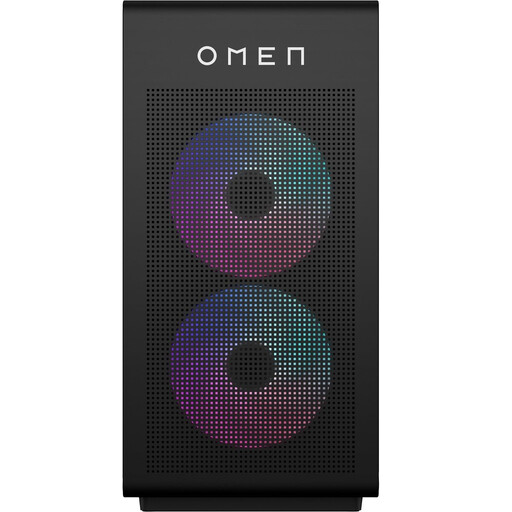 No image available
The listed 8 GB of graphics memory meets the video memory recommendation, but 16 GB RAM is below the 32 GB recommendation mentioned for Blender and Unreal.
16 GB RAM; GeForce RTX 5060 with 8 GB of graphics memory; 1 TB storage; Windows 11 Home.
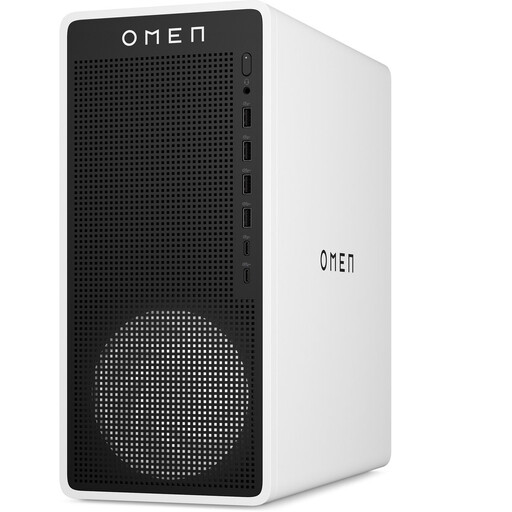 No image available
The listed 8 GB of graphics memory meets the video memory recommendation, while 16 GB RAM is below the 32 GB recommendation mentioned for Blender and Unreal.
16 GB RAM; RTX 5050 with 8 GB of graphics memory; 1 TB PCIe storage; Windows 11 Home. The product information lists an OMEN 16L case measuring 15,50 × 33,70 × 15,50 cm.
 No image available
The listed 8 GB of graphics memory meets the video memory recommendation; 16 GB RAM is below the 32 GB recommendation mentioned for Blender and Unreal.
16 GB RAM; RTX 5060 with 8 GB of graphics memory; 500 GB NVMe SSD; Windows 11 Home.
No, not automatically. QGIS includes tools for raster terrain analysis and 3D map views. Consider your dataset and workflows, and, if possible, try a representative project first. QGIS documentation doesn’t specify a universal requirement for a gaming GPU.
Before you buy, measure the space for the case, monitor and cables, and keep ventilation openings clear. Compare the dimensions of the exact configuration; a compact case or description of the cooling system doesn’t prove how quiet the PC will be during your project.
Check the upgrade options for your chosen model before counting on adding more RAM or storage. Energy-saving settings can help limit unnecessary power use during breaks. Base your electricity costs on how you use the PC, not just the power supply’s wattage.
When you buy from a business remotely, you’ll often have a 14-day cooling-off period; the Dutch government notes that exceptions may apply. You’re also entitled to a product that is fit for purpose. The Netherlands has no fixed statutory warranty period. If a product is faulty, contact the retailer; any manufacturer’s warranty is in addition to your statutory rights.