
Space explorer
You want to explore planets and galaxies, and match your PC to the simulation settings you actually use.


Start with the system requirements for your space simulation and the graphics settings you want to use, then compare them with the PC’s full configuration. In a shared bedroom, noise from the fans under load and enough clearance for cooling matter too. A compact case or quiet fan profile alone doesn’t prove that a PC will be quiet while you’re playing.
You want to explore planets and galaxies, and match your PC to the simulation settings you actually use.
You share a bedroom and want to take noise during intensive use into account, without blocking airflow to your PC.
You’re looking for somewhere to put your desktop while still leaving room for ventilation and connections.
Choose your simulation and settings first, then check that the exact PC configuration suits your space, noise preferences and overall purchase.
| What to consider | What to look for | Who is this important for? |
|---|---|---|
| Suitable for the simulation | Compare the CPU, GPU, dedicated video memory, RAM, storage and operating system with the requirements of your chosen software and settings. SpaceEngine specifies a minimum of 4 GB of dedicated VRAM for the ‘medium’ preset and 6 GB for ‘high’. These are preset guidelines, not a guarantee of a particular frame rate. | If my main priority is using the simulation settings I want, I compare the full configuration with the software’s requirements. Around 29% of consumers put simulation performance first. |
| Noise during use | Look for noise information about the exact configuration under load. Keep the ventilation openings clear and weigh up any adjustable fan profile against the need for sufficient cooling. | If I share a bedroom, I want to know how much noise the PC makes while I’m playing, without compromising cooling. Around 29% of consumers give their room-mate’s peace and quiet top priority. |
| Space and ventilation | Measure the available space, including room for cables and airflow, and compare it with the dimensions of the exact model. | When space is limited, the case needs to fit without blocking connections or air vents. Around 18% of consumers start by considering the space available. |
| Total purchase cost | Compare the exact CPU, GPU, RAM and SSD configuration, included components and total checkout price. Consider any additional warranty separately from your statutory rights. | If I’m looking for a complete configuration, I want to know which components and any extras are included in the purchase. Around 24% of consumers put the total cost first. |
Fans can spin faster and make more noise during intensive use. A lower fan speed must still provide sufficient cooling.
Look for a noise assessment of the exact configuration under load, and keep the air vents clear.
A series can include different processors and graphics cards. The full product name alone doesn’t always tell you which components are in the model being offered.
Before ordering, check the full model code and the CPU, GPU, RAM and SSD actually supplied.
An additional warranty is different from the statutory rights that apply to products that must be of satisfactory quality.
Read what extra cover is being offered and consider it separately from your statutory rights.
The Legion Tower 5i Gen 10 is worth considering if you’re comparing configurations with expandable memory and storage.
The MAG Infinite S3 14th is a tower series to compare if size and upgrade options are important to you.
The OMEN 35L is worth considering if you’re looking at a larger gaming tower with customisable components.
The ROG G700 is a full-tower series where you’ll need the full model code to distinguish between configurations.
The Predator Orion 3000 is an option to compare if you want to assess the dimensions of a specific model.
These PCs are designed for gaming and space simulations. Compare the listed configuration with the settings you want to use and the space available for ventilation.
 No image available
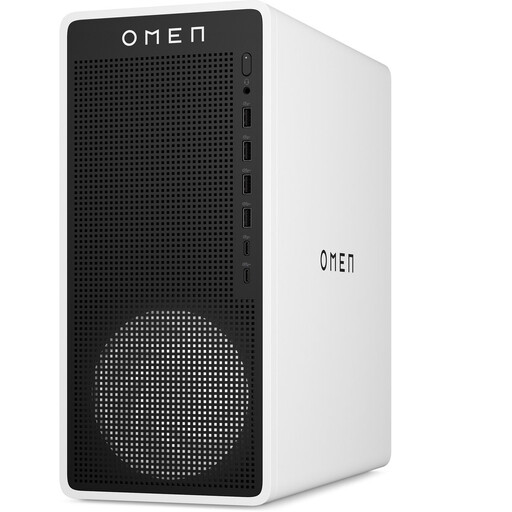
The listed RTX 5050 has 8 GB of dedicated video memory; the SpaceEngine guide specifies a minimum of 6 GB for the ‘high’ preset. This isn’t a guarantee of a particular frame rate.
Intel Core Ultra 7 265F, 16 GB DDR5 and a 1 TB SSD. The 16L case needs at least 10 cm of clearance on all sides; don’t place the desktop in an enclosed cabinet.
 No image available
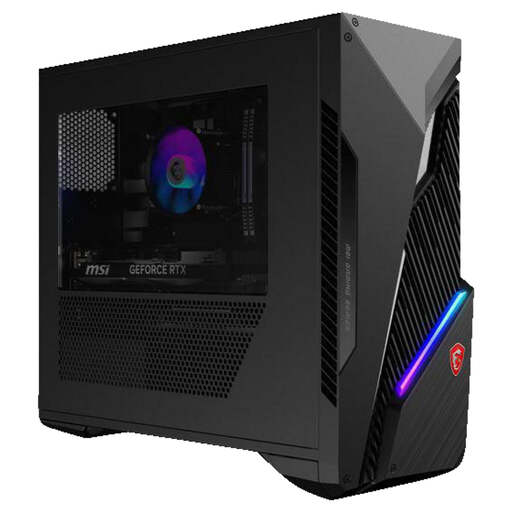
The listed RTX 5060 Ti has 8 GB of video memory; the SpaceEngine guide specifies a minimum of 6 GB of dedicated VRAM for the ‘high’ preset. This doesn’t guarantee a particular frame rate.
Intel Core i7-14700F, 16 GB memory and a 1 TB SSD.
 No image available
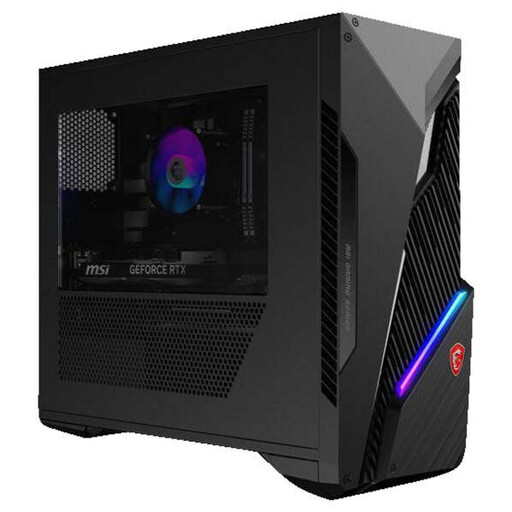
The listed RTX 5060 Ti has 8 GB of video memory; the SpaceEngine guide specifies a minimum of 6 GB of dedicated VRAM for the ‘high’ preset. This doesn’t guarantee a particular frame rate.
Intel Core i5-14400F, 16 GB memory and a 1 TB SSD. Don’t assume this model is the same as other PCs in the series.
 No image available
The listed RTX 5060 has 8 GB of video memory; the SpaceEngine guide specifies a minimum of 6 GB of dedicated VRAM for the ‘high’ preset. This doesn’t guarantee a particular frame rate.
Ryzen 5 5500, 16 GB DDR4 and a 500 GB NVMe SSD.
 No image available
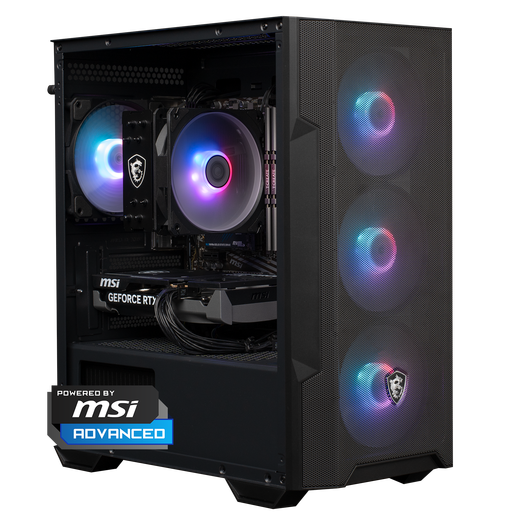
The listed RTX 5060 has 8 GB of video memory; the SpaceEngine guide specifies a minimum of 6 GB of dedicated VRAM for the ‘high’ preset. This doesn’t guarantee a particular frame rate.
Ryzen 5 5500, 16 GB DDR4 and a 1 TB NVMe SSD. The listed case dimensions are 388 × 200 × 423 mm.
No. Universe Sandbox publishes its own system requirements, while SpaceEngine provides guidance for different graphics presets. Choose the software and settings you want to use, then compare them with the PC’s full configuration.
Don’t block the ventilation. Fans can spin faster during intensive use, so keep the air vents clear and check any fan settings for the exact PC.
An expired manufacturer’s warranty doesn’t automatically remove your statutory rights. According to the Dutch Government, there’s no fixed statutory warranty period for a product; the retailer remains your point of contact if there’s a problem, and the assessment depends on factors including the product, how it’s been used and the fault.
For eligible consumer purchases made at a distance, a 14-day cooling-off period generally applies, although there are exceptions. The Dutch Government explains this period; check whether it applies to your specific purchase.