
Space explorer with limited desk space
You want a PC that fits the space available, but you don't want to mistake a small case for proof that a model can handle your simulations. ASUS ROG and HP Netherlands offer models in a range of case sizes.


Start with your simulation game's system requirements and the space available on and around your desk. Then decide between a mini PC, compact desktop or larger tower. SpaceEngine and Universe Sandbox publish different requirements, while a small case alone tells you nothing about the performance, noise levels or upgrade options of the specific model you choose.
You want a PC that fits the space available, but you don't want to mistake a small case for proof that a model can handle your simulations. ASUS ROG and HP Netherlands offer models in a range of case sizes.
First decide whether you want to play SpaceEngine, Universe Sandbox or another game, then compare its requirements with the PC's full configuration. Giant Army and Cosmographic Software publish separate requirements for their games.
For extended use, you should also consider ventilation and noise. Manufacturers' descriptions of cooling aren't the same as noise measurements taken while playing your chosen game.
A good fit if: you're short on space and the exact configuration meets your game's requirements. ASUS ROG lists the ROG NUC (2025) as having a case volume of around 3 litres.
Bear in mind: its small size doesn't prove that the PC will perform well enough, run quietly or be easy to upgrade. Remember to allow room for cables and ventilation, too.
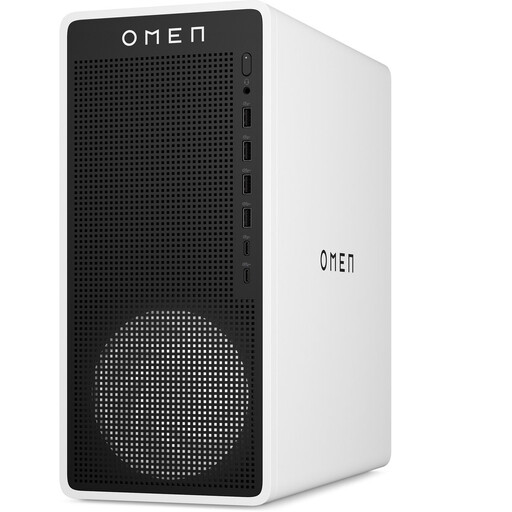
A good fit if: there's room for a small tower in your workspace and you want to compare a clearly specified configuration. HP Netherlands lists the OMEN 16L TG03-0630nd with, among other things, 16 GB RAM, a 1 TB SSD and an RTX 5060 with 8 GB of video memory.
Bear in mind: a desktop takes up more space than a mini PC; the listed components don't tell you how it will perform in games or how loud its fans will be.
A good fit if: you have space beside or under your desk and the smallest possible case isn't your main priority. Lenovo describes the Legion Tower 5 Gen 10 as a range with a 30-litre case.
Bear in mind: a larger case could be a practical drawback on a small desk, and its size alone doesn't guarantee better performance or quieter operation.
First compare the requirements for the game title and version you want to play. Then assess the fit, ventilation, configuration and overall purchase.
| Consideration | What should you check? | Who is this important for? |
|---|---|---|
| Game compatibility | Check the exact title and version. SpaceEngine lists 3 GB of video memory as the minimum and 5 GB as recommended; Universe Sandbox lists 4 GB as the minimum and 8 GB as recommended. Giant Army also warns that integrated graphics may cause problems. Compare the PC's full configuration with your chosen game's requirements. | I want to know first whether the PC is suitable for the simulation I play, not just whether ‘gaming’ appears in the product name. Around 31% of consumers put game compatibility first. |
| Desk fit | Measure the available width, height and depth, then compare them with the external dimensions of the exact PC. ASUS ROG lists the ROG NUC (2025) at around 3 litres; HP positions the OMEN 16L as a compact desktop. Leave room for connections and air vents, too. | I want the case to fit without blocking cables or ventilation openings. Around 31% of consumers put physical fit first. |
| Noise and heat | Check where the vents are and how the manufacturer recommends positioning the PC. ASUS lists three fans for the ROG NUC (2025), while HP describes the OMEN 16L's ventilation. These design details aren't comparable noise measurements taken while running your chosen simulation. | I use my PC for long periods in a shared workspace and want to take noise and heat into account. Around 23% of consumers prioritise comfort in their workspace. |
| Configuration and aftercare | Check which components and software come with the exact model and whether its connections are suitable for your monitor. The Dutch government distinguishes between statutory, manufacturer and additional warranties; if a product is faulty, the retailer is your point of contact. | I want to know in advance what I need and what cover any extra warranty adds. Around 15% of consumers prioritise total costs and aftercare. |
SpaceEngine and Universe Sandbox have separate system requirements. Universe Sandbox also warns that integrated graphics may cause problems.
First check the exact game title and version, then compare the PC's full configuration with that game's requirements.
A model sold as a barebone may not include RAM, an SSD or an operating system. The components you'll still need depend on the variant you choose.
Carefully check what's included with the exact model, and only compare configurations once you know which components come with it.
Missing components and software could mean extra purchases and installation work.
The case volume isn't the same as the space your complete set-up needs. The external dimensions, cables and air vents all matter, too.
Measure the space and check the dimensions and ventilation openings of the model you choose before ordering.
The Dutch government distinguishes between statutory, manufacturer and additional warranties. If a product is faulty, the retailer is your point of contact.
Check what an additional plan actually covers and which rights apply separately.
An additional plan may cost extra, so consider whether its cover meets your needs.
The ROG NUC (2025) is an example of a gaming PC in an exceptionally small case.
The OMEN 16L range in the Netherlands is a compact tower option; the model described is the TG03-0630nd.
The Legion Tower 5 Gen 10 is a larger desktop option for a workspace with room for a bigger case.
The MPG Trident AS 13th illustrates a form factor between a mini PC and a conventional tower.
The AtomMan G1 Pro shows why you should check the exact model when buying a compact gaming PC.
These gaming desktops are a starting point for comparing configurations for space simulations. For each model, check your game's system requirements and measure the case before deciding whether it will fit on your desk.
 No image available
The stated video memory is worth comparing with your chosen simulation's requirements. This comparison doesn't guarantee any particular gaming performance.
RTX 5050 with 8 GB of video memory; 16 GB RAM; 1 TB SSD.
 No image available
The stated video memory gives you a specific point of comparison with your chosen space simulation's requirements; check the game's other requirements, too.
RTX 5060 with 8 GB of video memory; 16 GB RAM; 500 GB NVMe SSD; MSI MAG FORGE M100R case.
 No image available
Compare the listed graphics card and video memory with the requirements for the exact game title; the components alone don't tell you what settings or performance to expect.
RTX 5060 with 8 GB of video memory; Ryzen 5; 16 GB RAM; 480 GB SSD; Wi-Fi; four ARGB cooling fans.
 No image available
Compare the listed graphics card and storage with your game's requirements. Before buying, also check the operating system listed for this model.
AMD Ryzen 7 5700X; GeForce RTX 5060 Ti with 8 GB of video memory; 16 GB DDR4 RAM; 480 GB NVMe PCIe SSD. Windows 11 is listed as Evaluation Version.
 No image available
Use the listed components to check the PC against your chosen simulation's system requirements; the configuration alone doesn't promise any particular image quality or frame rate.
Ryzen 7 7800X3D; GeForce RTX 5080 with 16 GB of video memory; 32 GB DDR5 RAM; 1 TB NVMe SSD. Windows 11 is listed as Trial.
Cosmographic Software and Giant Army both recommend 8 GB RAM for their games. This confirms the published recommendation, but it doesn't predict how a specific PC will perform with your chosen settings.
No, don't assume you can. Giant Army warns that integrated graphics may cause problems, even if the amount of video memory seems sufficient. Check the exact GPU and the support required for the version you want to play.
Measure the available width, height and depth, then compare them with the external dimensions of the exact PC. Check the position of the connections and ventilation openings, and keep them clear; there's no single clearance measurement that applies to every model.
No. According to the Dutch government, the Netherlands has no fixed statutory warranty period: you're entitled to a product that works as it should, and the retailer is your point of contact if something goes wrong. The manufacturer's warranty and any additional cover you buy are separate from this.
For many distance purchases made by consumers from a business, the Dutch government states that you have a 14-day cooling-off period. Check the terms that apply to your purchase; a purchase from a private seller isn't covered by the example of distance selling mentioned here.