Start with the racing simulator and screen you want to use, then check the full PC configuration, connections and case dimensions. A compact desktop can save space on a small desk; a larger case may suit you if you’re prioritising upgrade options. No single specification can, on its own, tell you how smoothly a particular rain session will run.
Who is this choice relevant to?
Practising on a wet racing line
First, you’ll want to know whether your chosen simulator supports wet-weather sessions and what PC requirements apply. iRacing limits rain to suitable combinations of paved circuit and car, while Assetto Corsa Competizione describes dynamic weather.
Sim racing at a small desk
You need to fit the PC, screen and controls into a limited space. So compare the dimensions and connections of the exact desktop model, not just the series name.
Allowing room for upgrades
You might start with one screen but plan to add equipment or storage later. In that case, the connections and layout of the specific model matter; a larger case will take up more space.
What should you look for?
Compact gaming desktop
Best for: a PC that needs to sit on or close to a small desk. Measure the exact case and check where the connections are located.
Trade-off: a smaller case isn’t automatically quieter, faster or easier to upgrade.
Larger gaming desktop
Best for: a setup where the PC can sit under the desk and future storage or extra equipment is a consideration.
Trade-off: the case takes up more room; a higher specification on paper doesn’t guarantee a particular frame rate in your chosen simulator.
First, your chosen simulator and screen determine which requirements to check. Then measure the available space and work out which connections you’ll need.
| What to consider |
What should you check? |
Who should pay particular attention? |
| Suitability for your simulator |
Choose your game first, then compare the full configuration with its system requirements. Also check whether the combination of car, circuit and rain session you want is available. |
If I mainly want to practise in wet conditions, I’ll want to know first whether my simulator supports them. Around 36% of consumers would put suitability for their chosen simulator at the top of their buying concerns. |
| Space around your desk |
Measure the available width, depth and height, then compare them with the dimensions of the exact PC. Allow for cables and clearance around the case, too. |
With a small desk, I’ll want to know whether the whole setup will fit, not just whether the case looks narrow enough on paper. Around 29% of consumers would prioritise the space available on their desk. |
| Connections for controls and screen |
Count the USB and display connections you’ll need, and check their positions on the exact model. Assess a multi-screen setup separately from a single-screen one. |
If I want to connect my wheel, pedals and screen, I’ll want to check in advance that the model I’ve chosen has the ports I need. Around 21% of consumers would put connections for controls and a screen at the top of their buying concerns. |
| Future upgrades |
Check the available storage and memory slots for the full model number; don’t assume a case is upgradeable just because of its size. |
If I want to add storage or equipment later, I’ll want to weigh up the room for upgrades against the space the PC takes up now. Around 14% of consumers would prioritise future upgrades. |
Common buying mistakes
-
Buying a gaming PC before choosing your simulator
Rain options and system requirements depend on the game. In iRacing, suitable rain sessions also depend on the circuit and car.
First decide what you want to practise in, then compare the full PC configuration with that simulator’s requirements.
-
Measuring only the width of the case
The case’s depth and height, as well as the screen, controls and cables, all need space.
Measure the space available and check the dimensions and port locations of the exact model before deciding on your setup.
-
Assuming a series name tells you the full configuration
Desktop models within the same series can have different processors, graphics cards and memory.
Compare full model numbers and the version you’re actually considering. Don’t assume a stated maximum applies to every model.
Brands to compare
HP
The Victus 15L is a compact desktop range. For the TG02-0727nd, HP lists an RTX 3060 Ti with 8 GB of dedicated video memory and dimensions of 15,5 × 29,73 × 33,7 cm.
- The dimensions and configuration of this specific model are useful for comparing it with the space available on your desk.
- These specifications apply to the TG02-0727nd and don’t, on their own, tell you how it will perform in a particular rain session.
MSI
The MPG Trident AS 14th is a compact desktop series with separately specified configurations.
- The published specifications provide information about case dimensions and connections.
- The series name doesn’t tell you which processor and graphics card a specific model has. Check the full model number and the version intended for sale.
ASUS
ASUS describes the ROG G22CH as a compact 10-litre gaming desktop.
- The series can be a useful point of comparison if you’re looking for a small case.
- Components listed as maximum specifications on the series page aren’t necessarily included in every model. ASUS notes that service and warranty terms may vary by country.
Lenovo
Lenovo Netherlands covers topics including processors, graphics cards, screen setups and peripherals in its sim racing advice.
- The guide helps you work out what to ask about your screen and controls when comparing desktop configurations.
- This is information from the manufacturer, not an independent performance test or a specification that applies to every Legion model.
Joybuy products for this choice
These are larger gaming PCs to compare with your racing simulator’s requirements and the space you have available for the case.
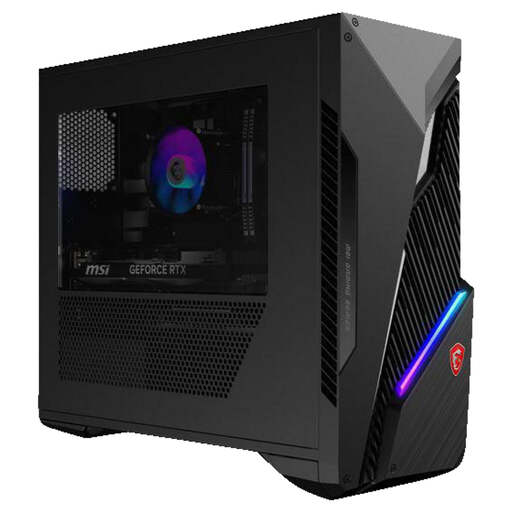 Image unavailable
MSI MAG Infinite S3 14NVM7-3002EU
Compare this larger desktop with your simulator’s requirements, and measure up beforehand to make sure the case will fit your setup.
The configuration lists an Intel Core i7-14700F, RTX 5060 Ti, 16 GB of memory and a 1 TB SSD.
The case is listed as 32 litres and measures 173,8 × 446,97 × 407,17 mm. Free 2.5- and 3.5-inch storage bays are listed.
View at Joybuy
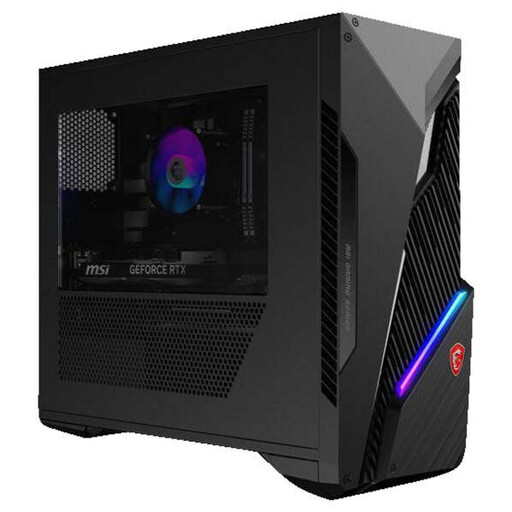 Image unavailable
MSI MAG Infinite S3 14NVM5-2873EU
This larger desktop is an option to consider if you want to weigh up the space the case takes against your simulator’s requirements.
The configuration lists an Intel Core i5-14400F, RTX 5060 Ti, 16 GB of memory and a 1 TB SSD.
The case is listed as 32 litres and measures 173,8 × 446,97 × 407,17 mm. Free 2.5- and 3.5-inch storage bays are listed.
View at Joybuy
Frequently asked questions
Do you need to choose iRacing to practise on a wet racing line?
No. iRacing supports rain only on suitable paved road-racing circuits and in sessions with compatible cars. Assetto Corsa Competizione also describes dynamic weather. Choose the simulator you want to use first; your PC doesn’t determine which weather scenarios the game offers.
Are iRacing’s minimum system requirements enough for a rain session?
The minimum requirements alone don’t tell you that. iRacing describes them as the absolute minimum for minimal graphics in test mode. Compare the recommended requirements with the full PC configuration and your intended screen setup; even then, a specific frame rate isn’t guaranteed.
What should you check before connecting a racing wheel and pedals?
Check that your controls are compatible with your chosen simulator, and count the connections available on the exact PC model. iRacing recommends a force-feedback wheel with pedals for an immersive online racing experience; it isn’t a general requirement for every sim racer.
What are your rights when buying a PC online in the Netherlands?
According to ACM ConsuWijzer, online purchases generally come with a 14-day cooling-off period after delivery, subject to exceptions such as certain made-to-order products. The seller must also put things right at no cost if a product, when used normally, doesn’t do what you could reasonably expect. This could mean a repair, replacement or refund. It doesn’t mean that every PC has a fixed two-year statutory warranty period.


