Who is this buying guide for?

Players who want every beat to count

You want what you hear and see to line up. So compare your complete audio setup, not just the PC’s processing power. Microsoft describes audio latency as the time between a sound being produced and you hearing it.

Players who enjoy different games

You play rhythm games but want to use the same PC for other games too. Before choosing extra graphics power, compare the requirements of each game with the exact configuration.

Players with a small desk

You have limited space for your PC, monitor and headphone cable. As well as checking the case size, look at the ports and the space needed for ventilation.

What should you look for when buying?

Compact gaming desktop

Good for: a small workspace, provided the exact configuration meets your gaming and connectivity needs.

Bear in mind: the case size doesn’t tell you whether your complete audio setup will have low latency.

Larger gaming tower

Good for: a permanent space and playing rhythm games alongside other demanding games.

Bear in mind: more space or graphics power won’t necessarily be useful for every rhythm game.

Configurable gaming tower

Good for: anyone who wants to choose their processor, graphics card and memory to suit different uses.

Bear in mind: check the full configuration again; the model name alone doesn’t tell you exactly what’s included.

What to consider What should you check? Who is it important for?
Sound and timing Check that the exact PC has the connection your headphones need. Also look at the connection type and any USB receiver. If you want to hear each hit as close to the beat as possible, consider the complete combination of PC, software, connection and headphones. Around 36% of consumers prioritise timing.
Smooth gameplay Compare the processor, graphics card, memory and operating system of the configuration you’ve chosen with your games’ requirements. If you need to follow visual cues clearly in your chosen games, check the requirements for each one. Around 29% of consumers give smooth visuals top priority.
The right configuration Make a note of your games and other uses, then compare complete configurations rather than just the graphics card’s name. If you don’t want to pay for performance you don’t need, choose a PC that suits the way you’ll use it. Around 21% of consumers prioritise value for money.
Space and ports Check the case dimensions, where the ports you need are located, and the space required for cables and ventilation. If you have a small desk, you’ll want the case and connections to fit neatly into your setup. Around 14% of consumers say limited space is their main concern.

Buying pitfalls

  • Assuming a more powerful graphics card will fix delayed headphone audio

    Audio latency can occur at different points in the audio chain. A more powerful graphics card therefore doesn’t prove that sound will reach you faster.

    First, check the connection, headphones and connection type. Then compare the PC with your games’ requirements.

  • Assuming PCs in the same product range are identical

    A product range may include configurations with different components. For example, the OMEN 16L TG03-0057nd is a different model from the TG03-0600nd.

    Check the full model number and the components in the specific configuration before applying product information to another PC.

  • Confusing the manufacturer’s warranty with your statutory rights

    According to the Dutch government, there is no fixed statutory warranty period in the Netherlands. If a product is faulty, the retailer remains your point of contact.

    Before choosing a paid warranty plan, check what extra cover it provides.

    A paid warranty plan may involve extra costs, so compare the additional cover it offers.

Brands to consider

HP

The OMEN 16L TG03-0600nd is a compact model to compare if you’re short on space.

  • For this configuration, HP lists Windows 11 Home, 16 GB RAM and a 1 TB SSD.
  • These specifications don’t prove that a particular headphone setup will have low latency. Other OMEN 16L configurations aren’t necessarily the same model.

Lenovo

The Legion Tower 5 Gen 10 is a larger tower to compare if your PC will have a permanent spot.

  • For item 90YJ002AMH, Lenovo lists 16 GB RAM and a 1 TB SSD.
  • The model name doesn’t tell you what performance to expect in a specific rhythm game or with a particular pair of headphones. Check the exact configuration.

Dell

The Alienware Aurora ACT1250 is worth comparing if you want to configure a gaming tower yourself.

  • Dell offers processor and graphics card options on its Dutch product page.
  • Dell says that your chosen configuration options may change other specifications. So check the final build.

ASUS

The ROG G700 is a full tower to compare if space and the option to make upgrades matter to you.

  • ASUS highlights tool-free access and standard components for the G700.
  • The listed processor and graphics card options described as ‘up to’ won’t necessarily apply to every configuration. A bigger case isn’t in itself an advantage for rhythm games.

Acer

The Nitro 50 is a gaming desktop range worth comparing with compact and larger towers.

  • Acer describes configurations with a range of components.
  • Specifications quoted as the maximum for the product range don’t automatically apply to an individual model.

Gaming PCs at Joybuy

This selection includes compact gaming PCs and larger towers to compare with the requirements of your rhythm games, headphones and available space.
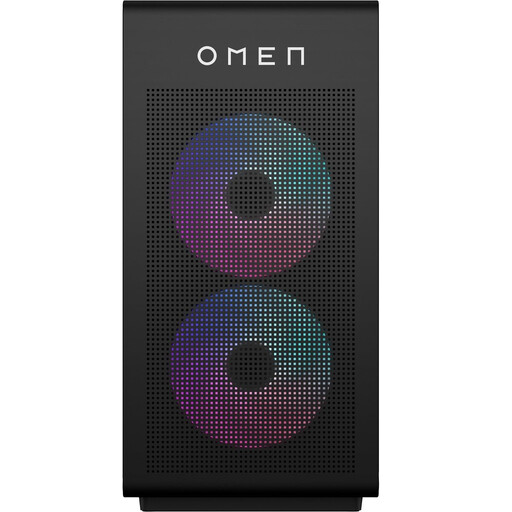
HP OMEN 35L Gaming Desktop GT16-0160nd C2FK7EA#ABH

HP OMEN 35L Gaming Desktop GT16-0160nd C2FK7EA#ABH

A larger gaming tower to compare if you have a permanent spot for it and want to tailor the configuration to your games.

16 GB DDR5, 1 TB SSD, Intel Core i7-14700F and RTX 5060. The product description calls for at least 10 cm of clearance all around and advises against use in an enclosed cabinet.

View at Joybuy
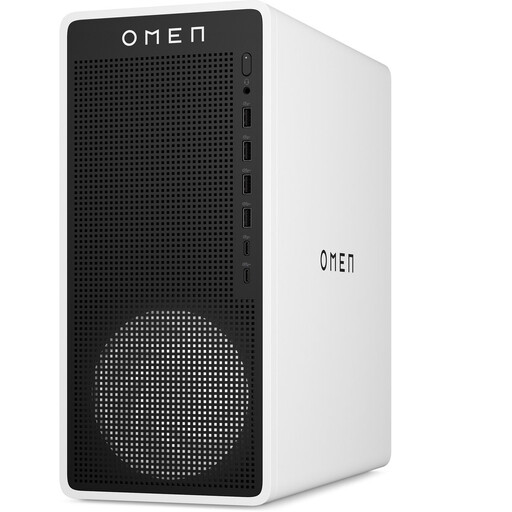
HP OMEN 16L Gaming Desktop TG03-0057nd C3YP0EA#ABH

HP OMEN 16L Gaming Desktop TG03-0057nd C3YP0EA#ABH

A compact desktop to compare if you have limited desk space; check that the configuration suits your games.

Intel Core Ultra 7 265F, RTX 5050, 16 GB DDR5 and 1 TB SSD. The product description calls for at least 10 cm of clearance all around and advises against use in an enclosed cabinet.

View at Joybuy
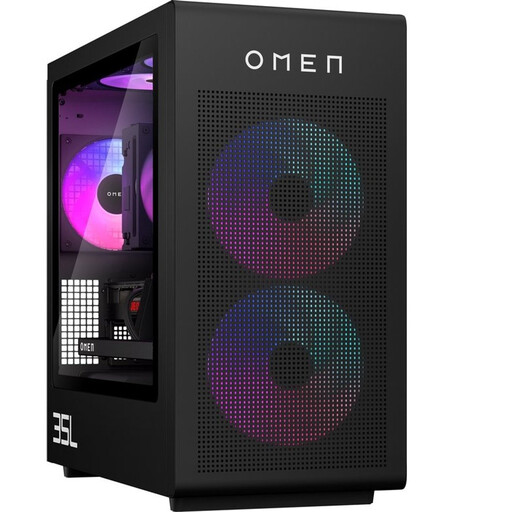
HP OMEN 35L Gaming Desktop GT16-0162nd D49NFEA#ABH

HP OMEN 35L Gaming Desktop GT16-0162nd D49NFEA#ABH

A gaming desktop to compare if you have a permanent spot for it and need a headphone connection.

16 GB DDR5, 1 TB SSD, Intel Core i7-14700F, RTX 5060 Ti and a headphone output.

View at Joybuy
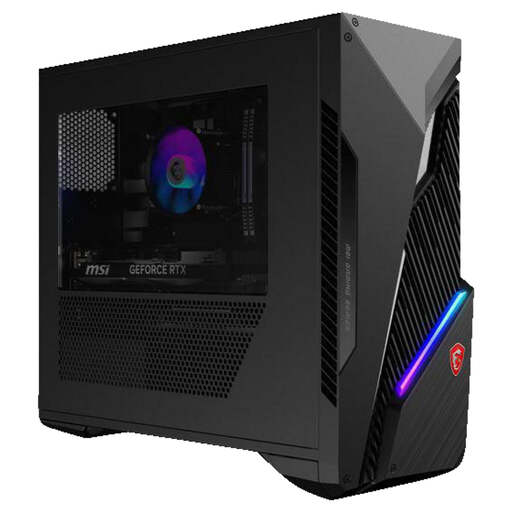
MSI MAG Infinite S3 14NVM7-3002EU

MSI MAG Infinite S3 14NVM7-3002EU

A gaming PC to compare with the requirements of your games, with a headphone output listed in the configuration table.

Intel Core i7-14700F, RTX 5060 Ti, 16 GB memory and a 1 TB SSD. A headphone output alone doesn’t tell you anything about latency across your complete audio setup.

View at Joybuy

FIREBAT F1 Mini PC with AMD Ryzen 5 7640HS

FIREBAT F1 Mini PC with AMD Ryzen 5 7640HS

A compact mini PC to compare if you’re short on space; check the listed configuration against your games’ requirements.

24 GB LPDDR5 RAM, 512 GB PCIe 4.0 SSD and Radeon 760M graphics.

View at Joybuy

Frequently asked questions

Should you choose wired headphones for rhythm games?

If timing is your priority, wired headphones are a sensible starting point for comparison. RTINGS describes differences between connection types; a headset with a 2.4GHz USB receiver may also perform differently from Bluetooth. These general differences don’t predict latency across your complete setup.

What can you do if the picture and sound seem out of sync?

First, test the headphones you actually use and check the selected audio output and any sound processing. Microsoft describes several stages in the audio chain; don’t assume that a faster PC component will fix latency throughout the entire setup.

Are you automatically entitled to exactly two years’ statutory warranty on a gaming PC in the Netherlands?

No. According to the Dutch government, there is no fixed statutory warranty period in the Netherlands: a product should last as long as you can reasonably expect it to. If a product is faulty, the retailer is your point of contact; a manufacturer’s warranty is in addition to your statutory rights.

Which product safety rules are relevant when buying in the Netherlands?

New electrical and electronic devices placed on the Dutch market must comply with the applicable European rules. The Dutch government explains that the manufacturer must provide the required CE marking and EU declaration of conformity. A shop listing alone doesn’t verify the documents for a specific item.

Do all the Cyber Resilience Act requirements already apply to a new PC?

No. The Dutch Ondernemersplein states that the reporting obligation for manufacturers has applied since 11 September 2026, while most of the other rules will only apply from 11 December 2027. So don’t treat those later requirements as if they were already fully in force.
