Who is this choice for?

Reaction trainer looking for minimal latency

You train with short visual stimuli and want to assess latency from input to display, rather than relying solely on a high fps claim. NVIDIA describes input devices, the PC and the screen as parts of the latency chain.

Big-screen gamer with an existing TV

You want to connect your PC to a large TV and need to check which resolution, refresh rate and gaming mode your exact TV supports. HDMI Licensing Administrator describes ALLM, for example, as a feature that allows a compatible device to switch a screen to a low-latency mode.

Buyer putting together a complete training setup

You’re choosing a PC and screen together and want to divide your budget between PC performance, a suitable screen and the other parts of the input-to-display chain. NVIDIA and HDMI Licensing Administrator describe aspects of system latency and gaming features for screens respectively.

What should you look for when buying?

PC with a large-screen TV

Best for: training from further away or using a screen that also serves other purposes. Check that both the TV and the PC connection support your desired resolution and refresh rate.

Keep in mind: image processing may mean you need a dedicated gaming mode. ALLM can switch a compatible TV to a low-latency mode automatically; otherwise, you may need to change the setting manually.

PC with a large gaming monitor

Best for: sitting close to the screen and making the most of its stated refresh rate and adaptive sync. Check that the connection you choose supports your desired display mode, and that your PC can deliver enough frames in your software.

Keep in mind: a high stated refresh rate doesn’t tell you everything about overall latency; your input devices and PC matter too. FreeSync requires a compatible combination of screen and graphics hardware.

Consideration What should you check? Who is this important for?
Input-to-display latency Compare performance in your game or training software and check the screen’s latency mode. If I’m training with short stimuli, I want to know where latency can arise across the whole chain. Around 33% of consumers prioritise input-to-display latency.
Screen compatibility Check the exact screen model, the desired resolution and Hz over the connection you plan to use, including any VRR support. If I want to keep my large TV or monitor, the PC needs to display the picture mode I want over the connection I’ve chosen. Around 27% of consumers prioritise screen compatibility.
Consistent training sessions Compare the complete configuration and look for relevant performance tests. Also check the cooling and upgrade options of the exact model. If I train regularly, I want to be able to assess a configuration that suits the way I use it. Around 20% of consumers prioritise consistent sessions.
Cost of the complete setup Set a total budget for the PC, screen and any connections you may need; check which components are included. If I want to choose a PC and large screen together, I need to make sure I don’t overlook the cost of a suitable screen setup. Around 20% of consumers prioritise the overall budget.

Common mistakes

  • Choosing based only on the graphics card or an fps claim

    Your peripherals and screen also contribute to overall latency. A graphics card name or fps figure therefore doesn’t tell you about the whole chain.

    Start with your training, screen and desired display mode. Then assess the performance of the specific PC configuration.

  • Assuming HDMI or 120 Hz will always give you the same display mode

    The available display mode depends on the connections and settings of both the PC and the screen.

    Check the specifications of both connections. Once everything is connected, select the display mode you want from those actually available.

  • Using a TV without checking its latency mode

    A TV may use a different image processing mode for gaming than it does for films.

    Check the gaming mode on your exact TV model and see whether both the TV and PC support ALLM. If not, you may need to set the mode manually.

Brands to consider

HP OMEN

A desktop range to compare complete gaming PC configurations.

  • For the OMEN 35L GT16-0606nd, HP lists a Core Ultra 7 265F, RTX 5070 Ti, 32 GB RAM and 2 TB SSD. HP also mentions tool-free upgrades.
  • These details apply to that specific model; they aren’t measured frame rates and don’t automatically describe every OMEN PC.

Lenovo Legion

A desktop range with configurations you can compare against your existing screen and intended use.

  • For item 90YJ002AMH, Lenovo lists a Ryzen 7 7700X, RTX 5070, 16 GB RAM and 1 TB SSD.
  • Check the exact configuration and availability; this list of components alone won’t tell you what fps to expect in your training.

Acer Predator

According to Acer, the Orion range includes various models, from compact desktops to larger systems.

  • Acer describes the range as upgrade-friendly.
  • The range name doesn’t confirm which processor, connections or performance a specific PC on offer has. Check the exact model.

Dell Alienware

A desktop range to compare complete gaming setups with other configurations.

  • Dell describes Aurora models with RTX 50-series graphics cards and a choice of cooling options.
  • This description of the range doesn’t automatically apply to every configuration. Check the component list for the exact model.

Gaming PCs at Joybuy

These gaming desktops are options to compare as the PC foundation for a large screen. Match your choice to the resolution, refresh rate and training software you use.
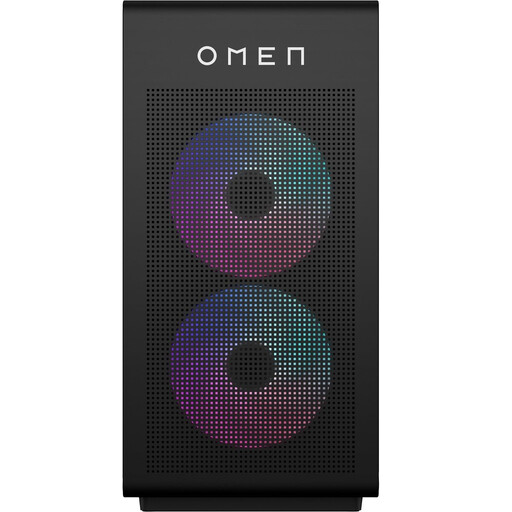
HP OMEN 35L Gaming Desktop GT16-0160nd

HP OMEN 35L Gaming Desktop GT16-0160nd C2FK7EA#ABH

A configuration to compare if you’re looking for a gaming PC for a large screen. Check its performance with your own software and display mode.

Core i7-14700F, RTX 5060, 16 GB DDR5 and 1 TB SSD. The description lists HDMI 2.1 and DisplayPort 2.1.

Joybuy

Shark Max Bite R500 gaming PC

Shark Max Bite R500 Gaming PC RTX5060/R5/16GB/500GB

Compare this PC against the resolution and settings you use for your training.

Ryzen 5 5500, RTX 5060, 16 GB DDR4 and a 500 GB NVMe SSD. The description mentions gaming at 1080p and 1440p.

Joybuy
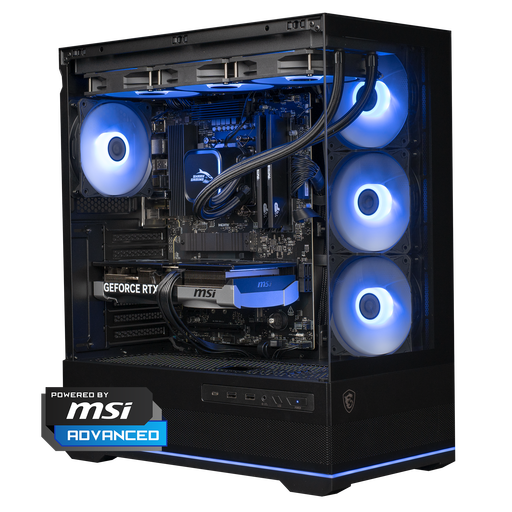
Shark Ultimator R700 gaming PC

Shark Ultimator R700 Gaming PC RTX5070/R7/16GB/1TB

Consider this configuration as one option for a large screen, and compare its components with the requirements of your training software.

Ryzen 7 7800X3D, RTX 5070 with 12 GB, 16 GB DDR5 and 1 TB NVMe storage.

Joybuy
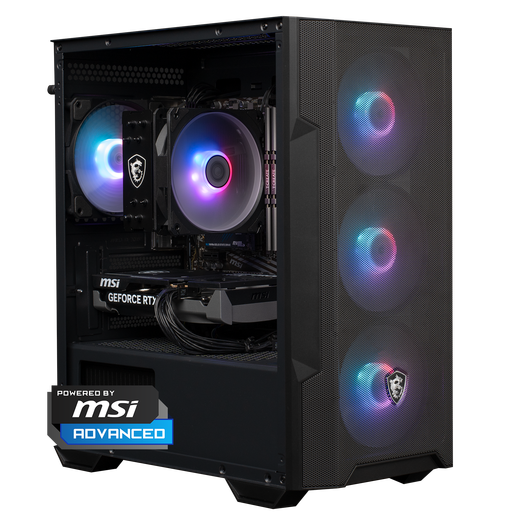
Shark Max Bite R501 gaming PC

Shark Max Bite R501 Gaming PC RTX5060/R5/16GB/1TB

Compare this PC with your desired display mode and the performance your training software needs.

Ryzen 5 5500, RTX 5060, 16 GB DDR4 and a 1 TB NVMe SSD. The description mentions gaming at 1080p and 1440p.

Joybuy

RGB gaming PC with RTX 5060 and Ryzen 5

RGB Gaming PC RTX 5060 Ryzen 5 16 GB 480 GB SSD

A PC option to compare for gaming on a large screen. Check that the configuration suits your training software.

Ryzen 5 5500, RTX 5060, 16 GB DDR4 and a 480 GB SSD. The description also lists a USB Wi-Fi AC600 adapter included and gaming at 1080p and 1440p.

Joybuy

Frequently asked questions

Does a higher fps automatically mean a faster response on screen?

No. A higher fps doesn’t automatically guarantee lower overall latency. NVIDIA also describes input devices and the screen as parts of the latency chain, so assess your complete setup and the settings in your game or training software.

How do I set the refresh rate after connecting my screen?

In Windows, select the connected display and check the available refresh rates in the display settings. If the setting you want isn’t available, check the supported screen input, PC output and connection. Microsoft Support explains how to change the refresh rate in Windows.

Should I switch on gaming mode on a TV?

Use a low-latency mode if your TV offers one. According to HDMI Licensing Administrator, a device that supports ALLM can switch the screen to this kind of mode automatically; otherwise, you may need to set it manually. Check the features of your exact TV model.

How can I keep a desktop suitable for longer sessions?

Keep the ventilation openings clear and follow the manufacturer’s instructions for your exact model on placement and cleaning. A mention of liquid cooling or an airflow design doesn’t prove how the PC will perform under your workload.

What are my rights if a PC I bought online doesn’t work properly?

In the Netherlands, a product must meet what you could reasonably expect from it under normal use. According to ACM ConsuWijzer, the seller is responsible for providing an appropriate solution if the product is faulty, such as a repair, replacement or refund. For distance purchases, the Dutch government also says you generally have a 14-day cooling-off period; check which exceptions apply to your purchase.
