What should you look for when choosing?
Compact gaming desktop
A good fit if: your PC needs to sit on or beside a desk with limited space. Compare the dimensions of the exact version with the space available, including room for cables.
Trade-off: a smaller case won’t solve a lack of ventilation space, and without comparable measurements, noise levels and performance can’t be established.
Larger, upgradeable tower
A good fit if: you can position the case away from your desk and connections or future upgrades are important to you.
Trade-off: a tower takes up more space and needs good airflow; adding extra hardware does not, by itself, prove that latency during training will be lower.
| What to consider |
What to look for |
Who is this most important for? |
| Latency during reaction tasks |
Check that the exact PC and monitor are suitable for your software. Where possible, compare input-to-display measurements using the same settings. |
If I mainly train with reaction tasks, I want to assess the whole setup rather than just an FPS figure. Around 36% of consumers say latency is their top purchasing priority. |
| Space and ventilation |
Measure the space, room for cables and clearance around the chosen version’s ventilation openings. |
If my desk is also my workspace, I want to keep enough room while still allowing the case to ventilate freely. Around 22% of consumers say fitting a PC on their desk is their top purchasing priority. |
| Connections and upgrades |
Check the memory and storage configuration and the connections your equipment needs against the complete model number. |
If I want to change parts or peripherals later, I want to know what this version actually offers. Around 21% of consumers say upgradeability is their top purchasing priority. |
| Total cost |
Check what’s included with the PC and compare the software requirements. Only estimate electricity costs using appropriately measured power consumption, hours of use and your tariff. |
If I’m budgeting for a complete training setup, I want to take into account the equipment I already have and still need. Around 21% of consumers say total cost is their top purchasing priority. |
The percentages show a possible breakdown of the purchasing priorities listed, not measured market shares. NVIDIA Research found that lower system latency can improve performance in specific first-person aiming tasks; this is no guarantee for other software or users.
Gaming PCs on Joybuy
This Joybuy selection features gaming desktops with specified processor and graphics card configurations for anyone comparing PCs for reaction-time training. The specifications alone don’t indicate measured reaction time.
 No image available
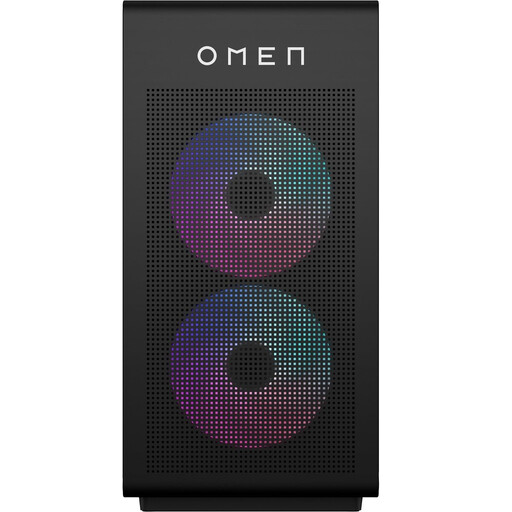
OMEN 35L Gaming Desktop GT16-0160nd C2FK7EA#ABH
A desktop with a specified processor and graphics card to compare with your training software requirements.
Intel Core i7-14700F; GeForce RTX 5060; 16 GB DDR5; 1 TB SSD; Windows 11 Home.
Joybuy
 No image available
Shark Max Bite R500 Gaming PC, Powered by MSI
A gaming PC with specified components to check against the requirements of your own training software.
Ryzen 5 5500; GeForce RTX 5060; 16 GB DDR4; 500 GB NVMe storage; Windows 11 Home; MSI MAG Forge M100R case.
Joybuy
 No image available
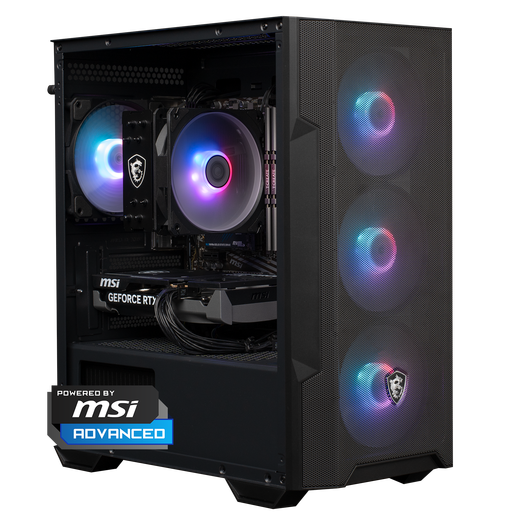
Shark Max Bite R501 Gaming PC, Powered by MSI
A gaming PC with specified components to check against the requirements of your own training software.
Ryzen 5 5500; GeForce RTX 5060; 16 GB DDR4; 1 TB NVMe storage; Windows 11 Home; MSI MAG Forge M100R case.
Joybuy
 No image available
RGB Gaming PC RTX 5060 Ryzen 5 16 GB 480 GB SSD
A gaming PC with a specified processor and graphics card to compare with your training software requirements.
Ryzen 5 5500; GeForce RTX 5060; 16 GB DDR4; 480 GB SSD; Windows; MSI MAG Forge M100A case; four fans.
Joybuy
 No image available
Panoramic Gaming PC AMD Ryzen 7 5700X RTX 5060 Ti
A gaming PC with a specified processor and graphics card to compare with your training software requirements.
AMD Ryzen 7 5700X; GeForce RTX 5060 Ti 8GB; 16 GB DDR4; 480 GB NVMe PCIe SSD; Windows 11; Corsair 2800X case.
Joybuy
Frequently asked questions
Is a higher refresh rate on its own enough for better reaction-time training?
No, not by itself: latency across the whole setup also matters. Research into first-person aiming tasks involving eight skilled esports players found that lower latency was important; this result doesn’t guarantee better performance for other users or software.
How should I position and maintain a PC on a shared desk?
Keep the vents clear and follow the manual for your chosen PC. HP Support recommends ensuring adequate ventilation for HP desktops and regularly cleaning the vents; follow the manufacturer’s instructions for maintenance.
Why should I check the complete model number?
Because components and connections can vary between versions. Lenovo Netherlands lists an RTX 5070 in the short title and an RTX 5070 Ti in the specifications for the Legion Tower 5i Gen 10 90YA0027MH. Ask for the GPU specification to be confirmed before you buy or compare it.
What product regulations apply to desktop computers in the Netherlands?
Desktops sold in the EU are subject to the applicable ecodesign requirements under Regulation (EU) No 617/2013, as described by the European Commission. The manufacturer is responsible for the applicable EU conformity assessment and for applying the CE marking where required by the rules, according to Your Europe. This says nothing about a PC’s reaction time; check the information for the exact version.
Can I return a gaming PC bought online?
For distance purchases from a business, you usually have a 14-day cooling-off period, according to the Dutch Government. There are exceptions, including products made to order, so check whether any apply to your purchase. For your statutory guarantee rights, in addition to any manufacturer’s or seller’s warranty, see the information from ACM ConsuWijzer.


