
Trainer using visual timing tests
Wants a clearly perceptible visual response and compares the PC with the monitor, rather than focusing solely on the graphics card’s name.


Start by checking the requirements of your training software, monitor and headset connection, then assess the exact PC configuration. Intel explains that each device in a setup can add latency; RTINGS measures monitor input lag by model and mode, so a powerful graphics card alone won’t tell you how quickly the whole setup responds.
Wants a clearly perceptible visual response and compares the PC with the monitor, rather than focusing solely on the graphics card’s name.
Uses a headset for audio cues, so takes the PC’s audio technology and connections into account when choosing.
Wants to use training software now and may upgrade components later, so the exact configuration and room for expansion are important.
First choose the software, monitor and audio connection you plan to use, then compare the PC with that specific setup. Intel explains that devices in a setup can add latency; as RTINGS points out, a monitor input-lag measurement applies to the model and mode tested.
| What to consider | What to look for when buying | Who is this important for? |
|---|---|---|
| Visual response | Check your training software’s requirements, your chosen resolution and settings, the display output, and input-lag measurements for the monitor mode you plan to use. | If I’m doing visual timing tests, I want to assess the PC and monitor as one setup. Visual response is the top priority for around 40% of consumers considering this choice. |
| Headset audio | Check which audio or USB connection you need and how your headset connects to PC audio. Bluetooth LE Audio requires compatible devices and software; Microsoft describes it as having lower latency than Bluetooth Classic Audio. | If you’re training with audio cues, you’ll want to know whether your chosen headset and PC support the connection you need. Around 30% of consumers give audio timing and compatibility top priority. |
| Complete setup | Make a note of the monitor, headset and input devices you already have, and check what your training software requires. | If I need to put together the whole training setup, I want to know in advance which components I still need. Around 20% of consumers prioritise the total cost of their purchase. |
| Upgradeability | Compare the upgrade options and configuration of the exact model variant; don’t rely on the case alone. | If you want to upgrade components later, it’s useful to know the details and upgrade options of the specific version. Upgradeability is the top priority for around 10% of consumers. |
A frame-rate claim doesn’t measure latency across the whole chain. The PC, monitor, input devices and settings can all affect what you perceive during a timing test.
Compare your training software’s requirements with your chosen PC settings, and look for input-lag measurements for the specific monitor model and mode you plan to use.
A monitor or connection that doesn’t suit your intended setup may mean you need a different component.
Simply having Bluetooth doesn’t tell you which audio mode the PC and headset use. Microsoft says Bluetooth LE Audio requires compatibility on both sides; a headset with a USB dongle also uses a different connection from Bluetooth.
Check the audio connection for the exact headset model and whether your PC supports the required feature. If possible, test the combination with your training software.
You may need a different headset or a compatible USB dongle if your chosen devices don’t support the same connection.
A manufacturer may offer different processors, graphics cards and memory capacities within the same product line. That means a specification for the range won’t necessarily apply to every PC with that product name.
Compare the full model or product code with the specifications for the version you’re considering.
Legion Tower desktops are worth comparing if you’re looking for a system with a specific configuration.
OMEN 35L desktops are worth comparing by model code if you’re looking for a ready-to-use configuration.
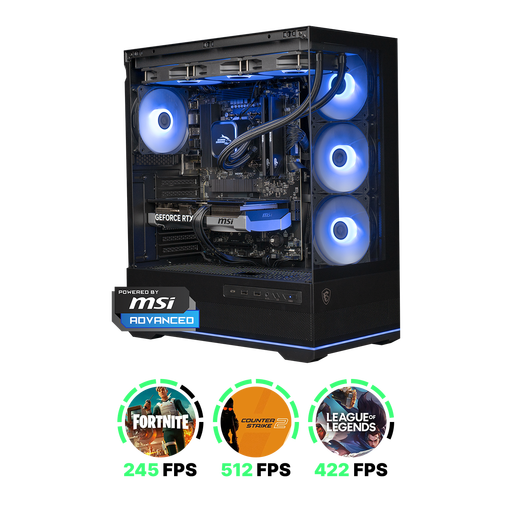
The MAG Infinite S AI 2nd product line is a useful starting point for checking the connections and upgrade options of a specific version.
The Predator Orion 3000 is worth comparing if you’re considering a compact gaming desktop.
These ready-to-use gaming desktops are options to compare for a setup with training software, a monitor and a headset. Check that the connections and specifications of each version suit your needs.
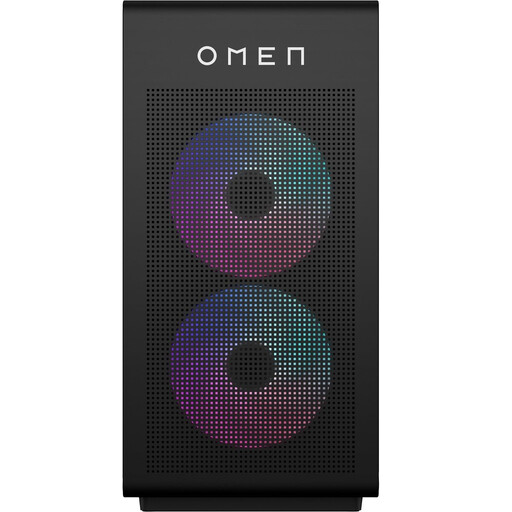 No image available
A ready-to-use gaming desktop to compare with your training software and monitor requirements.
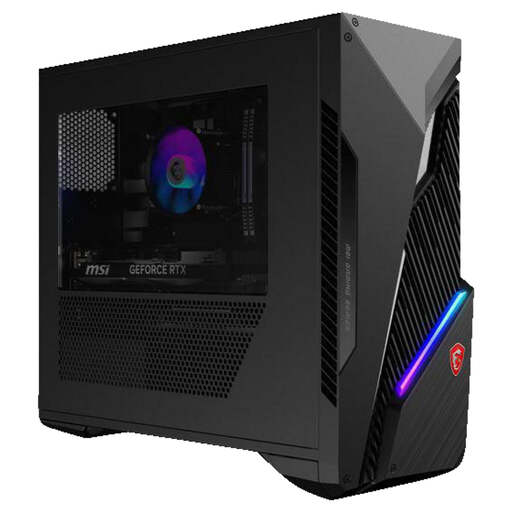 No image available
A gaming PC to consider for visual timing tests; compare its configuration with your software and monitor requirements.
The product name lists an Intel Core i7 and RTX 5060 Ti.
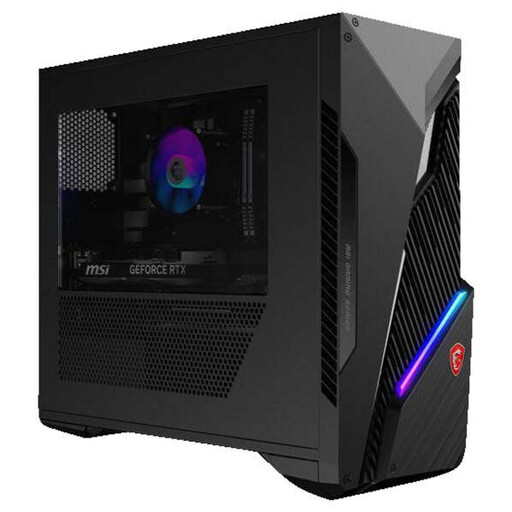 No image available
A gaming PC to match to your training software requirements and monitor settings.
The product name lists an Intel Core i5 and RTX 5060 Ti.
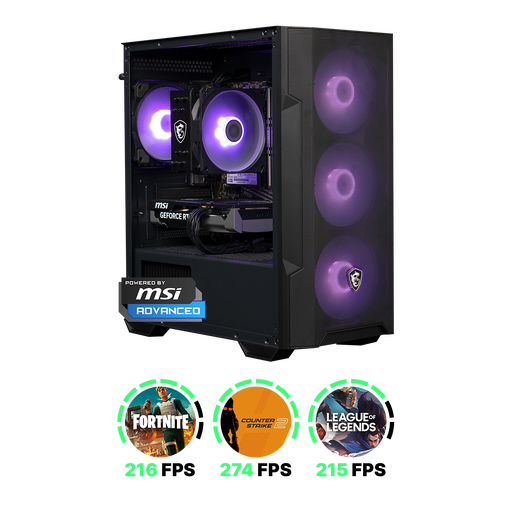 No image available
A gaming PC to compare with the software and screen settings you plan to use for reaction-time training.
The product name lists RTX 5060, R5, 16 GB and 500 GB.
 No image available
A gaming PC to assess against your training software requirements and the rest of your setup.
The product name lists RTX 5070, R7, 16 GB and 1 TB.
No. Also check input-lag measurements for the specific monitor model and mode you plan to use, and whether your PC can run your training software with your chosen settings. Monitor input lag isn’t the same as the total delay between a stimulus, the PC and your response.
Choose a connection that both the PC and headset support. For example, a headset may use a USB dongle with a 2.4 GHz connection for PC audio, while Bluetooth is a separate feature. Check the exact model and test it with your training software.
According to ACM ConsuWijzer, online product purchases usually come with a statutory cooling-off period of up to 14 days after delivery, with some exceptions. You’re also covered by the statutory guarantee if a product doesn’t meet the expectations you could reasonably have under normal use; this isn’t automatically limited to the stated manufacturer’s warranty.