
Sim racer using one screen
You want to practise wet corners and changing grip, and choose a PC to suit your racing simulation and screen settings. iRacing and Kunos Simulazioni explain how rain and track conditions play a part in their simulations.


Start with the racing simulation and your screen setup: practising on one monitor calls for a different approach from playing across multiple screens or in VR. Then weigh up the graphics configuration against cooling, noise and the space available for the case. Compact doesn’t automatically mean quiet, and you don’t necessarily need a more powerful desktop for a single screen.
You want to practise wet corners and changing grip, and choose a PC to suit your racing simulation and screen settings. iRacing and Kunos Simulazioni explain how rain and track conditions play a part in their simulations.
You need to put your desktop in a shared room and weigh up noise against cooling. A PC needs cooling, but how noisy it seems depends on the complete setup.
You have limited room for your PC alongside your screen and controls, and are comparing compact and larger cases. Look beyond the size and check how much clearance is needed for ventilation.
Best for: when desk space is limited and you mainly practise on one screen.
Trade-off: check the ventilation, connections and upgrade options on the exact model; a compact size says nothing about how noisy it is while gaming.
Best for: when you have room for a larger case or are considering a different screen setup.
Trade-off: compare the components in each configuration; extra case or cooler space alone doesn’t prove that the PC is quieter.
Best for: when you want to choose the case, fans and components individually to suit your noise and space requirements.
Trade-off: you’ll need to assess compatibility, assembly and support yourself; information about individual fans isn’t a noise measurement for a complete PC.
| What to consider | What to check before buying | Who is this most important to? |
|---|---|---|
| Visuals and graphics configuration | Make a note of the simulation, screens, resolution and settings you want; then compare the exact GPU, video memory, CPU and RAM with the simulation’s requirements. | If I want to practise on wet tracks with a clear picture, I’ll choose based on my simulation and screen settings; around 33% of consumers put visual performance first. |
| Noise and cooling | Ask for a measurement under a similar gaming load, if one is available; check the fan controls and keep the air intake and exhaust clear. | If someone else is resting in the same room, I want to weigh up noise without compromising cooling; around 27% of consumers prioritise peace and quiet in the bedroom. |
| Dimensions and placement | Compare the dimensions of the exact case with the space available, and check where the PC draws in and expels air. | If my desk has little room, the desktop needs to fit without blocking the ventilation openings; around 20% of consumers put limited space at the top of their list. |
| Running costs and future purchases | Budget for the complete setup and, if you wish, measure its actual power consumption; check the upgrade options for the exact configuration. | I want to weigh up the cost of the PC and the rest of my setup; around 20% of consumers put running costs and future purchases first. |
A general label doesn’t tell you whether the configuration suits your simulation, screen setup and preferred settings. iRacing describes its minimum system requirements as being for minimum graphics settings in test mode.
Choose your simulation, screens and preferred session first. Then check the components in the exact PC against the system requirements.
If the configuration doesn’t suit your settings, you may need a different configuration or to adjust the graphics settings.
Case size and information about individual fans aren’t a measurement of the noise made by a complete PC during a racing session.
Where possible, compare noise measurements under a similar load and position the case so that its air vents remain clear.
Products in the same desktop range can differ in model number and components; a similar series name doesn’t prove that the configurations are identical.
Before buying, check the full model number, configuration, seller and current availability.
The OMEN configurations listed in the Netherlands show how models within a single product range can differ.
The Legion Tower 5 Gen 10 is an example of a larger desktop configuration whose components can be compared model by model.
The Predator Orion 3000 range is an example of how to consider case size and graphics configuration together.
The MPG Trident AS 10th range illustrates a compact desktop design for situations where space is a major consideration.
This selection includes compact and larger gaming desktops with a dedicated graphics card. Compare the configuration and case size with your simulation, screen setup and available space, and keep the ventilation openings clear.
 No image available
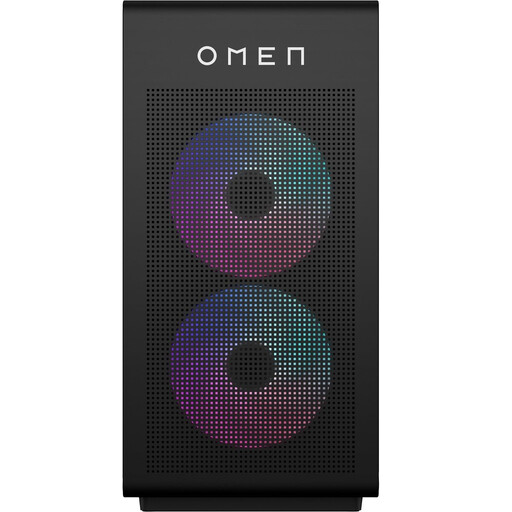
Suitable for a setup with room for a larger desktop; check that the case will fit in your chosen spot before buying.
Intel Core i7-14700F, RTX 5060 with 8 GB, 16 GB DDR5 and a 1 TB SSD.
Leave at least 10 cm of clearance on all sides; don’t use the PC in an enclosed cabinet.
 No image available
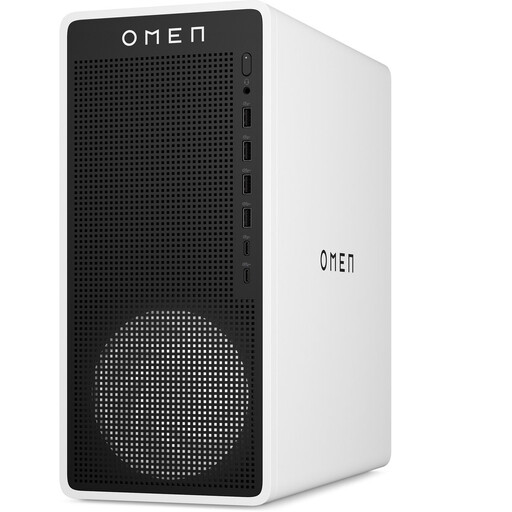
Suitable for a desk where a more compact case is preferred; keep the ventilation openings clear.
Intel Core Ultra 7 265F, RTX 5050 with 8 GB, 16 GB DDR5 and a 1 TB SSD.
The instructions call for at least 10 cm of clearance on all sides and advise against using it in an enclosed cabinet.
 No image available
A compact case can help when space is limited; measure the available space and keep the air vents clear.
Ryzen 5 5500, RTX 5060 with 8 GB, 16 GB memory, 500 GB NVMe SSD and Windows 11 Home.
The product information lists an MSI MAG FORGE M100R case.
 No image available
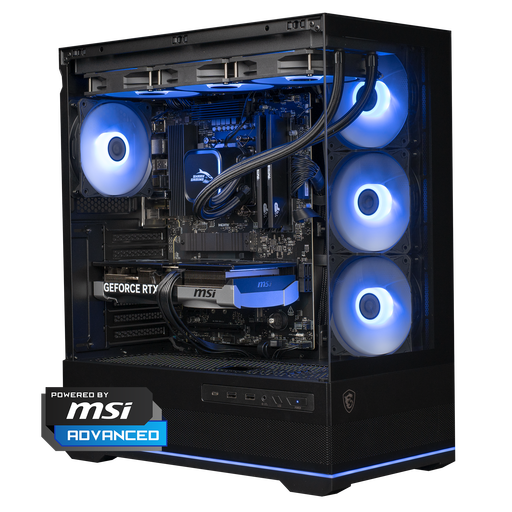
Consider this larger desktop only if the stated case dimensions suit your setup.
Ryzen 7 7800X3D, RTX 5070 with 12 GB, 16 GB DDR5, 1 TB NVMe storage and a 360 mm liquid cooler.
The stated dimensions are 420 × 225 × 485 mm.
 No image available
Compare the configuration with your racing simulation’s requirements and the screen settings you want to use.
Ryzen 5 5500, RTX 5060 with 8 GB, 16 GB DDR4, 480 GB NVMe SSD and Wi-Fi.
No. According to iRacing, rain is only possible on paved road courses and in sessions with cars that are suitable for wet conditions. So check the car and session you’ve chosen too; a different PC can’t make an unsuitable session suitable.
No. iRacing describes its minimum requirements as being for minimum graphics settings in test mode. Compare the current requirements with your own screen setup and the settings you want to use.
Keep the air intake and exhaust clear and, where possible, compare noise measurements under a similar gaming load. Follow the instructions for the exact model when cleaning or opening the PC.
Measure its consumption during your own use and multiply the kilowatt-hours measured by your electricity rate. Milieu Centraal notes that gaming PCs often use a lot of electricity; actual consumption depends on the PC and how long you use it.
Electrical products offered on the EU market must meet the applicable safety requirements and carry the required CE marking. The Dutch government outlines this requirement for electrical appliances; check the documentation and marking on the actual device, as a product title alone doesn’t prove compliance.