What should you consider when choosing?
Start with the requirements for your engine version and project, then decide which configuration fits. Assess the complete PC’s noise levels under a relevant workload, rather than relying on the case name or design alone.
| What to consider |
What should you check? |
Who is this important for? |
| Noise and cooling |
Ask for noise data for the complete configuration under a relevant workload, and check the coolers and space for airflow. Don’t assume a PC is quiet just because of its case name. |
If I work for long periods in a quiet study, I want cooling that keeps the PC at a safe temperature without fan noise disturbing my concentration; around 36% of consumers put quiet operation and cooling first. |
| Suitable 2D performance |
Check the engine version, project size and programmes you’ll have open at the same time. Godot Engine describes a simple basic project for version 4.4; these aren’t universal requirements for every version. |
For simple 2D puzzles, I don’t want to pay for graphics capacity my engine and project don’t need. Around 29% of consumers prioritise suitable 2D performance. |
| Capacity for 3D projects |
Check the requirements of the engine features you use, and distinguish between system RAM and graphics memory. For Unreal Engine 5 on Windows, Epic Games recommends 32 GB of RAM and at least 8 GB of graphics memory; that isn’t a requirement for every puzzle project. |
For large 3D levels, I want to match the PC to the engine features and project size; around 21% of consumers put high-end 3D performance first. |
| Upgrade options |
For the exact model, check the available memory slots, storage options, power supply and service terms. |
As my project grows, I want to know whether I can upgrade the PC later, rather than choosing the wrong version; around 14% of consumers prioritise upgrade options. |
Joybuy products for level design
This selection from Joybuy includes compact systems for lighter levels and towers for more demanding 3D work or combined design and testing tasks.
 No image available
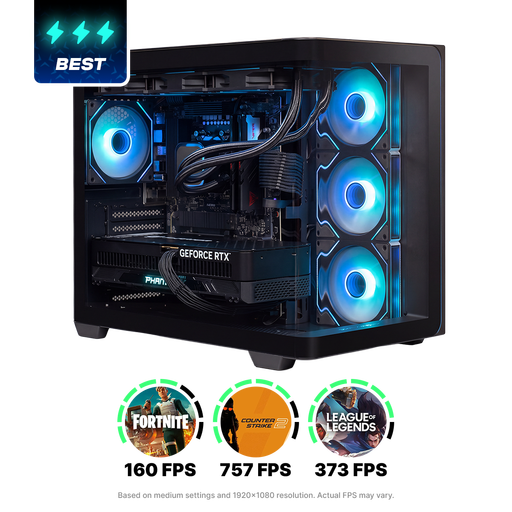
Almighty Shark R900 gaming desktop, RTX 5090, Ryzen 9, 32 GB RAM
A configuration to compare if you’re working on larger 3D projects and have checked the relevant engine requirements.
The product information lists a Ryzen 9, Windows 11 Home, 32 GB of RAM and an RTX 5090 with 24 GB of graphics memory. It also mentions a 2 TB NVMe SSD and a 360 mm liquid cooler.
Keep the ventilation openings clear and place the PC on a stable, flat surface.
View at Joybuy
 No image available
Lenovo Legion T5 30IAX10, Core Ultra 7, RTX 5070, 32 GB DDR5
A tower to compare for more demanding editing and testing tasks. Check that the exact version suits your engine and project.
The product information lists a Core Ultra 7, 32 GB DDR5, an RTX 5070, a 1 TB SSD, Wi-Fi 7 and Windows 11 Home. Support for up to 64 GB of memory and additional storage is also mentioned.
Keep the cooling vents clear and leave enough space for airflow.
View at Joybuy
 No image available
FIREBAT F1 mini PC, Ryzen 5 7640HS, 24 GB LPDDR5
A compact option to compare for simple levels. Check the requirements for your engine version and project before choosing.
The product title lists 24 GB LPDDR5, a 512 GB PCIe 4.0 SSD and Radeon 760M graphics. The title describes the system as quiet, but that isn’t a noise measurement of the PC under your workload.
View at Joybuy
 No image available
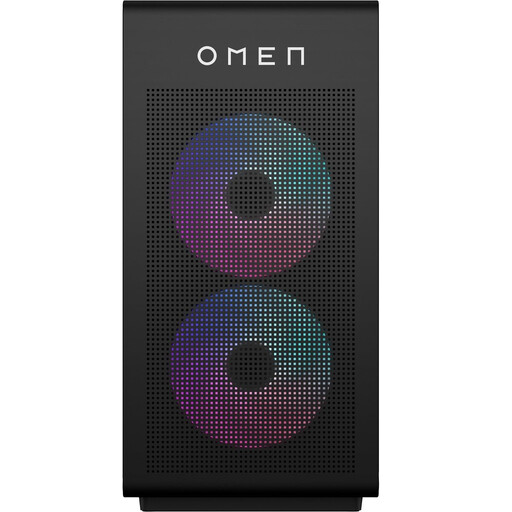
OMEN 35L GT16-0160nd C2FK7EA#ABH
A complete tower to compare for designing and testing. Match the configuration to the software and project you use.
The product information lists a Core i7-14700F, RTX 5060, 16 GB of RAM and a 1 TB SSD. Upgradeable memory is also mentioned.
Place the desktop on a hard, flat surface with good ventilation and at least 10 cm of clearance. Don’t use it in an enclosed cabinet.
View at Joybuy
 No image available
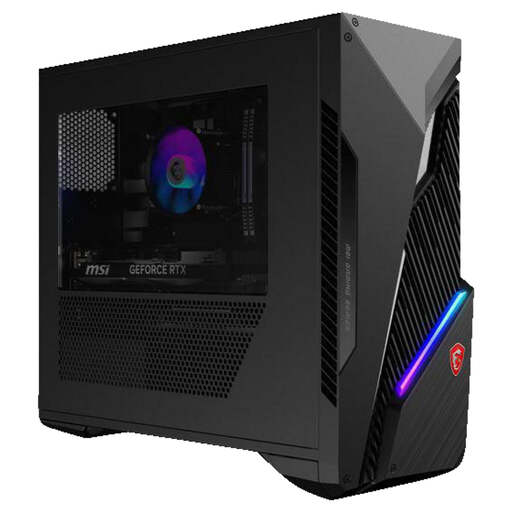
MSI MAG Infinite S3 14NVM7-3002EU, Core i7-14700F, RTX 5060 Ti
Compare this desktop with the requirements of your editor and testing software, and check that the memory suits the size of your project.
The product information lists a Core i7-14700F, RTX 5060 Ti and 16 GB of RAM. MSI describes Silent Storm Cooling as designed for low noise levels, but that isn’t a measurement of the noise during your work.
View at Joybuy
Frequently asked questions
Do I need a powerful dedicated graphics card for a simple 2D puzzle level?
Not necessarily. Depending on the renderer, the minimum requirements published by Godot Engine for a simple project in version 4.4 also include integrated graphics. Those requirements don’t automatically apply to your engine version, other software or larger projects, so check them separately.
Where should I put the tower in my study?
Keep the ventilation openings clear and follow the placement instructions for the exact model. Joybuy’s product information for the OMEN 35L GT16-0160nd specifies a hard, flat surface with good ventilation and at least 10 cm of clearance. Check the guidance for the PC you choose.
What can I do if the PC breaks down sooner than I could reasonably expect?
You can assert your statutory rights with the seller if the product is faulty. ACM ConsuWijzer states that if a product breaks sooner than expected under normal use, the seller must put it right free of charge, for example by repairing or replacing it, or refunding you. The appropriate solution depends on the circumstances.
When buying online in the Netherlands, do I always have 14 days to change my mind, even for a custom-built PC?
Online purchases generally come with a statutory 14-day cooling-off period from delivery, but an exception may apply to customised products. The Netherlands Authority for Consumers and Markets (ACM) states that a computer assembled to order from the options offered may be covered by the cooling-off period, while products made to an individual consumer’s specifications may be exempt. Check the details of your specific order.


