
Designer with few power sockets
You want to set up a workspace for interface design and gaming without stacking adapters and screens unsafely. The available power sockets will partly determine which setup is practical.


Start by counting the power sockets your entire setup needs, then choose a computer to suit your design software, games and screen. You don’t necessarily need a powerful gaming desktop for Figma. A laptop with its own screen could remove the need for a separate monitor, while a compact desktop can save space for an external power adapter without necessarily using less electricity. Check the ports and power supply for each configuration, and don’t simply connect extension leads to one another.
You want to set up a workspace for interface design and gaming without stacking adapters and screens unsafely. The available power sockets will partly determine which setup is practical.
You have specific requirements for games, resolution or frame rate as well as your design work, and want to choose the graphics configuration accordingly.
You’re looking for a desktop gaming PC that fits on your desk and comparing compact cases with larger towers that may offer more room for upgrades.
Choose this option: if you mainly design interfaces, also want to game and want to limit the number of devices that stay plugged in.
Bear in mind: an external screen still needs a connection. Check whether the laptop and monitor support both video and suitable power over a single USB-C cable.
Choose this option: if a desktop PC suits you but desk space is limited.
Bear in mind: the PC and a separate screen will usually each need a power socket. A built-in power supply saves space for an adapter, but not necessarily a socket.
Choose this option: if you have a dedicated workspace and the exact gaming configuration or future upgrades matter more than size.
Bear in mind: the tower and separate screen need to be plugged in independently. The stated power supply rating is not a measure of actual electricity consumption.
| Consideration | What to check before buying | Who is this important to? |
|---|---|---|
| Safe connections | Count the plugs for your PC, screen and chargers. Check the extension lead’s load rating and what else is connected to the same circuit. | If I have few sockets, I want to connect my whole setup without linking extension leads unsafely. Around 33% of consumers put safe connections first. |
| Interface design | Check which software you use, which operating systems it supports and how it connects to your screen. Figma says its software is primarily browser-based. | If my computer is mainly for interface design, I want to know what hardware my software and screen setup actually require. Around 27% of consumers prioritise their design workflow. |
| Gaming performance | Match the exact GPU configuration to your games, screen resolution and desired frame rate. | If I play demanding games, I want to choose a configuration that suits my games and screen, rather than relying on the model name alone. Around 20% of consumers prioritise gaming performance. |
| Size and upgrades | Measure the case and allow room for cables and ventilation. Check the available memory and storage options for each configuration. | If desk space is limited, I want to know whether the PC will fit and which upgrades the configuration allows. Around 20% of consumers prioritise desk space. |
More sockets don’t increase the load that the socket or circuit can handle. The Dutch Fire Service warns that using too many extension leads, or connecting them to one another, can cause an overload and fire.
First, list all your devices and their connections. Check the stated load rating and don’t use damaged extension leads. Don’t simply connect extension leads to one another.
A power supply specification, such as the 500 W rating listed for a specific Lenovo configuration, doesn’t measure how much electricity the PC uses while you’re designing or gaming.
To compare electricity consumption, look at figures for complete systems tested under similar conditions. Don’t estimate consumption or costs using only the power supply label.
Compact dimensions describe the case, not the number of sockets needed for your complete setup. A separate screen will usually need power too.
Check how each configuration is powered, and count the plugs for the PC, screen and other equipment separately.
The MPG Trident AS 14th is a compact desktop worth comparing if saving space for an adapter and potential memory or storage upgrades are important to you.
The ROG NUC (2025) is a mini PC option worth comparing if desk space is limited.
The Legion Tower 5 Gen 10 (30L AMD) is a larger tower option for a dedicated workspace where the exact configuration matters.
The OMEN 35L is a tower range worth comparing for a dedicated gaming setup and potential upgrades.
The Alienware Aurora ACT1250 is a configurable gaming tower worth comparing if a dedicated desktop with its own power connection suits you.
These Joybuy product picks are gaming laptops with a built-in screen, designed for workspaces where a separate monitor isn’t always needed. You’ll still need to consider the laptop and its included or required power adapter when planning your connections.
 No image available
The built-in screen could remove the need for a separate monitor if it suits your design work.
Core i7-14700HX; RTX 5070; 32 GB of memory; 1 TB storage; 16-inch IPS screen with 2560 × 1600 pixels and 240 Hz.
 No image available
The built-in screen gives you an option for interface work without a separate monitor on your desk.
Core Ultra 9; RTX 5070 Ti; 32 GB of memory; 1 TB SSD; 16-inch WQXGA screen; QWERTY keyboard.
 No image available
The built-in 17.3-inch screen could replace an external monitor if it suits your work and viewing distance.
Intel Core 7 240H; RTX 5050; 16 GB DDR5 memory; 512 GB SSD; 17.3-inch Full HD screen; Wi-Fi 6E.
 No image available
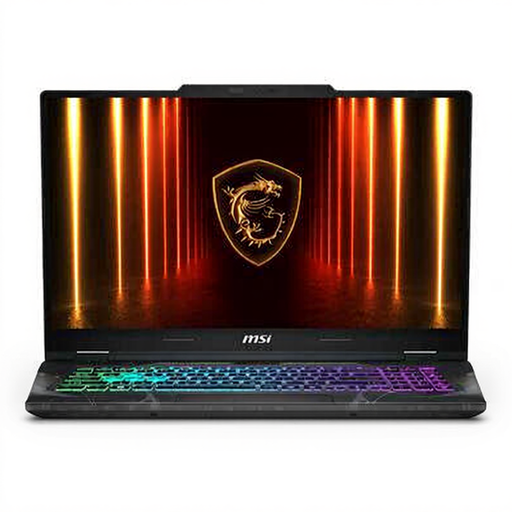
The built-in 16-inch screen is an alternative to a separate monitor in a small workspace.
Ryzen 9 9955HX; RTX 5070 Ti; 16 GB of memory; 1 TB SSD; screen with 2560 × 1600 pixels.
The power adapter must be purchased separately.
 No image available
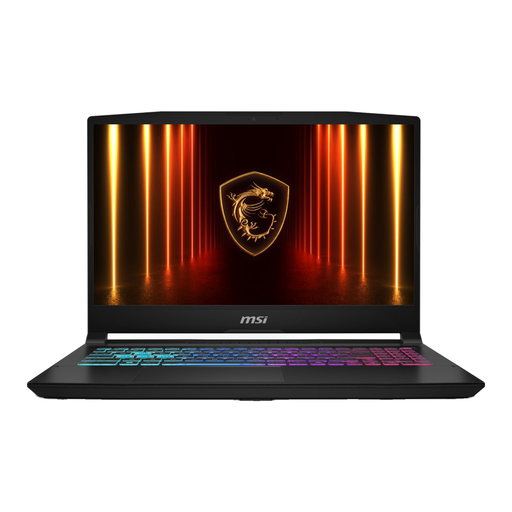
The built-in 15.6-inch screen could be enough if you don’t need a separate monitor.
Core i7-13620H; RTX 5060; 16 GB of memory; 512 GB SSD; 15.6-inch Full HD screen with 144 Hz.
The power adapter must be purchased separately.
Not just for Figma: Figma says its software is primarily browser-based and works on supported full desktop operating systems. Choose the rest of your hardware to suit your other software and the games you want to play.
Don’t simply do this. The Dutch Fire Service warns that using too many extension leads, or connecting them to one another, can cause an overload and fire. Check the load for your entire setup and don’t use damaged extension leads.
Only if both devices support the required video and power functions, and the power is sufficient for your laptop and how you use it. Dell lists video, data and power of up to 90 W over a single cable for a specific USB-C hub monitor. This doesn’t confirm compatibility or the power requirements of every gaming laptop.
When you buy as a consumer, you’re entitled to a legal guarantee if the product doesn’t meet the standard you could reasonably expect under normal use. ACM ConsuWijzer says the seller must resolve an appropriate issue free of charge; a manufacturer’s warranty doesn’t automatically limit this statutory right. Online purchases often also come with a 14-day cooling-off period after delivery, subject to legal exceptions.
Anyone placing or selling electrical or electronic equipment on the market in the Netherlands must ensure it complies with the applicable European rules. The Dutch government describes the CE marking and EU Declaration of Conformity required for the device where applicable. A brand name or product listing alone doesn’t confirm that a specific configuration complies with those rules.