
Pilot who wants a panoramic mountain view
You want to see the scenery across several screens, so you’ll need to assess your simulator’s display options and graphics demands.


First decide whether your extra screens will show separate outside views, create one wide outside view or mainly display cockpit instruments. Then check that your chosen simulator supports your setup and confirm the ports on the exact graphics card. Compare the processor, video memory and RAM with your simulator’s requirements; those requirements don’t prove how well it will perform at your total screen resolution.
You want to see the scenery across several screens, so you’ll need to assess your simulator’s display options and graphics demands.
You use your main screen for the view and want cockpit information on a separate display. Check the window options and connections first.
You’re starting with a smaller setup but want room for more memory, storage or screens. Compare the full specification, not just the model range.
Choose this if: you want each side screen to show a different view of the mountain scenery.
Trade-off: check that your simulator supports extra views. Separate images demand more from your setup than a dedicated instrument screen alone.
Choose this if: you’d prefer one continuous outside view to separate, individually adjustable viewing angles.
Trade-off: check the supported resolutions and screen alignment. NVIDIA describes Surround as displaying across all connected Surround screens, but that doesn’t confirm how angled screens will look in your simulator.
Choose this if: cockpit information is your priority and you don’t need an extra outside view on every screen.
Trade-off: you won’t get the same wide outside view as you would with extra viewing angles. Check the window and instrument options in your chosen simulator.
| What to consider | What to check before buying | Who should prioritise this? |
|---|---|---|
| Panoramic mountain views | Note the number of screens, their total resolution and the viewing angles you want. Then check your simulator’s features and the outputs on the exact graphics card. | If I want to use the side screens for extra viewing angles, a wide mountain panorama comes first; around 36% of consumers say panoramic views are their top buying priority. |
| Smooth performance | Compare the processor, GPU, video memory and RAM with the requirements of the simulator you actually use. The official system requirements for Microsoft Flight Simulator and Laminar Research’s X-Plane are useful guidelines, not a performance test for your screen setup. | For me, smooth flying on my chosen simulator and screen resolution matters most; around 29% of consumers put smooth performance at the top of their list. |
| Cockpit on a separate screen | Check how the simulator arranges windows and instruments, and whether the connections will work with every screen in your setup. | If I want to see cockpit information separately without replacing the outside view, this layout is my main concern; around 21% of consumers give an overview of the instruments top priority. |
| Cost and upgrades | Compare the full specification and check what upgrades are possible for memory, storage and screens. Ask in advance about the terms and costs of any changes. | I want to weigh up the purchase against possible future upgrades and the rest of my setup; around 14% of consumers say upgrade options and total cost are their top priority. |
A mention of monitor support doesn’t prove that a PC can handle your total resolution or display several separate outside views smoothly. Official system requirements aren’t a performance test for your specific route and screen layout.
First, decide how many outside views you need and note the total screen resolution. Then assess the exact PC specification for the simulator you want to use.
A model range or short title doesn’t always tell you which components are included in the product you’ll receive. For the Lenovo configuration 90YA0027MH, the short GPU description differs from the detailed specification on the manufacturer’s page.
Before buying, ask for confirmation of the full model number, graphics card, video memory, RAM and video outputs on the configuration that will be supplied.
The screens, connections and any flight controls you need are also part of the overall setup. Microsoft lists budget, available space and the level of immersion you want as factors when choosing a hardware setup.
Work out which screens and controls you actually want to use, then check how they’ll connect to your chosen PC.
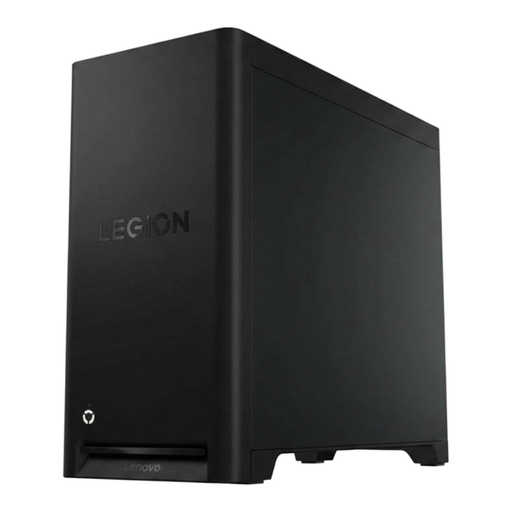
The Legion Tower 5i Gen 10 configuration 90YA0027MH is a specific model you can compare component by component. Lenovo lists 32 GB RAM; its detailed GPU specification names an RTX 5070 Ti with 16 GB VRAM.
The OMEN MAX 45L GT23-0693nd is a specific configuration for which HP lists 32 GB RAM, a 2 TB SSD and an RTX 5080 with 16 GB VRAM.
The Joybuy product description for the Ultimator R700 configuration lists a Ryzen 7 7800X3D, an RTX 5070 and 16 GB RAM.
These PCs are a starting point for a desktop setup with multiple simulator screens. Check that the connections and specification suit the screen layout you want.
 No image available
The product description states support for up to four independent displays. Check that the available outputs and your simulator suit the screen layout you want.
Intel Core Ultra 7; 32 GB DDR5; 1 TB PCIe 4.0 SSD; NVIDIA GeForce RTX 5070; 12 GB video memory according to the product description; Wi-Fi 7; Windows 11 Home. The description states that the memory can be upgraded to 64 GB.
Before ordering, check with the seller for the CE information for this exact configuration.
 No image available
The product description states that the memory can be upgraded to 32 GB. Check whether the current specification suits your simulator and future plans.
AMD Ryzen 5; 16 GB RAM; 1 TB SSD; RTX 5060; 8 GB video memory according to the product description.
Before ordering, check with the seller for the CE information for this exact configuration.
Start with the simulator you actually plan to use. Microsoft Flight Simulator and Laminar Research list different system requirements; the requirements for one simulator don’t prove performance in the other or on your screen setup.
Start with the multi-monitor settings in your simulator. Microsoft Flight Simulator’s documentation describes additional render windows; check the options and controls in your installed version before choosing hardware specifically for this purpose.
No. Microsoft Flight Simulator lists 32 GB RAM as recommended and 64 GB as ideal. These are different official guidelines, not a guarantee of a particular frame rate across multiple screens.
According to ACM ConsuWijzer, consumers generally have up to 14 days from delivery to change their mind about online purchases, subject to legal exceptions. If a product is faulty, the seller is responsible for the statutory guarantee; it isn’t simply a fixed two-year period for every PC.
Electrical products must meet applicable EU product requirements, including CE marking. RVO and the Dutch Government explain the product rules, but that information doesn’t prove that a specific PC configuration complies. Ask the seller for information about the exact model.