
Builder of large Factorio factories
Wants to stop a growing factory from slowing down the simulation, so keeps UPS—the update rate of the game world—separate from graphical FPS.


Start with the game and work out whether the simulation is slowing down or the visuals are stuttering. The Factorio Wiki distinguishes between UPS and FPS, while Satisfactory also has specific graphics card requirements. Then compare the full processor, graphics card, memory and storage configuration, and check the case size, ventilation clearance and noise levels under load for your home office.
Wants to stop a growing factory from slowing down the simulation, so keeps UPS—the update rate of the game world—separate from graphical FPS.
Plays games such as Satisfactory and wants to weigh up the processor, graphics card and RAM as a complete configuration against the game's requirements.
Also uses a desktop for everyday work, so needs to consider its position, ventilation clearance, upgrade options and noise levels.
First choose your game and decide what kind of slowdown you want to avoid. Then compare the full PC configuration with your workspace and any upgrade plans.
| What to consider | What should you check? | Who is this important for? |
|---|---|---|
| Simulation speed | Check the exact processor model and amount of RAM. In an existing Factorio save, check the FPS, UPS and timing diagnostics separately; the Factorio Wiki explains that low UPS can slow down the game world. | If my large Factorio factory starts running more slowly, I want to know whether the simulation or just the visuals are stuttering. Around 36% of consumers make simulation speed their top priority. |
| 3D visuals | Compare the exact GPU model and video memory with the requirements of your chosen game. For the recommended configuration, the Official Satisfactory Wiki lists 16 GB RAM and an RTX 2070 or RX 5700, or equivalent performance, with 8 GB VRAM. This does not guarantee a particular frame rate. | If I mainly play a 3D factory game, I want to match the graphics card and video memory to the game and my display settings. Around 29% of consumers prioritise 3D visuals. |
| Positioning and upgrades | Measure the available space and check the dimensions of the case, access to ports, clear ventilation openings and upgrade options for the exact model. | If my desktop is going in a permanent spot in my home office, I want to know whether it will fit and whether I can access the parts I might want to change later. Around 21% of consumers give workspace and upgradeability top priority. |
| Purchase and aftercare | Compare the CPU, GPU, RAM and SSD for one exact model. Check what’s included and who to contact about your statutory rights. | If I’m buying a complete PC, I want to compare the model accurately and know who’s responsible for aftercare. Around 14% of consumers prioritise purchase and aftercare. |
In Factorio, low UPS can slow down the game world, even when graphical FPS isn’t the cause of the problem.
Check FPS and UPS separately before choosing components.
The Official Satisfactory Wiki states that the system requirements don’t guarantee a configuration will work in every situation.
Use the requirements as a basis for comparison, and take the exact configuration, factory and graphics settings into account.
The full codes G700TF-07265F200W and G700TF-07265F666W are different; the ROG G700 model name alone doesn’t prove that they’re the same version.
Before buying, compare the full model code and the specifications of the version you’re actually choosing.
The Legion Tower 5 is a range worth considering if you want to compare the full configuration of a particular version.
The OMEN 35L is a desktop range worth considering if easy access to components and a larger tower are important to you.
The ROG G700 is a full-tower range; compare the full model code before comparing different versions.
The MAG Infinite S3 14th is a range worth comparing for case dimensions, ports and possible configurations.
These desktops are options for comparing configurations for factory-building games. Consider the individual components for each game and use case.
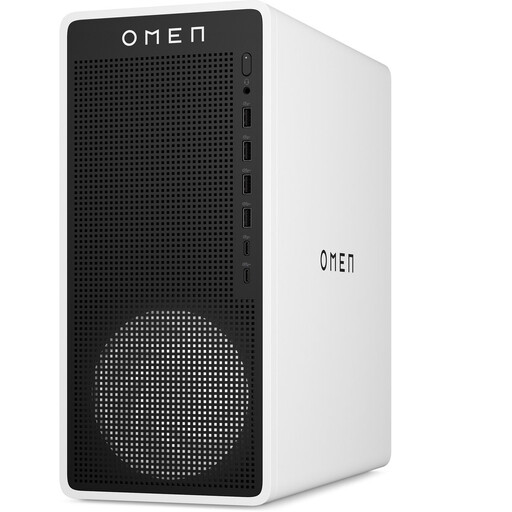 Image unavailable
The listed 16 GB RAM matches the recommended memory capacity for Satisfactory; on its own, this doesn’t predict performance in a particular factory.
Core Ultra 7; RTX 5050 with 8 GB; 16 GB DDR5; 1 TB SSD; 16-litre chassis.
 Image unavailable
This version lists 16 GB RAM, a useful point of comparison for Satisfactory's recommended memory capacity.
Ryzen 5 5500; RTX 5060 with 8 GB; 16 GB DDR4; 500 GB NVMe SSD; MSI MAG FORGE M100R case.
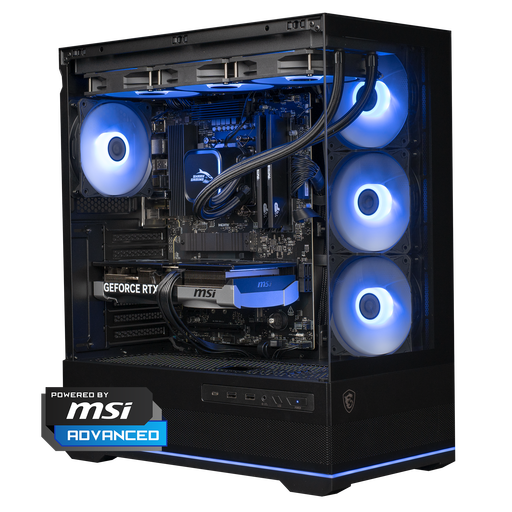 Image unavailable
The configuration lists the processor, graphics card and video memory, so you can compare these components with your game's requirements.
Ryzen 7 7800X3D; RTX 5070 with 12 GB; 16 GB DDR5; 1 TB NVMe SSD; MSI MAG PANO 110R PZ case.
 Image unavailable
The listed memory capacity matches the recommended RAM size for Satisfactory; also check that the other components suit your game and settings.
Ryzen 5 5500; RTX 5060 with 8 GB; 16 GB RAM; 480 GB SSD; MSI MAG Forge M100A case; four ARGB fans; USB Wi-Fi adapter.
 Image unavailable
The configuration lists 16 GB DDR4 and a dedicated graphics card; assess both against the requirements of your chosen factory game.
Ryzen 7 5700X; RTX 5060 Ti with 8 GB; 16 GB DDR4; 480 GB NVMe SSD. The description lists Windows 11 as an evaluation version.
Not before checking what’s causing the slowdown. Factorio distinguishes between FPS for the visuals and UPS for the simulation; check the timing diagnostics for that save before choosing components.
The Official Satisfactory Wiki lists 16 GB RAM as a recommended system requirement. This doesn’t guarantee a particular level of performance in every factory, and doesn’t account for the space used by other open programmes.
Measure the space for the case and check that the ventilation openings will remain clear and the ports accessible. To find out how noisy it is while gaming, look for a measurement of the exact version; a description of the cooling system isn’t a noise measurement.
No. A fixed commercial warranty period doesn’t, by itself, determine how long your statutory rights apply. According to the Netherlands Authority for Consumers and Markets, the seller is responsible if a consumer product doesn’t meet what you could reasonably expect from it; a commercial warranty doesn’t replace that responsibility.
For online sales, you generally have a 14-day cooling-off period after delivery. The Netherlands Authority for Consumers and Markets distinguishes between computers assembled from the options offered and products made to the consumer’s own specifications; check which situation applies to your order.