
Builder of large factories
You want your factory to remain playable as it grows, so you’re comparing the PC as a whole rather than just the graphics card. The developers of Factorio explain that large factories can hit a limit on updates per second.


Match your PC to the game and the size of factory you’re aiming to build. For large Factorio factories, it’s worth assessing the complete system, including the processor and memory, as well as the graphics card. Choose a graphics card to suit your screen’s resolution and settings, too. In a bright room, consider the brightness and reflections of the separate monitor; a more powerful PC won’t solve screen reflections.
You want your factory to remain playable as it grows, so you’re comparing the PC as a whole rather than just the graphics card. The developers of Factorio explain that large factories can hit a limit on updates per second.
You want to be able to see diagrams and text clearly. Brightness and screen finish are separate considerations from your choice of PC; ASUS ROG also highlights reflections and brightness across the whole screen.
You may want to upgrade the memory or storage later, or use other programmes at the same time. Compare the specifications and upgrade options for the exact version you’re considering: a product range can include different configurations.
Start with the game and the size of factory you’re aiming to build. Then decide on your screen resolution and preferred settings, before comparing the components and upgrade options of the exact PC configuration.
| What to consider | What to look for when buying | Who is this important for? |
|---|---|---|
| Simulation in large factories | Compare the processor and memory in the complete configuration; look for tests using similar games and factory sizes where available. | If I want to keep expanding a large factory, I’ll compare the whole PC rather than just the graphics card. Around 40% of consumers put simulation performance first. |
| Readability in daylight | Assess the screen’s brightness across the whole display, finish and reflections; also consider where it will be positioned in relation to windows. | If I play in a bright room during the day, I want to be able to read text and diagrams without reflections getting in the way. Around 30% of consumers give daylight readability top priority. |
| Graphics settings and resolution | Match the exact GPU model to the game, resolution and settings you want; check that the connections are compatible with your screen. | If I want to use a higher resolution or different graphics settings, I’ll check that the graphics card and my screen are compatible. Around 20% of consumers put this graphics connection first. |
| Upgrades and multitasking | Check the memory, SSD capacity and upgrade options for the exact item number, as well as what’s included. | If I might need more space later or use other programmes at the same time, I want to know what the specific tower can accommodate. Around 10% of consumers put upgradeability first. |
With very large factories, the workload from game updates can limit the experience; an impressive graphics card name doesn’t prove that it will solve this problem.
First, decide which game you’ll play and how large a factory you’re aiming to build. Then compare the complete PC, including its processor and memory.
Peak brightness isn’t the same as brightness across the whole screen. Reflections and the light in your room also make a difference.
Check the screen’s specifications and finish, and consider its position in relation to light sources before looking at a more powerful PC.
Different versions in the same tower range can have different components. For example, Lenovo lists a 512 GB SSD and no keyboard or mouse for version 90YJCTO1WWNL1; these details don’t automatically apply to other versions.
Check the item number, components and box contents for the version you want to buy.
The Legion Tower 5 is a range of gaming towers. For version 90YJCTO1WWNL1, Lenovo Netherlands lists a Ryzen 5 7600, RTX 5060, 16 GB RAM and 512 GB SSD.
The OMEN 35L range includes several desktop versions. For GT16-0606nd, HP lists a Core Ultra 7 265F, RTX 5070 Ti, 32 GB RAM and 2 TB SSD.
The Predator Orion 3000 is a tower range worth comparing if space for the case is a consideration.
The ROG G700 is a larger tower range for those considering space for a separate case and access to components.
The MAG Infinite Z 8B is a gaming desktop range you can compare version by version.
These gaming PCs are configurations to compare for factory-building games, for example by processor, graphics card, memory and storage. Choose a PC to suit the game you play and the screen you use.
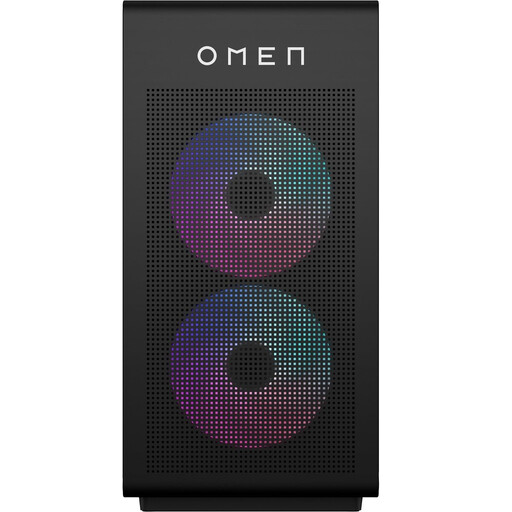 Image unavailable
A configuration to compare as a complete PC for factory-building games, taking both the processor and graphics card into account.
Intel Core i7-14700F; RTX 5060; 16 GB DDR5; 1 TB SSD. The description says the memory can be upgraded.
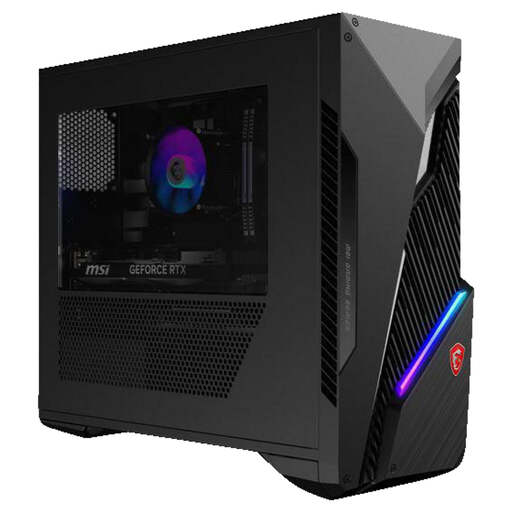 Image unavailable
An option for assessing the processor, graphics card and storage as part of the same configuration.
Intel Core i7-14700F; RTX 5060 Ti; 16 GB memory; 1 TB SSD. The configuration table lists empty 2.5-inch and 3.5-inch drive bays.
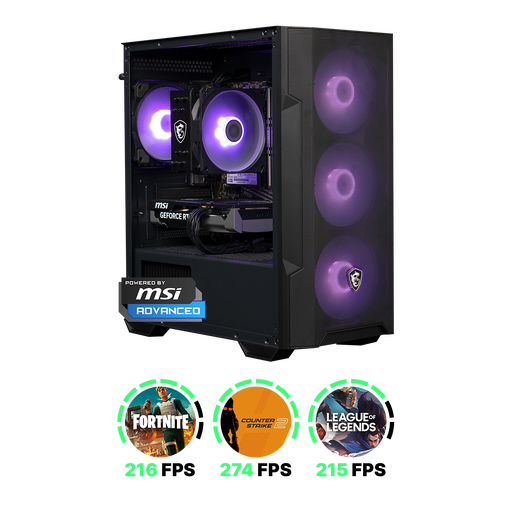 Image unavailable
Compare this PC if you want to consider the listed processor, graphics card and storage together for your game.
Ryzen 5; RTX 5060; 16 GB memory; 500 GB NVMe SSD. The product description says that the charger isn’t included as standard and must be bought separately.
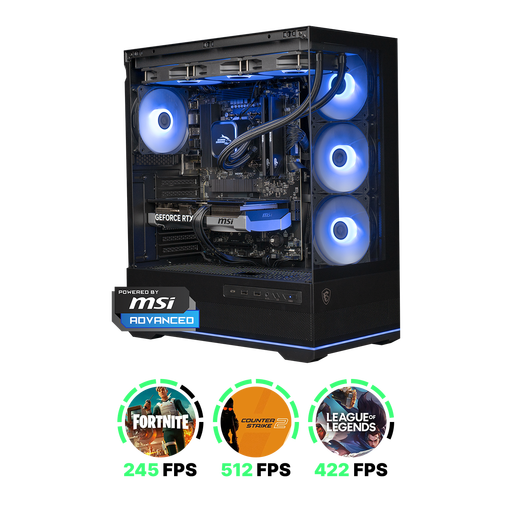 Image unavailable
A configuration for assessing the listed processor and graphics card together for your factory-building game.
Ryzen 7 7800X3D; RTX 5070; 16 GB memory; 1 TB NVMe SSD. The product description says that the charger isn’t included as standard and must be bought separately.
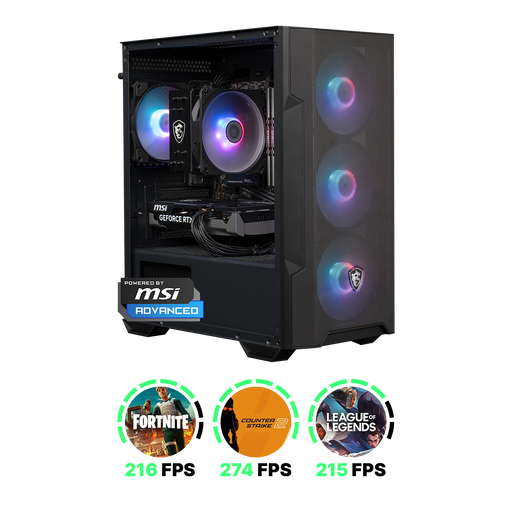 Image unavailable
An option to compare if you want to consider the complete PC configuration and the storage available.
Ryzen 5; RTX 5060; 16 GB memory; 1 TB NVMe SSD. The product description says that the charger isn’t included as standard and must be bought separately.
No, not without considering your game and screen. The developers of Factorio explain that large factories can hit a limit on updates per second; resolution and graphics settings matter too. So compare the complete configuration with the way you plan to use it.
Not if screen brightness or reflections are the problem. Assess the separate monitor and its position in relation to light sources, and check whether the PC you’ve chosen comes with a monitor.
Check the connections on the exact PC version, what’s included and which components can be upgraded. Manufacturers offer different configurations within the same tower range; a product range description doesn’t confirm which components are in your version.
According to ACM ConsuWijzer, the seller must put a product right free of charge if it doesn’t meet what you could reasonably expect under normal use. For a standard online product purchase, you generally have up to 14 days after delivery to change your mind; ACM ConsuWijzer notes some exceptions, including custom-made products.