
Developers using two screens
If you want to use a test view alongside your editor, code or test data, check that the exact PC configuration can run both screens at once. Microsoft explains how to set up connected screens in Windows.


For collision testing, with an editor on one screen and code or test data on the other, start by considering your engine and project workload. Then check that the exact PC configuration can run both screens at once using suitable connections. Unity recommends 8 GB of RAM as the minimum for its editor, but the amount you need also depends on your project’s size and complexity. For Unreal Engine 5.8, Epic Games recommends 32 GB of RAM and at least 8 GB of graphics memory. Check the collision detection mode and physics time step too, before blaming missed collisions on the hardware alone.
If you want to use a test view alongside your editor, code or test data, check that the exact PC configuration can run both screens at once. Microsoft explains how to set up connected screens in Windows.
For larger Unity projects or Unreal Engine work, match the memory and graphics configuration to your project’s workload. Unity links memory requirements to project size and complexity, while Epic Games lists recommended hardware for Unreal Engine 5.8.
If you’re investigating missed collisions or performance, don’t look at the PC alone. Unity also recommends testing and profiling the project’s collision detection mode and physics time step.
A good fit if: your project is relatively small and you mainly use the editor and test view alongside other windows.
Bear in mind: Unity recommends 8 GB of RAM as the minimum for its editor, but larger or more complex projects may need more memory.
A good fit if: you use Unreal Engine for larger projects and want to match the configuration to your project’s workload.
Bear in mind: For Unreal Engine 5.8, Epic Games recommends 32 GB of RAM, at least 8 GB of graphics memory and a DirectX 12-compatible graphics card. This doesn’t guarantee performance for a specific project or support for two screens.
| What to consider | What should you check? | Who is this important for? |
|---|---|---|
| Two screens | Check the video outputs on the exact configuration, the inputs on both screens and support for extending your display across both at once. | I want to see the test view and my editor or test data at the same time; around 36% of consumers prioritise a two-screen setup. |
| Engine workload | Match the RAM and graphics memory to your engine, project size and rendering features. | I want a PC that suits the size of my Unity or Unreal project; around 29% of consumers focus mainly on engine workload. |
| Collision diagnostics | Profile the test and, where relevant, assess the collision detection mode and physics time step. | I want to investigate missed collisions without immediately assuming there’s a hardware issue; around 21% of consumers mainly analyse collision behaviour. |
| Expandability | Check the upgrade options for the exact configuration, and whether you already have your screens and suitable cables. | I want to know whether my setup can grow with my needs and what connections and cables I’ll need; around 14% of consumers prioritise upgrades and additional purchases. |
The name of a graphics card doesn’t tell you which outputs the complete PC configuration has or whether they’ll suit both screens.
Check the connections on the exact configuration and compare them with the inputs on your screens.
You may need a suitable cable or adapter, so check before setting everything up.
Unity says memory requirements depend on the size and complexity of your project. Epic Games recommends higher hardware specifications for Unreal Engine 5.8.
Choose a PC to suit your engine and project workload, and check whether the memory can be upgraded on each configuration.
As well as hardware, Unity highlights the collision detection mode and physics time step as factors you can test for your project.
Check the settings and profile the test before deciding that you need a hardware upgrade.
The Legion Tower 5i Gen 10 is a configurable gaming desktop. The base configuration listed comes with 16 GB of RAM and a 512 GB SSD.
The HP OMEN 35L GT16-1689nd is an example configuration with 32 GB of RAM and a 2 TB SSD.
The Alienware Aurora ACT1250 can be configured with a choice of processors, graphics cards and memory options.
This selection from Joybuy includes desktops for game development and collision testing, as well as a gaming laptop. Check the connections and support for both screens on the exact model you’re considering.
 No image available
A desktop option for more demanding gaming and editor work. Check the video outputs on this model before using it with two screens.
Intel Core Ultra 7 265F, 32 GB DDR5, 1 TB SSD and NVIDIA GeForce RTX 5070 with 12 GB of graphics memory. Listed with Windows 11 Home.
No image available
A desktop option for gaming and editor work. Make sure the exact configuration supports both screens at once.
Intel Core Ultra 5 225F, 32 GB DDR5, 1 TB PCIe 4.0 SSD and NVIDIA GeForce RTX 5070 with 12 GB of graphics memory. Listed with Windows 11 Home.
 No image available
A desktop option for game development. The product description says it supports up to four independent screens; check the outputs on the exact configuration and make sure they suit your screens.
Intel Core Ultra 7, 32 GB DDR5, 1 TB PCIe 4.0 SSD and NVIDIA GeForce RTX 5070. Listed with Windows 11 Home.
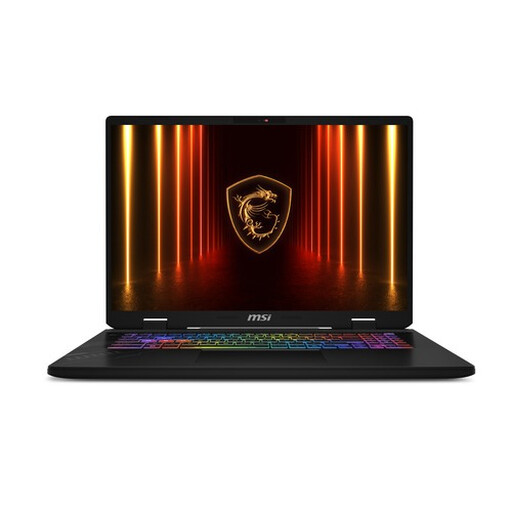 No image available
A gaming laptop for a mobile workstation. Check which outputs are available for your two external screens.
17-inch screen, Intel Core Ultra 7 255HX, 32 GB DDR5, 1 TB SSD and NVIDIA GeForce RTX 5060 Laptop GPU with 8 GB. Listed with QHD+ 240 Hz and Windows 11 Home.
 No image available
A gaming PC for lighter Unity projects and occasional testing. Match the configuration to your project size and check the screen outputs.
AMD Ryzen 5 5500, 16 GB DDR4, 500 GB SSD and NVIDIA GeForce RTX 5060 with 8 GB of graphics memory.
Connect both screens to suitable outputs and select Extend these displays in Windows if you want to use different windows on each screen. First check that the exact PC configuration supports both screens at once.
Not necessarily. Unity also recommends reviewing the collision detection mode and physics time step. Test and profile your project before blaming missed collisions on the hardware.
The Dutch government says that, in many cases, you have 14 days to change your mind when buying from a business at a distance, although there are exceptions. Your statutory rights if a product is faulty are separate from any additional manufacturer’s warranty; check the terms that apply to your order.
The Dutch government says electronic devices placed on the market in the EU must carry a CE mark. The mark alone doesn’t tell you whether a PC supports two screens at once or is suitable for your project.