
Developers working on collision logic
If you regularly check how objects react, consider the processor demands of frequent physics steps. Unity Technologies and Epic Games explain how smaller time steps or substepping can increase CPU load.


Start by matching your PC to your engine, project size and type of collision test. The processor matters for frequent physics calculations, while larger projects may also need more memory and, in some cases, greater graphics capability. Unity and Unreal publish recommendations for different versions and uses, so compare these with your own project and consider the space and ventilation available at your workstation.
If you regularly check how objects react, consider the processor demands of frequent physics steps. Unity Technologies and Epic Games explain how smaller time steps or substepping can increase CPU load.
If you work in a large Editor environment as well as running collision tests, compare the memory and graphics recommendations for your version of Unreal with the requirements of your own project. For Unreal Engine 5.8, Epic Games recommends 32 GB RAM and at least 8 GB of graphics memory, among other baseline specifications.
If you need to fit a desktop into a compact workspace, weigh up its case dimensions, ventilation clearance and expansion options alongside the components and peripherals in your complete setup.
For virtual collision testing, look beyond the gaming label. The processor demands of physics calculations, the size of your project and the tools you use for visual checks are all separate considerations. Unity Technologies and Epic Games publish recommendations for different engine versions; use them as context for your own project, not as a performance guarantee for a particular PC.
| What to consider | What to check before buying | Who should consider this? |
|---|---|---|
| CPU and collision tests | Compare the full processor specifications with your engine and test project; also check the physics frequency settings. | If you mainly run frequent physics calculations, you’ll want to know how much CPU time your settings require. Around 36% of consumers prioritise processor load for collision testing. |
| Memory | Check which engine version you use, how much RAM is installed and whether it can be upgraded. | If you work with large project files or several parts of an Editor project at once, having enough memory is an important factor. Around 29% of consumers prioritise project size and memory. |
| Graphics for visual checks | Check your project’s rendering features, the exact graphics card and its graphics memory against the requirements for your engine version. | If you also want to inspect complex scenes visually, match the graphics components to the features you use. Around 21% of consumers prioritise visual scene checks. |
| Workspace and setup | Check the case dimensions, ventilation clearance, connections and which components or peripherals are included. | If you have a small desk, check in advance that the desktop and the rest of your setup will fit. Around 14% of consumers prioritise space and the cost of their complete home-working setup. |
The name of a graphics card alone won’t tell you whether a PC is right for your collision tests. Unity Technologies and Epic Games explain that smaller physics time steps or substepping require more CPU capacity; graphics and memory needs are separate considerations.
Compare the processor, RAM and graphics card with your own engine version and test scene, and take relevant project settings into account too.
Choosing a more powerful graphics card when your test project mainly needs extra CPU capacity or memory could mean paying for capability that doesn’t match your top priority.
For the Lenovo Legion Tower 5i Gen 10 examined, the short shop name lists an RTX 5070, while the detailed specifications mention an RTX 5070 Ti with 16 GB of graphics memory. Differences like these can make it difficult to compare configurations.
Before choosing a version, ask the seller to confirm the full product number and the graphics card actually supplied.
Otherwise, you could spend extra time working out which configuration the title refers to.
ACM ConsuWijzer distinguishes between your statutory rights and any manufacturer’s or seller’s warranty. In the Netherlands, there is no fixed statutory warranty period of just two years.
Keep your proof of purchase and the product specifications. If something goes wrong, contact the seller first.
HP offers OMEN 35L desktops in a range of configurations; compare the full model number and specification.
The Legion Tower 5i Gen 10 is a desktop range; check the specifications of the exact model you’re considering.
GameComputers.nl offers configurable and ready-built systems if you want to match the components to your project.
These desktops give you specific CPU, RAM and GPU configurations to compare for virtual collision testing and working in a game engine. Choose one to suit your engine version, project size and the graphics features you actually use.
 Image unavailable
The listed 32 GB RAM and 12 GB of graphics memory give you specific figures to compare with the requirements of your Unreal Engine project.
Processor: Intel Core Ultra 7 265F. Memory: 32 GB DDR5. Storage: 1 TB SSD. Graphics card: NVIDIA GeForce RTX 5070 with 12 GB. Operating system: Windows 11 Home.
Image unavailable
The listed 32 GB RAM and 12 GB of graphics memory give you specific figures to compare with the requirements of your Unreal Engine project.
Processor: Intel Core Ultra 5 225F. Memory: 32 GB DDR5. Storage: 1 TB PCIe 4.0 SSD. Graphics card: NVIDIA GeForce RTX 5070 with 12 GB. Operating system: Windows 11 Home.
 Image unavailable
The combination of 32 GB RAM and an RTX 5070 is a configuration you can compare with the memory and graphics requirements of your own project.
Processor: Intel Core Ultra 7. Memory: 32 GB DDR5. Storage: 1 TB PCIe 4.0 SSD. Graphics card: NVIDIA GeForce RTX 5070. Operating system: Windows 11 Home.
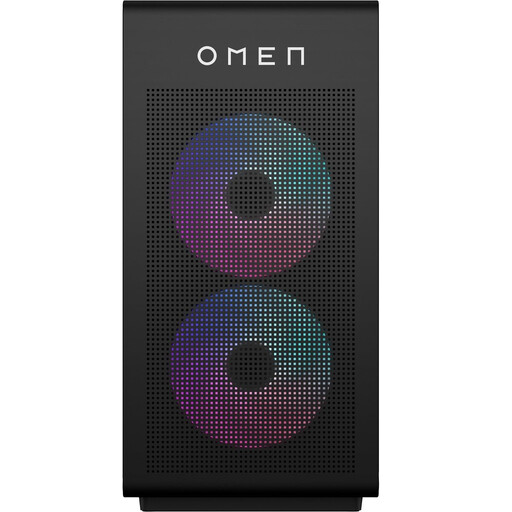 Image unavailable
With 16 GB RAM and 8 GB of graphics memory, you can compare this configuration with your engine’s requirements and project size.
Processor: Intel Core i7-14700F. Memory: 16 GB RAM. Storage: 1 TB SSD. Graphics card: RTX 5060 with 8 GB of graphics memory.
 Image unavailable
The listed 16 GB RAM and 500 GB of storage give you specific figures to compare with your own project’s requirements and files.
Processor: AMD Ryzen 5 5500. Memory: 16 GB RAM. Storage: 500 GB NVMe SSD. Graphics card: RTX 5060 with 8 GB of graphics memory.
No, not automatically: a graphics card can’t replace a suitable CPU for physics calculations. Unity Technologies and Epic Games explain that smaller physics time steps or substepping may require more CPU capacity. You should also compare the GPU with the graphics features used in your own project.
In Unity, check your project’s Fixed Timestep setting. A smaller time step can make the simulation more stable, but it also increases CPU load. For the version consulted, Unity Technologies gives 0.02 seconds, or 50 steps per second, as the default. In Unreal, substepping can also improve stability at the cost of extra processing.
According to ACM ConsuWijzer, you have statutory rights in addition to any manufacturer’s or seller’s warranty. If the product doesn’t meet what you could reasonably expect during normal use, the seller must offer an appropriate solution free of charge. In the Netherlands, there is no fixed statutory warranty period of just two years.
For online consumer purchases, you generally have 14 days from delivery to change your mind. The Dutch government lists exceptions to the right to cancel; before ordering, check whether an exception applies to a PC built specifically for you.