
Large-city player
You mainly want to play Cities: Skylines II, so you compare the full processor, memory and graphics card configuration with Paradox Interactive's recommended requirements.


Let the game you most want to play guide your PC setup: recommendations for Cities: Skylines II differ from those for Anno 1800. Assess the screen separately, as a more powerful PC won't solve glare. Decide how much you want to spend only after checking the brightness, reflection handling and position of your current monitor.
You mainly want to play Cities: Skylines II, so you compare the full processor, memory and graphics card configuration with Paradox Interactive's recommended requirements.
You play near a window or under bright lights and want the picture to remain clear despite potential reflections and limited screen brightness.
You mainly play a less demanding title such as Anno 1800 and want to check the requirements for your chosen settings before paying for a more powerful PC.
For Cities: Skylines II, Paradox Interactive recommends, among other things, 16 GB RAM and specific processors and graphics cards. Ubisoft gives recommendations for Anno 1800 at high settings, 1080p and 60 frames per second. So always compare a PC with the requirements of the game that will guide your choice.
A good fit if: you mainly play Anno 1800 at the settings described by Ubisoft and compare the full configuration with those requirements.
Bear in mind: these recommendations don't predict what Cities: Skylines II or larger, customised game worlds will demand.
A good fit if: this is the game guiding your purchase. Compare the exact processor, RAM capacity and full graphics card variant with Paradox Interactive's recommendations.
Bear in mind: the recommended configuration doesn't guarantee the same results for every city, mod or graphics setting.
A good fit if: your PC already runs the game you want to play satisfactorily, but daylight makes the picture difficult to see.
Bear in mind: a different screen won't make up for a lack of processing or graphics performance.
| What to consider | What should you check? | Who should consider this? |
|---|---|---|
| Processor and RAM | Compare the exact processor and amount of RAM with the requirements of your chosen game; don't treat the requirements of different games as interchangeable. | If I want to simulate large cities, I want to match the full configuration to the game that matters most to me. Around 31% of consumers prioritise these simulation and memory needs. |
| Visibility in daylight | Assess the screen's position, brightness and reflection handling. A matt finish alone doesn't tell you how much distracting glare will remain. | If daylight makes my map harder to read, I want to know how the screen handles light in my room. Around 31% of consumers prioritise visibility. |
| Graphics card and resolution | Check the full GPU model, video memory and screen resolution you want; don't infer performance or equivalence from a model name alone. | If graphics are my main concern, I want the graphics card to suit my game and screen resolution. Around 23% of consumers prioritise their graphics choice. |
| Overall setup | Check what's included with the desktop, including whether a screen is supplied, and look at the RAM, storage and upgrade options for the exact model. | If I need to choose the PC and possibly a separate screen together, I want to be able to see the whole setup. Around 15% of consumers prioritise the total purchase and future upgrades. |
The official recommendations for the city-building games covered here differ. A model name alone doesn't show whether the processor, RAM and full graphics card variant are right for your game.
Make a note of the exact components in the model on offer and compare them with the requirements of the game you most want to play.
Light reflecting off the screen can affect visibility, regardless of the PC's performance.
Before replacing your desktop, first check the position of your current screen, its brightness and how it handles reflections.
A top specification listed for a product range may not apply to the model you're looking at. On the Lenovo product page reviewed, the GPU listed in the title differs from the one in the specifications table.
Check the full model number and ask for confirmation if information about the model on offer conflicts.
HP lists OMEN desktops in several sizes and configurations, including the OMEN 16L and HyperX OMEN 35L. Its Dutch product listings provide component details for each model.
Lenovo describes the Legion Tower 5i Gen 10 as a tower with a side panel that can be removed without tools.
The Nitro 50 is a desktop range with several possible component configurations.
For the screen part of your setup, Dell describes the G2725D as a 27-inch QHD IPS gaming monitor.
These desktops offer configurations you can compare with the requirements of city-building games. Check the full specifications of the model you've chosen before making a decision.
 No image available
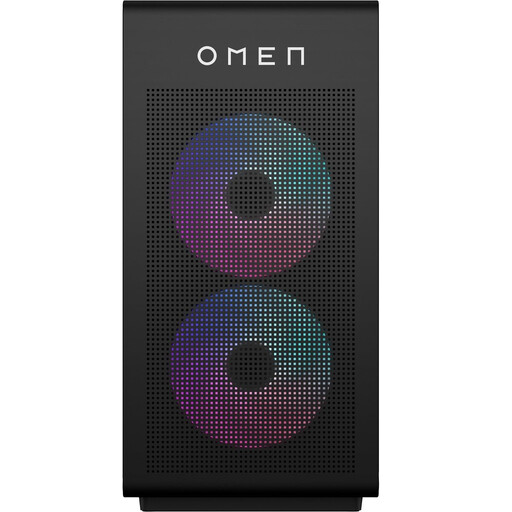
A configuration to compare with the requirements of Cities: Skylines II; Paradox Interactive recommends 16 GB RAM for this game.
Intel Core i7-14700F, 16 GB RAM, 1 TB SSD and RTX 5060 with 8 GB. Windows 11 Home is listed as pre-installed but not activated.
 No image available
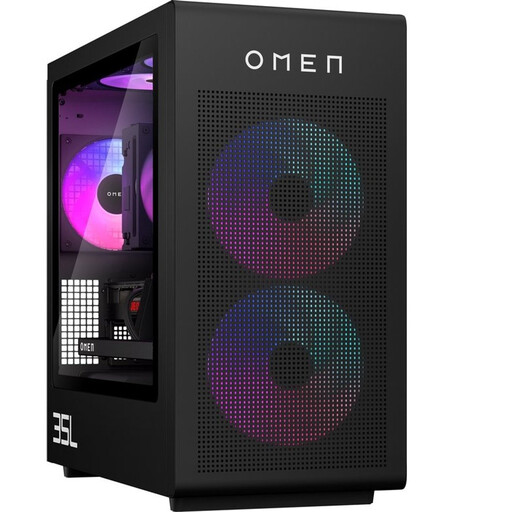
A configuration to compare with the components recommended for your chosen city-building game; a GPU model name alone can't predict gaming performance.
Intel Core i7-14700F, 16 GB RAM, 1 TB SSD and RTX 5060 with 8 GB.
 No image available
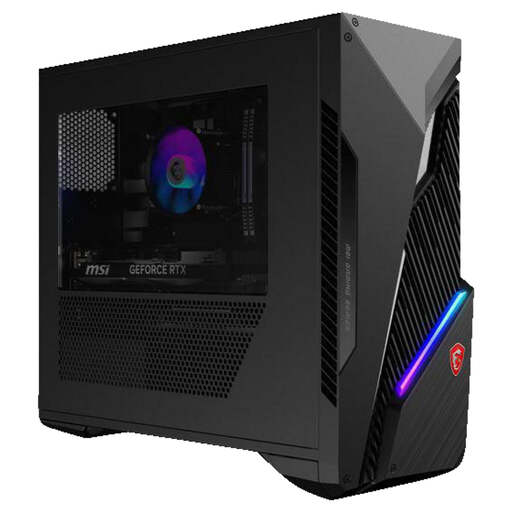
The listed components give you specific points of comparison with your chosen game's requirements. Compare the full configuration, not just the graphics card.
Intel Core i7-14700F, 16 GB RAM, 1 TB SSD and RTX 5060 Ti with 8 GB.
 No image available
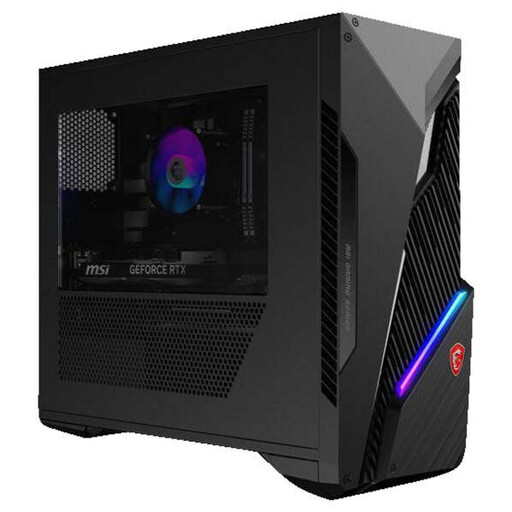
Compare this model with the requirements of the game that matters most to you and the resolution of the screen you want to use.
Intel Core i5-14400F, 16 GB RAM, 1 TB SSD and RTX 5060 Ti with 8 GB.
 No image available
Use the listed components to compare with the requirements of your chosen city-building game; don't infer performance from a single component.
AMD Ryzen 7 5700X, 16 GB DDR4 RAM, RTX 5060 Ti with 8 GB and 480 GB NVMe PCIe SSD. Windows 11 Home is listed as pre-installed but not activated.
No. Compare the requirements for the game guiding your purchase. For Anno 1800 at high settings, 1080p and 60 frames per second, Ubisoft recommends, among other things, 8 GB RAM. Paradox Interactive recommends 16 GB RAM for Cities: Skylines II, along with different processor and graphics card examples.
Compare the video output on the exact desktop model with the screen's input and the resolution you want. Dell lists DisplayPort 1.4 and HDMI 2.1 for the G2725D; also check which cable comes with the screen.
No. According to the Netherlands Authority for Consumers and Markets, the seller is responsible for the statutory guarantee if a product doesn't meet what you could reasonably expect from it. Any manufacturer's guarantee is separate.
According to ACM ConsuWijzer, online purchases generally come with a statutory cooling-off period that ends 14 days after delivery. There are exceptions, including certain made-to-order or personalised products, so check whether your purchase falls under an exception.
No. 400 cd/m² is the brightness Dell specifies for the G2725D, not a measure of reflections in your room. Consider reflection handling and the position of light sources too. RTINGS.com notes that strong reflections can affect visibility, even on a bright screen.