
Builders with limited connections
You want to know whether power sockets or USB ports are in shorter supply before choosing between a cable, receiver or Bluetooth. Bluetooth is only an option if both the mouse and computer support it.


If power sockets are your main concern, a wired mouse, a mouse with replaceable batteries or a rechargeable mouse could be the answer without needing a separate mains adapter. If USB ports are in short supply too, only choose Bluetooth after checking that both your computer and the exact mouse model support it; a 2.4GHz receiver and a USB cable will use a port. Then consider hand shape, the scroll wheel, extra buttons and battery maintenance.
You want to know whether power sockets or USB ports are in shorter supply before choosing between a cable, receiver or Bluetooth. Bluetooth is only an option if both the mouse and computer support it.
You place and control lots of components, and want to check whether a scroll wheel or customisable buttons suit the commands and settings in your game.
You want to consider comfort and think ahead about how you’ll fit battery changes or charging breaks into your routine.
Count available power sockets and USB ports separately: the way a mouse is powered doesn’t automatically determine how many connections it needs to your computer.
| What to consider | What to look for | Who should weigh this more heavily? |
|---|---|---|
| Connection and available space | Count available power sockets and USB ports separately. Check Bluetooth support on both your computer and the exact mouse model, or see whether it needs a USB receiver. | If I have few connections to spare, I want to avoid using up a USB port unnecessarily. Around 33% of consumers prioritise available connections. |
| In-game controls | Check your game’s settings to see whether extra buttons, programmable functions or different scroll modes would be useful. | When I’m controlling tracks, points or other components, I want to use features that my game actually supports. Around 27% of consumers prioritise controls. |
| Hand shape and comfort | Consider the dimensions, shape, handedness and button placement; try the grip if possible. | For longer building sessions, I want a mouse that suits my hand and grip, rather than judging by weight alone. Around 20% of consumers make fit their main priority. |
| Batteries and charging | Check the battery type, battery life for each connection mode and whether you can use the exact model while it’s charging. | If I’d rather not change batteries or plan a break to charge, I compare how each model is powered. Around 20% of consumers prioritise battery maintenance. |
A mouse with a 2.4GHz receiver will usually need a USB port while in use. Bluetooth can remove the need for a receiver, but only if your computer and mouse support it.
Check the connection options for both devices before choosing; don’t rely on the word ‘wireless’ alone.
Battery life can vary depending on the model, connection mode and battery type. For example, Razer gives different maximum manufacturer figures for the Orochi V2 over Bluetooth and 2.4 GHz, measured with a lithium AA battery.
Compare battery life only with the relevant mode and battery in mind, and consider how you’ll replace the batteries or charge the mouse.
A button or tilt wheel is only useful if the feature you want works in the game and settings you use.
First check your game’s keyboard and mouse settings, then see which buttons you can customise.
A product title isn’t a reliable way to tell whether the charging port works with a cable you already own.
If you want to use an existing cable, check the charging port on the exact version before buying.
This selection includes both wired gaming mice and wireless models with replaceable batteries from the brand.
The Orochi V2 combines Bluetooth and 2.4 GHz with a replaceable battery, while the Basilisk V3 X HyperSpeed focuses on customisable controls.
According to SteelSeries, the Rival 3 Wireless Gen 2 offers Bluetooth or a 2.4GHz USB receiver and runs on replaceable AAA batteries.
The GXT 926 Redex II comes with a 2.4GHz receiver and a cable for use while charging; the GXT 929 Helox is a different rechargeable model.
According to CHERRY, the M50 Wireless can connect by cable, 2.4 GHz or Bluetooth.
This selection includes gaming mice with Bluetooth, a 2.4GHz connection or a wired connection. Bluetooth can remove the need for a USB receiver if your computer supports it; also check the connections and features of the exact version.
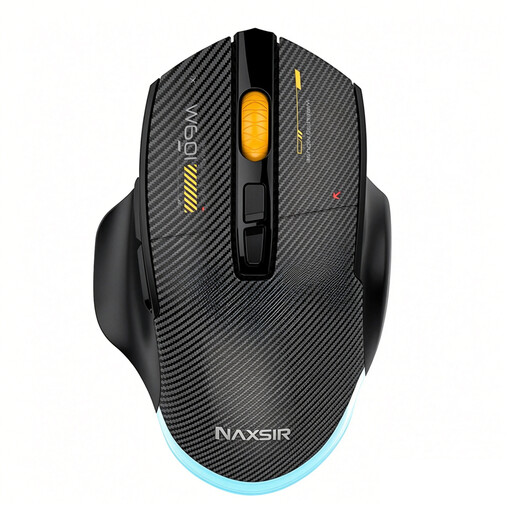 No image available
If your computer supports Bluetooth, you can use this connection mode without a USB receiver; 2.4GHz and wired modes are also available.
The product name lists 12,800 DPI, seven programmable macro buttons and RGB lighting.
Bluetooth requires support from your computer.
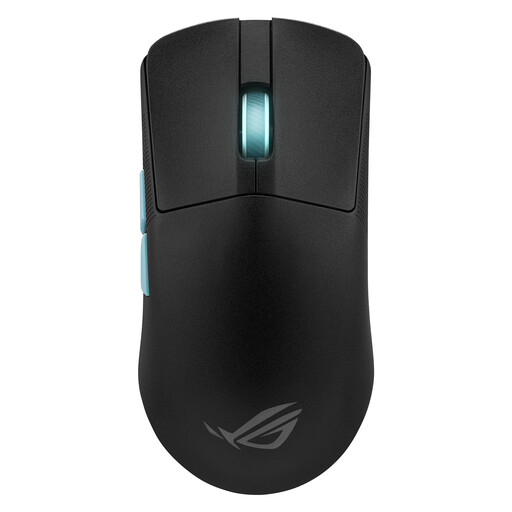 No image available
The stated Bluetooth mode can remove the need for a USB receiver if your computer supports Bluetooth.
The product name lists Bluetooth, RF wireless and USB Type-A, plus a 36,000 DPI optical sensor.
Check which connection suits your computer and how you plan to use the mouse.
 No image available
If your computer supports Bluetooth, this model offers a way to connect without a USB receiver; the product name also lists 2.4 GHz and USB-C.
The product name lists a 400 mAh battery, a weight of 56 g and a magnetic base.
According to the product warning, keep the magnetic base away from pacemakers, medical implants and items such as payment cards.
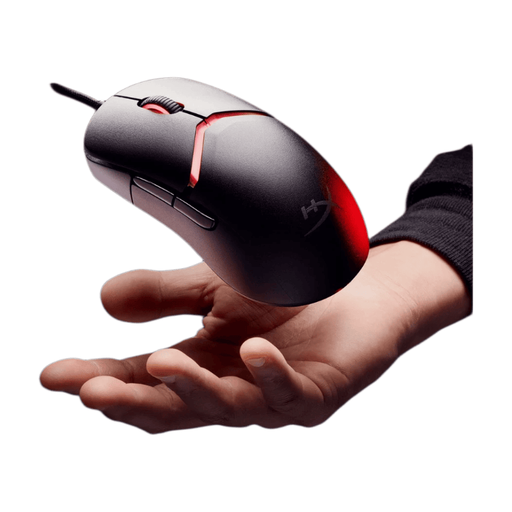 No image available
A wired connection is an option if you have a USB port available and don’t want to use a wireless receiver.
The product name lists 26,000 DPI and RGB lighting. The product information describes interchangeable components with 16 possible grip combinations.
The wired USB connection uses a USB port.
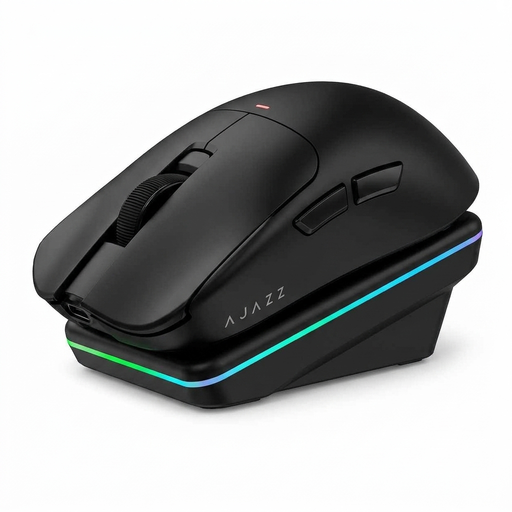 No image available
The Bluetooth mode can remove the need for a USB receiver if your computer supports Bluetooth; the product name also mentions 2.4 GHz and USB-C.
The product name lists a charging dock, a built-in battery, a PAW3311 sensor, 24,000 DPI and a weight of 63 g.
Check that the connection mode and charging method suit your computer and how you plan to use the mouse.
No. A mouse with replaceable batteries uses those for power, while a rechargeable model can be charged via USB, depending on the version. Separately check whether your computer needs a USB receiver for the connection or can use Bluetooth.
If both your computer and mouse support Bluetooth, that connection doesn’t need a USB receiver. A 2.4GHz model with a receiver will usually use a USB port, so check the connection options for the exact version.
Take flat batteries to a collection point, such as a shop or supermarket that sells batteries. The Dutch government advises that they shouldn’t go in the bin.
For a standard online product purchase, ACM ConsuWijzer says you generally have a cooling-off period that ends 14 days after delivery; check the terms and any applicable exceptions. You’re also covered by the statutory guarantee: if a product used normally stops working sooner than you could reasonably expect, the seller must put things right under the applicable rules. This isn’t simply a fixed two-year period.
Not for the mouse alone: wired, battery-powered and USB-rechargeable options don’t need a separate mains adapter for the mouse. The Fire Service advises plugging high-power appliances directly into a socket where possible; this is general safety advice, not a special rule for gaming mice.