
Reaction trainer using a large screen
You want to tell the difference between the mouse’s response and any delay from the screen when reacting to fast-moving visual cues.


For reaction training on a large screen, a mouse you can move with control, using either a wired connection or its own USB receiver, is a sensible starting point. RTINGS generally describes these connections as offering low click latency, but the mouse alone doesn’t determine how quickly your whole setup responds: your computer and display settings matter too. A high DPI or polling rate, on its own, doesn’t prove that your reaction time will improve.
You want to tell the difference between the mouse’s response and any delay from the screen when reacting to fast-moving visual cues.
You move the mouse frequently and care about control, weight and a grip that suits your hand.
You want to move without a cable or switch between devices, so you’re also weighing up the receiver, Bluetooth and charging.
For time-critical training, your choice of connection makes a difference. You should also consider the fit and the screen’s input lag with your own settings.
A good fit if: you train in one place and don’t want to charge your mouse.
Trade-off: the cable may restrict your movement, so consider how you’ll manage it.
A good fit if: you want to move freely and your training device has a compatible USB port.
Trade-off: check which receiver you need and remember that you’ll have to charge the mouse.
A good fit if: easily switching between devices matters more to you than achieving the lowest possible click latency.
Trade-off: RTINGS generally reports higher click latency with Bluetooth than with a wired connection or a dedicated USB receiver. This isn’t a measurement of every individual model.
| What to consider | What should you check? | Relevant consumers |
|---|---|---|
| Latency across your setup | Where possible, compare measured click and sensor latency for each connection, and check the screen’s input lag at the refresh rate you use. | When practising fast clicks on a large screen, I want to know which parts of my setup affect my reactions; around 33% of consumers consider latency across the whole setup most important. |
| Control when aiming | Check the weight of the exact model, sensor latency and adjustable sensitivity; the maximum DPI alone doesn’t tell you how accurately you’ll move. | When making lots of repeated aiming movements, I want a setting and weight that let me move the mouse with control; around 27% of consumers prioritise control when moving. |
| Fit and grip | Compare the shape and size with your hand and grip, and check that any side buttons are easy to reach. | When I train for longer sessions, I want to hold the mouse comfortably and consistently; around 20% of consumers consider a suitable grip most important. |
| Connection and ease of use | Check the available USB ports, the receiver supplied and the battery life at the polling rate you want to use. | When switching between devices or training without a cable, I want to know which connection and charging routine will work for me; around 20% of consumers prioritise connection convenience. |
Click latency, sensor latency and screen input lag are different parts of your setup. A high maximum figure therefore doesn’t tell you how quickly the whole combination will respond.
Where possible, compare measurements for the connection you’ll use and check your screen settings too. Choose a sensitivity you can control accurately.
For up to 8,000 Hz on the Razer DeathAdder V3 Pro, Razer specifies a separate HyperPolling Wireless Dongle. The stated battery life also varies depending on the polling rate.
Check which receiver the exact model needs and what battery life to expect at your chosen setting.
Needing a separate receiver and charging more often can mean extra practical steps.
A manufacturer’s warranty doesn’t automatically replace your statutory rights. ACM ConsuWijzer distinguishes between the statutory guarantee and the seller’s warranty.
Keep your proof of purchase and contact the seller if there’s a fault.
The PRO X SUPERLIGHT 2 is a wireless model with LIGHTSPEED, designed for players who want to move their mouse freely.
The wired DeathAdder V3 and wireless DeathAdder V3 Pro are separate examples of ergonomically shaped mice.
The wired Pulsefire Haste 2 is an option if you don’t want to worry about charging.
According to SteelSeries, the Aerox 3 Wireless (2022) offers both 2.4GHz and Bluetooth modes.
This selection includes wired and wireless gaming mice for a fixed training spot or a setup where you want to switch between connection modes.
 No image available
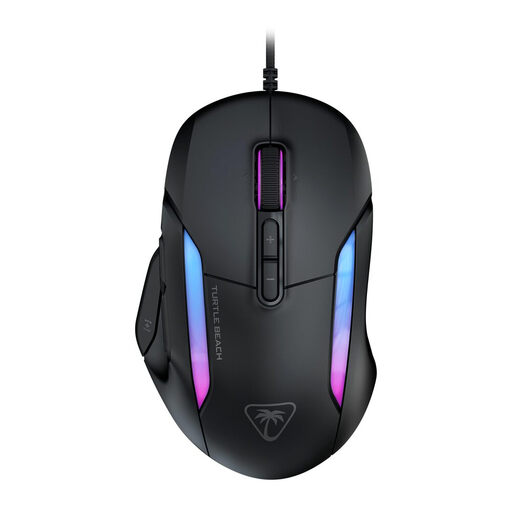
The wired connection suits a fixed training spot; RTINGS generally describes wired mice as offering low click latency.
The product information lists 23 buttons and 26,000 DPI. The shape is described as ergonomic for right-handed use and medium to large hands.
 No image available
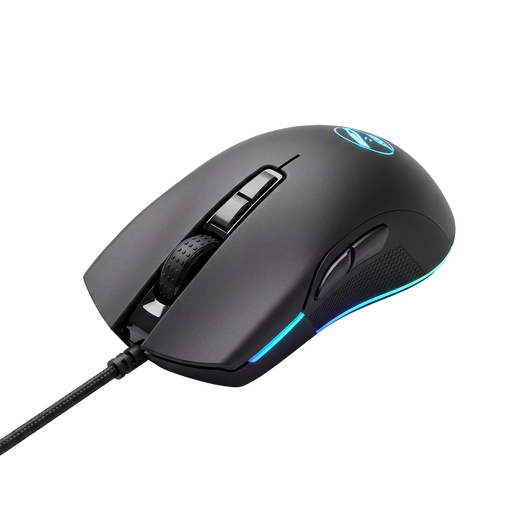
This wired mouse may suit a fixed training spot; check whether its right-handed shape works with your grip.
The product information lists a PMW3360 sensor, adjustable DPI, polling of up to 1,000 Hz, seven programmable buttons and a weight of around 95 g.
 No image available
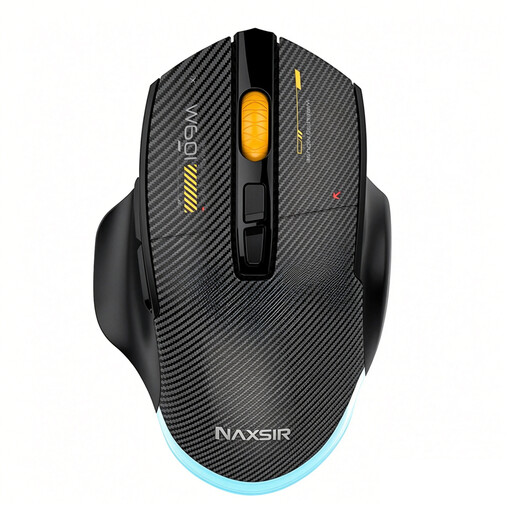
The different connection modes may be useful if you want to choose between a wired connection, a 2.4GHz receiver and Bluetooth.
The product information lists 12,800 DPI, seven programmable buttons and a polling range of 125–1,000 Hz. RTINGS generally reports higher click latency with Bluetooth than with a wired connection or a dedicated USB receiver.
 No image available
The product information lists wired, 2.4GHz and Bluetooth connections; check which mode you’re using if minimising click latency is a priority.
According to the product information, the mouse has six DPI levels, polling of up to 1,000 Hz and a weight of 73 g.
 No image available
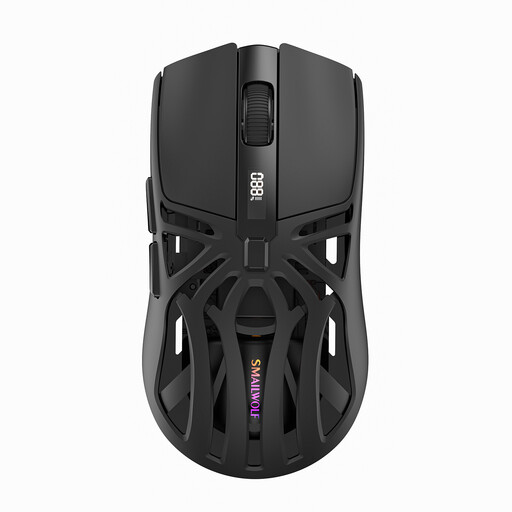
This wireless model is worth comparing if you want to use a receiver; check which accessories and settings come with the version you’re considering.
The product name lists a PAW3395 sensor, 26K DPI, a weight of 56 g and support for 2.4G, USB-C and Bluetooth. The product description warns you to keep the magnetic charging base away from pacemakers, medical implants and payment cards.
Screen size alone doesn’t determine this. For reaction training, also check the screen’s input lag at the refresh rate you actually use.
A wired connection or a compatible dedicated USB receiver is a sensible starting point if low click latency matters. RTINGS generally reports lower click latency with these connections than with Bluetooth, but results vary by model.
Bear in mind the battery and the polling rate you use. For the DeathAdder V3 Pro, Razer specifies up to 90 hours at 1,000 Hz, compared with up to 17 hours at 8,000 Hz when using the required HyperPolling Wireless Dongle; these are stated figures for that model.
For a standard online purchase, you generally have a statutory cooling-off period of up to 14 days after delivery, with some exceptions, according to ACM ConsuWijzer. Your statutory guarantee is also separate from any manufacturer’s warranty; if there’s a fault, contact the seller.
Radio equipment sold on the European market is subject to the applicable requirements of the Radio Equipment Directive. The Netherlands’ Radiocommunications Agency explains that equipment meeting the requirements carries a CE marking; check the information and marking for the exact version you’re buying.