
Aiming and clicking practice
You practise fast mouse movements and clicking, and want a comfortable grip and consistent input above all. RTINGS.com identifies hand size, grip and input performance as relevant factors when choosing a mouse.


Start with a mouse shape that suits your hand and grip, and a connection that works well with your computer. A lightweight, straightforward mouse may suit fast aiming and clicking practice. If you also use the same mouse for long periods of work, a comfortable shape and useful extra buttons may matter more. A high maximum DPI or polling rate alone is no proof that your personal reaction time will improve.
You practise fast mouse movements and clicking, and want a comfortable grip and consistent input above all. RTINGS.com identifies hand size, grip and input performance as relevant factors when choosing a mouse.
You use the same mouse for long periods of screen-based work and want it to remain comfortable outside your training sessions. The Dutch Arboportaal highlights repetitive movements as a consideration when working at a screen.
You want to get started with a suitable connection and adjustable controls, without having to set up features you don't need. For example, the Glorious Gaming manual distinguishes between basic operation and more advanced software customisation.
For reaction training at home and possibly everyday computer use, your choice mainly comes down to grip, comfort, connection and the settings you actually need.
A good fit if: you want freedom of movement on your mouse mat during aiming and clicking practice, and don't mind managing the battery.
Consider: check the battery or charging requirements, the shape and which receiver you need for the setting you want.
A good fit if: you don't want to manage a battery and your desk gives the cable enough room to move.
Consider: the cable may get in the way during fast movements; wired doesn't automatically mean faster than wireless.
A good fit if: you use the same mouse throughout long working days and its shape also suits your training movements.
Consider: a vertical or other ergonomic shape feels different from a conventional esports mouse; if possible, try it out to see whether you can make precise movements with it.
| What to consider | What to look for when buying | Who is this important for? |
|---|---|---|
| Control during fast movements | Check whether the shape suits your hand and grip, and what sensitivity settings are available. | If I want to aim and click quickly again and again, I focus on control and a consistent setting. Around 40% of consumers put fast aiming and clicking control at the top of their buying priorities. |
| Comfort when working from home | Consider hand size, shape and button reach; take breaks between long periods of screen work and practice sessions. | During long working days, I want a mouse that feels comfortable and lets me reach the buttons without constantly changing my grip. Around 30% of consumers give long-term comfort at work their highest priority. |
| Reliable connection | Check that the connection works with your computer and, for wireless use, see which receiver is included. | If I want to avoid interruptions while practising, I check that my chosen connection and desk set-up are practical. Around 20% of consumers prioritise a suitable, uninterrupted connection. |
| Settings and extra equipment | Check software compatibility and whether the settings you want work with the included components. | If I only need straightforward controls, I don't want to choose settings or accessories I won't use. Around 10% of consumers put simplicity and keeping extra costs down at the top of their priorities. |
A sensor's maximum specification doesn't tell you how quickly you'll react to a stimulus, and it doesn't automatically mean the shape will suit you.
First compare the grip, control and settings you can use consistently during practice. Don't treat a training effect as a proven product feature.
A stated maximum may depend on the version and the receiver used.
Check which receiver and settings the exact model requires. For example, Logitech G says a separate receiver is needed to achieve a polling rate of up to 8 kHz with the PRO 2 LIGHTSPEED.
That receiver is sold separately, so factor in the additional cost if you want to use the higher setting.
The Joybuy listing for the Razer DeathAdder V4 Pro gives a different sensor and other key specifications from Razer Europe.
Before choosing, check that the model identity and key specifications match Razer's European product specifications.
Logitech G describes the PRO X SUPERLIGHT 2 as a lightweight wireless option. The PRO 2 LIGHTSPEED has adjustable side buttons for left- or right-handed use.
Razer positions the DeathAdder V4 Pro as an ergonomic esports mouse and the Viper V3 HyperSpeed as a wireless mouse powered by an AA battery.
SteelSeries describes the Rival 5 as a wired mouse for a range of gaming genres.
The Keychron M5 combines a vertical shape with wired and wireless connection options.
According to Glorious Gaming, the Model O 2 Wired is a lightweight wired mouse with six programmable buttons.
This selection includes wired and wireless gaming mice for reaction training and computer use at home.
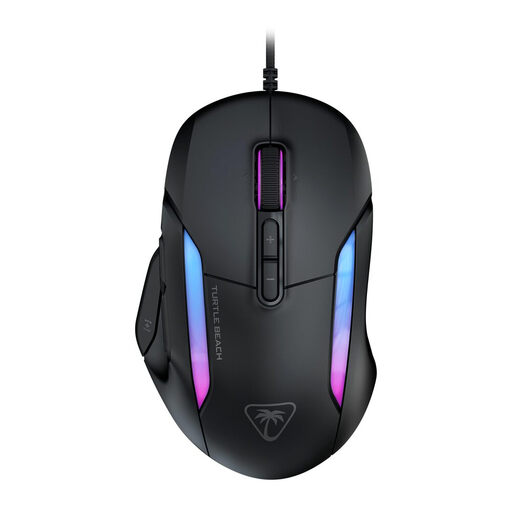 No image available
A wired option if you want to avoid managing a battery and adjust the sensitivity.
The product name states up to 26.000 DPI and 23 buttons.
Check that the fixed cable gives you enough room to make fast aiming movements.
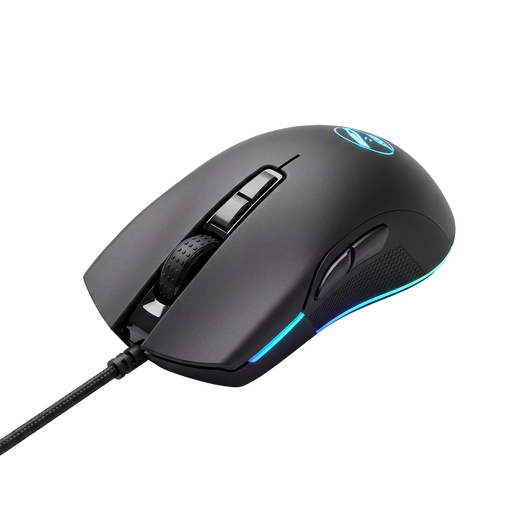 No image available
A wired option if you don't want to manage a battery; check that the shape and side grips suit your hand.
The cable may get in the way when you make fast movements on the mouse mat.
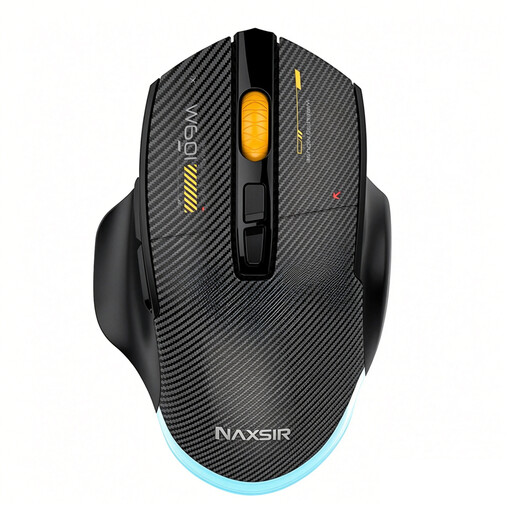 No image available
The listed wired, 2.4G wireless and Bluetooth connections give you several options; check which ones your computer supports.
The product name states up to 12.800 DPI and seven programmable macro keys.
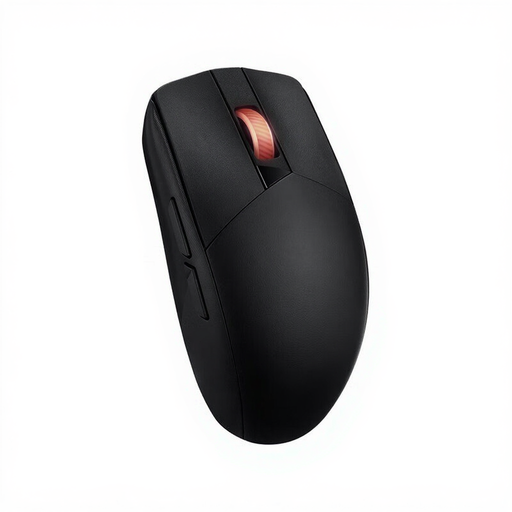 No image available
An option to compare if you're looking for an ambidextrous design and more than one connection option.
The product name lists RF wireless, Bluetooth and a resolution of up to 36.000 DPI.
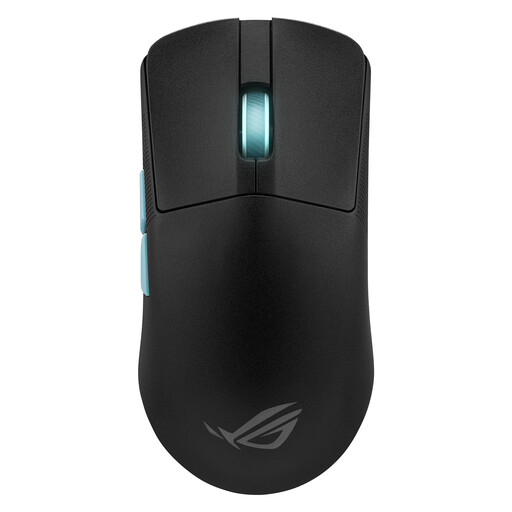 No image available
An option to compare if you're looking for an ambidextrous design and wireless or Bluetooth connectivity.
The product name lists RF wireless, Bluetooth, USB Type-A and a resolution of up to 36.000 DPI.
No. Start with a shape that suits you and settings you can use consistently. The polling rate describes how often the mouse sends information, not how quickly you react to a stimulus. Also check which receiver and settings the specific model requires.
First check the connection and the default settings on the model you've chosen. For the Glorious Model O 2 Wired, the manufacturer says basic operation is possible without additional software; for advanced customisation, the manual specifies Glorious CORE on Windows.
Break up long periods of screen-based work with different tasks or breaks, and make sure your workspace is suitable. The Dutch Arboportaal identifies repetitive movements as a consideration; using a different mouse is not, by itself, a proven solution to discomfort.
For eligible online purchases from a business, the Dutch government generally provides a 14-day cooling-off period. Separately, you have the right to a product that meets the required standards in the Netherlands; if there's a fault, contact the seller. A manufacturer's warranty doesn't replace your statutory rights.