
Reaction-time trainer
You want to compare click timings consistently. So don’t change your mouse, audio cue and screen setup all at once; Igor’sLAB explains how test conditions can affect measurements of mouse latency.


Choose a mouse that feels comfortable in your hand and registers clicks consistently; a high DPI figure alone does not mean faster reaction times. A wired mouse is a sensible choice if the cable does not restrict your movement. A wireless mouse with its own 2.4 GHz receiver gives you more freedom to move, but you’ll need to consider the receiver’s placement and the power supply. When comparing scores, keep your headphones, audio cue, screen and settings the same.
You want to compare click timings consistently. So don’t change your mouse, audio cue and screen setup all at once; Igor’sLAB explains how test conditions can affect measurements of mouse latency.
You want to move freely without mouse input stuttering, and you’re considering where to place the mouse receiver among your other connected devices. Logitech Support describes possible interference with certain combinations of wireless USB peripherals and USB 3.0 devices.
You’re mainly looking for a shape and weight that suit your hand and movements; a high sensor specification won’t automatically make a mouse comfortable to use. SteelSeries and Razer publish weight specifications for individual models.
A good fit if: you practise in one place and the cable doesn’t restrict your movement; you won’t need to manage a wireless mouse receiver or mouse battery.
Keep in mind: the cable can get in the way during wide movements, and latency varies by model and overall PC setup.
A good fit if: you want more freedom to move and can position the receiver well.
Keep in mind: the power supply and receiver placement. For certain interference issues, Logitech Support recommends keeping USB 3.0 devices and wireless USB receivers apart.
A good fit if: you don’t want to use a separate receiver and competitive timing isn’t a deciding factor.
Keep in mind: Igor’sLAB’s gaming mouse comparison did not cover Bluetooth. For the Aerox 5 Wireless, SteelSeries specifies 125 Hz over Bluetooth compared with up to 1,000 Hz over 2.4 GHz; this is a model-specific specification, not a universal measurement of Bluetooth mice.
| What to consider | What to look for | Who does this matter to? |
|---|---|---|
| Consistent click registration | Check the connection and click response; keep your headphones, cue, software, PC and screen settings the same when comparing. | When I compare my click timings, I mainly want to know whether the mouse and test setup respond in the same way. Around 33% of consumers put registration first. |
| Fit and control | Compare the shape, weight of the exact version, grip and how easily you can reach the buttons. | During long practice sessions, I want to move a mouse without its shape or grip getting in the way. Around 25% of consumers prioritise fit and control. |
| Connection alongside headphones | Check the connection type and receiver; test whether the mouse works reliably while your headphones are on. | When I practise with headphones, I want to avoid interference in my wireless setup. Around 25% of consumers prioritise connection stability. |
| Use and maintenance | Check whether the version needs a battery or charging, or is wired; also check which connections and accessories you’ll need. | I want to know which routine suits my setup and what the mouse needs to work. Around 17% of consumers consider cost and maintenance most important. |
Igor’sLAB measured varying system latency across 22 mice using the same 1,000 Hz polling setting with NVIDIA LDAT. A mouse specification doesn’t automatically describe the entire input-to-screen chain.
First, check that the mouse feels comfortable and registers reliably. Only compare latency using measurements of the exact models under similar conditions.
Research published in Shinrigaku Kenkyu and summarised via PubMed describes how an additional auditory cue can affect measured visual reaction time. This is not a measurement of a specific gaming mouse.
Keep your headphones, volume, type of cue and other test conditions the same when comparing scores.
The Basilisk V3 Pro 35K is a different version from the Basilisk V3 Pro. Model names alone don’t prove that their key specifications match.
Before buying, check the full model name and the specifications of the version you’re choosing.
The models mentioned illustrate different options: the wired G203 LIGHTSYNC and the wireless G305.
The wired Aerox 3 is an option if you’re looking for a mouse without a wireless connection.
The Viper V3 Pro and Basilisk V3 Pro are different models; check the full name of each version.
This Joybuy selection consists of wireless gaming mice. For reaction training, consider the fit, connection you choose and the conditions attached to the stated specifications; a DPI figure alone doesn’t prove lower reaction latency.
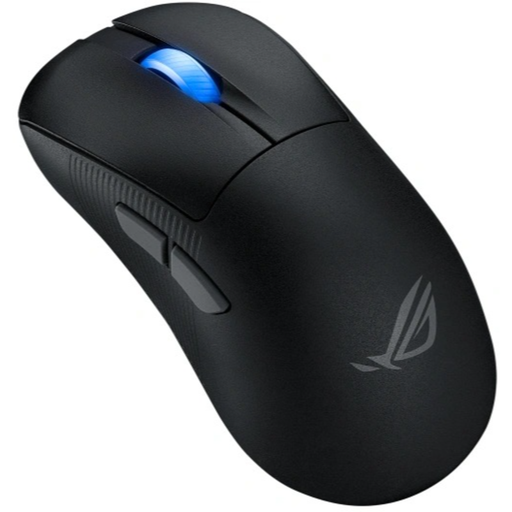 Image unavailable
A wireless option with several stated connection options; check which mode suits your training setup.
The product information lists RF Wireless, Bluetooth and a USB Type-A receiver, a weight of 54 g and up to 8,000 Hz in wired mode. These specifications are not an independent measurement of reaction latency.
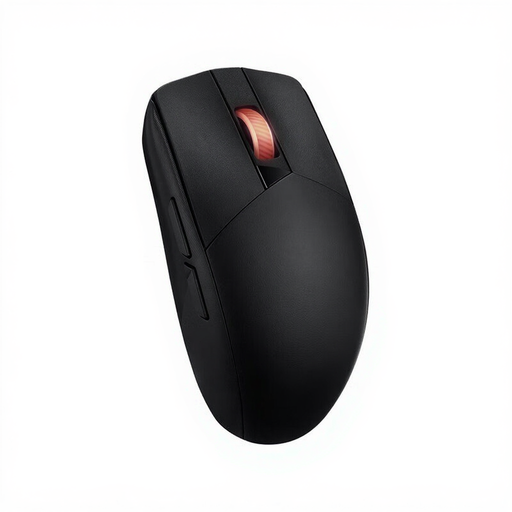 Image unavailable
According to the product information, this wireless version has an ambidextrous shape; check that it suits your grip.
The title lists RF Wireless, Bluetooth and 36,000 DPI. The product information gives a weight of 68 g; that figure alone won’t tell you whether the mouse feels comfortable in your hand.
 Image unavailable
The stated 2.4G connection may suit you if you want to practise wirelessly; check the receiver and where it will sit in your setup.
The product name lists a PAW3395 sensor, 26,000 DPI, 2.4G, USB-C, Bluetooth, a 400 mAh battery, a weight of 56 g and a magnetic charging dock.
Keep the charging dock at least 15 cm away from pacemakers, and away from cards, badges and other medical implants. Keep small parts out of reach of children under 3 years old.
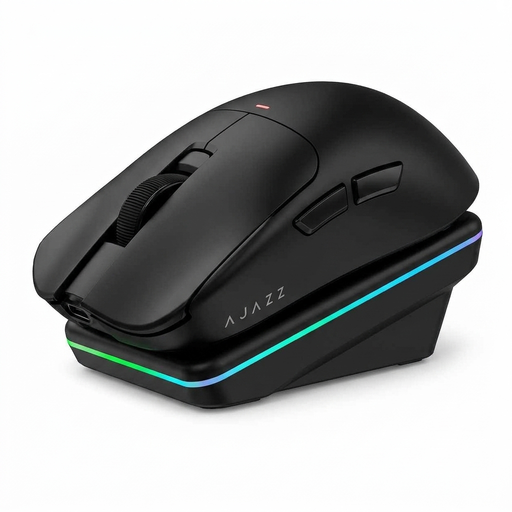 Image unavailable
This version may suit you if you want to choose between wireless and wired connections; check which mode you’ll use during practice.
The product information lists Bluetooth, 2.4G and USB-C, a PAW3311 sensor, 24,000 DPI and a weight of 63 g. The stated shape is designed for medium to large hands, but fit is a personal matter.
Up to 1,000 Hz is stated for wired and 2.4G modes; this is not an independent measurement of reaction latency.
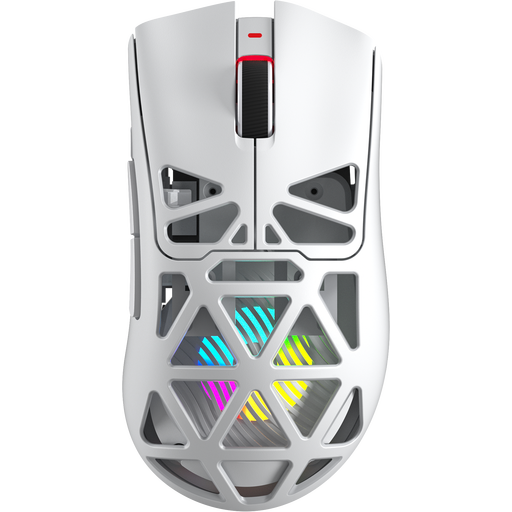 Image unavailable
A wireless option with several stated connection methods; check which one you’ll use and whether the receiver suits your PC setup.
The product information lists 2.4G, Bluetooth 5.0 and USB-C, a PAW3311 sensor, 12,000 DPI, a weight of 67 g and a 400 mAh battery. It also mentions 8 kHz; this specification is not an independent measurement of reaction latency.
A mouse specification doesn’t show that your biological reaction ability will improve. Your measured time may also depend on the input-to-screen chain; research into reaction tasks also shows that an additional audio cue can affect measured visual reactions. So compare scores under the same conditions.
Test the mouse with your headphones switched on, and position the receiver according to the instructions for your chosen model. Logitech Support explains that certain 2.4 GHz USB peripherals may experience interference when a USB 3.0 device is connected. In that situation, Logitech recommends spacing out the connections and placing the receiver closer to the peripheral; this doesn’t mean every combination will experience interference.
It varies by mouse. According to Logitech, the G305 uses one AA battery, while the wired G203 doesn’t need a mouse battery. Check which cable or receiver your chosen version needs, and follow the installation instructions.
According to the Dutch government, when you buy from a business at a distance, you’ll usually have a 14-day cooling-off period. You’re also entitled to a product that meets reasonable expectations; the Netherlands doesn’t have a fixed statutory warranty period of two years. If a product is faulty, contact the seller, even if the manufacturer offers its own warranty.