
Builders who want to customise their buttons
You often switch between actions while building and want to check whether easily accessible, customisable mouse buttons would suit you.


For building in a sandbox world, a mouse that feels comfortable in your hand and has easily accessible buttons and scroll wheel is a sensible starting point. In Minecraft, you use the mouse to look around and control the hotbar, among other things. Choose extra programmable buttons if you want to assign commands yourself, or go wireless if you want to avoid a cable and are happy to manage the battery or charging.
You often switch between actions while building and want to check whether easily accessible, customisable mouse buttons would suit you.
You prioritise a shape and grip that feel comfortable in your hand, rather than the highest number of buttons or the highest DPI.
You want to weigh up whether the freedom of movement offered by a wireless mouse is worth giving up the simplicity of a wired connection.
Choose this if: you mainly use the standard controls and don’t want to manage a mouse battery or separate receiver.
Bear in mind: a cable limits your freedom of movement, and a simple layout offers fewer buttons you can assign directly.
Choose this if: you often switch between actions and are happy to assign commands yourself.
Bear in mind: button placement, grip and the time it takes to set everything up; more buttons aren’t automatically more convenient.
Choose this if: a mouse cable gets in the way or you regularly change your setup.
Bear in mind: the connection type and battery or charging requirements of the model you choose.
| What to consider | What should you check? | Who should pay particular attention? |
|---|---|---|
| Scroll wheel and controls | Check that the scroll wheel, middle click and any side buttons are easy to reach with your grip, and that you can assign the commands you want. | If I want to switch quickly between items or actions while building, I want controls I can reach without searching. Around 33% of consumers say direct access to controls is their main priority. |
| Shape and grip | Check the dimensions and button placement; if possible, try the mouse with the grip you usually use. | For longer building sessions, I want a mouse shape that suits my hand and grip, even if that means fewer buttons. Around 27% of consumers give grip their highest priority. |
| Cable and power | Check your computer’s connections and whether the mouse needs a receiver, battery or charging cable. | If a cable restricts my movement, I want to know what connection and power source a wireless mouse needs. Around 20% of consumers prioritise a cable-free setup. |
| Features you need | Decide which controls you really want to use and check what settings are needed for them. | I want a straightforward mouse and don’t need extra controls if I’m not going to customise or use them. Around 20% of consumers prioritise features that suit the way they use their mouse. |
A sensor’s maximum DPI rating alone doesn’t tell you whether the scroll wheel, buttons or fit will suit the way you build.
First compare the shape, scroll wheel and buttons you actually want to use.
Programmable buttons won’t automatically perform the game action you want; you need to assign the commands yourself.
Make a short list of commands in advance and check which software and settings your exact mouse requires.
Allow time to assign and check the buttons.
Connection and power requirements vary by model, so check the details of the mouse you’re considering.
Check what’s included in the box, how the mouse is powered and which connection your computer needs.
A similar base name doesn’t prove that two variants are the same model or have the same specifications.
Before buying, compare the full model name and relevant specifications on the product page.
The G203 LIGHTSYNC offers a wired layout with six buttons, while the wireless G502 X LIGHTSPEED has more customisable controls.
The wired Cobra is a compact, more straightforward option; the Basilisk V3 Pro is a separate wireless model with more controls.
The wired Rival 3 Gen 2 and Rival 5 are examples of different shapes and control layouts.
The wired Scimitar RGB Elite is designed for those who want to assign lots of functions to buttons.
This selection from Joybuy includes wired models, mice with programmable buttons and wireless options. Check each model’s connection, grip and settings to make sure they suit your setup.
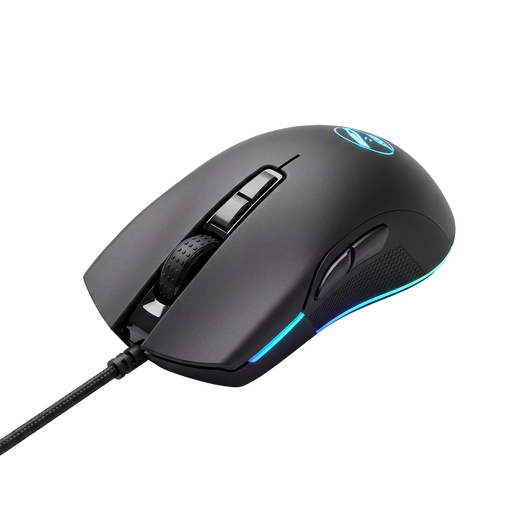 No image available
A wired option if you want to assign commands without using a wireless connection.
The product description lists a USB cable and seven programmable buttons.
 No image available
A wireless option with several listed connection types; check which ones work with your computer.
The product information lists 2.4G, USB-C and Bluetooth, a PAW3395 sensor, 26K DPI, a 400 mAh battery and a weight of 56 g. It also mentions a magnetic charging dock; keep magnets away from pacemakers, medical implants and credit cards.
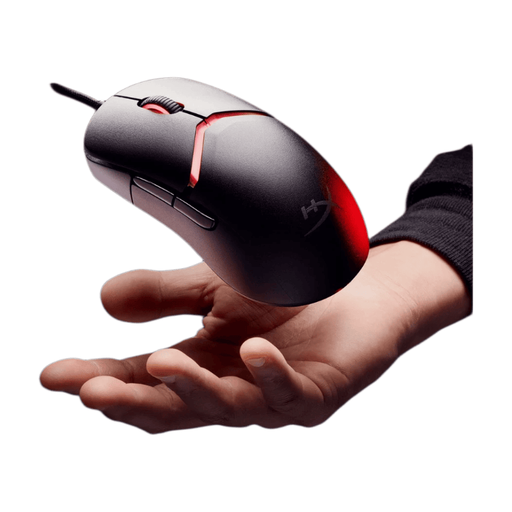 No image available
A wired option if you want to adjust the grip configuration to suit your hand and the way you hold the mouse.
The product description lists a weight of 69 g, interchangeable parts, 16 grip combinations and a flexible USB cable.
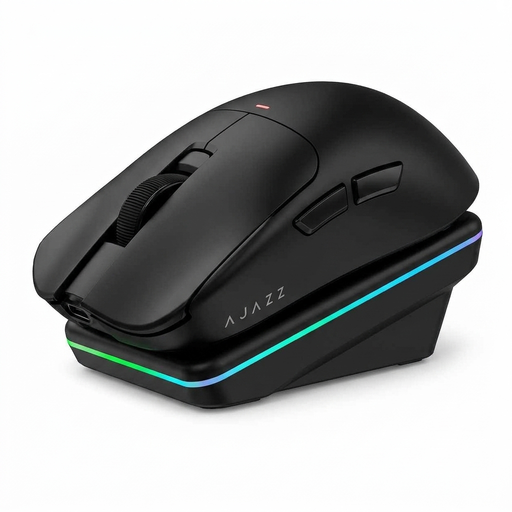 No image available
A wireless option if you want to compare different connections and customisable buttons.
The product information lists Bluetooth, 2.4G and USB-C, a PAW3311 sensor, 24,000 DPI and a weight of 63 g. The description says it suits medium to large hands and palm or claw grips, and mentions software for customising buttons and macros.
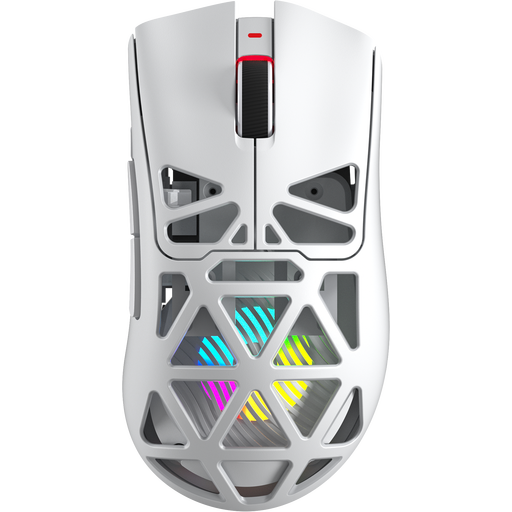 No image available
A wireless model to consider if you’re looking for programmable buttons and several connection options.
The product name lists seven programmable buttons, Bluetooth 5.0, 2.4G and USB-C, a PAW3311 sensor, 12,000 DPI, 8KHz, a weight of 67 g and a 400 mAh battery.
No, not for the standard controls described here: Minecraft uses mouse movement, clicking and scrolling. Extra buttons are an option if you want to assign other commands yourself; check the settings for your version of the game and your mouse.
Start with the in-game controls, then check which software supports your exact model. Logitech explains how to assign buttons and set up profiles in G HUB for supported Logitech G mice; Corsair lists iCUE for profiles and key bindings on the Scimitar RGB Elite.
No, a mouse and headphones are separate peripherals. However, check your computer’s connections if both devices need a port or receiver.
For an online purchase by a consumer, ACM ConsuWijzer says you generally have a statutory 14-day cooling-off period from the date of delivery; exceptions and conditions may apply. The seller is also responsible for the statutory guarantee if the product does not meet what you could reasonably expect from it, as explained by the Netherlands Authority for Consumers and Markets.