
Vandaag of morgen in huis

Kwaliteit gegarandeerd

Welkomstaanbiedingen ontgrendelen: GRATIS bezorging | Tot 80% korting | Gratis 30 dagen JoyPlus-proefperiode
Download de app
A gaming mouse should suit your game, hand and the way you move. Yet many buyers focus mainly on a high DPI figure, RGB lighting or a well-known brand. This can lead to a mouse that looks impressive on paper but feels too heavy, uncomfortable or awkward in practice.
Use these points to compare a gaming mouse for PC based on features you can check. That way, you can find a wireless model, an ergonomic gaming mouse or a lightweight gaming mouse that suits your setup.
A gaming mouse with a high DPI can be set to a high sensitivity, but that doesn’t automatically mean you’ll play more accurately. DPI mainly determines how far the cursor moves in response to a particular physical mouse movement. Many FPS players actually use lower sensitivity and move their whole arm more.
So be sure to check:
A wireless gaming mouse can connect via 2.4 GHz, Bluetooth or both. Bluetooth is useful for laptops and everyday use, but 2.4 GHz with a USB receiver is usually the more practical choice for fast-paced PC games. Also check whether the receiver is included and where you can plug it in.
A rechargeable battery means no loose batteries, but you should still check the stated battery life and whether you can keep playing while it charges.
An ergonomic gaming mouse won’t automatically suit every hand. A large model can feel comfortable with a palm grip, while a compact, symmetrical model may be a better fit for a claw or fingertip grip. Check the dimensions, weight and shape of the thumb rest.
A light mouse can help with fast movements, but some players prefer a heavier model for greater stability. Choose based on your playing style, not just the lowest weight.
A lightweight gaming mouse can feel comfortable for fast-paced FPS games. Models weighing around 53 to 75 grams are available, while ergonomic models with extra buttons often weigh around 90 to 112 grams.
As well as the weight, check:
An optical gaming mouse tracks movement using a sensor. A high maximum DPI, such as 18,000, 30,000 or more, gives you plenty of adjustment options. For most players, it’s more important that the settings can be adjusted in suitable steps and that the sensor suits their preferred sensitivity.
According to the product description, the Logitech G PRO X SUPERLIGHT 2 has a HERO 2 sensor with a stated resolution of up to 44,000 DPI. Other models, such as the Razer DeathAdder Essential, are listed at 6,400 DPI. Both may be suitable, depending on your preferences and the games you play.
The polling rate shows how often the mouse reports its position to the computer. 1000 Hz is a common setting for gaming. Some models list 4000 or 8000 Hz, but check whether your PC, software and monitor can make meaningful use of that setting.
A wired mouse doesn’t need a battery. A wireless gaming mouse gives you more freedom to move, but you’ll need to consider battery life, the charging cable and the receiver.

Why it suits this user: This wireless gaming mouse combines a 2.4 GHz connection with a weight of around 73 grams and six programmable buttons. It’s a straightforward option if you’re looking for your first serious gaming mouse.
The product details list 4800 DPI, a 1000 Hz polling rate, USB-C charging and up to 80 hours of battery life. This gives you a clearer picture of the key features than a marketing claim about speed alone.
Wireless 2.4 GHz connection, six programmable buttons, RGB lighting and the option to play while charging via USB-C.
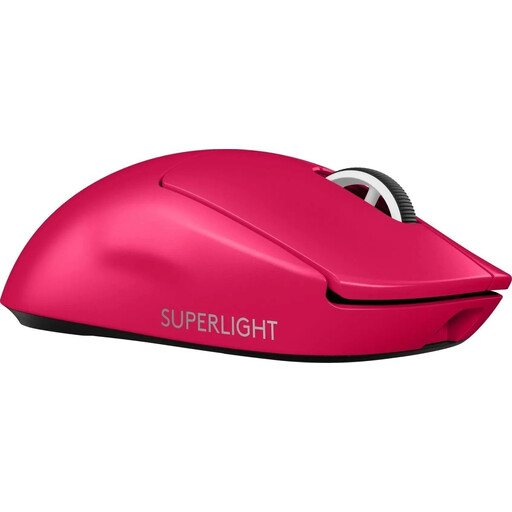
Why it suits this user: If you’re looking for a lightweight wireless mouse with minimal distractions, this 60-gram, right-handed model offers LIGHTSPEED technology and USB-C charging.
The low weight and wireless connection are clearly stated. Check in advance, though, whether five buttons are enough for the games you play.
60 grams, HERO 2 sensor, LIGHTSPEED wireless connection and USB-C charging. The product information lists a sensor resolution of up to 44,000 DPI.
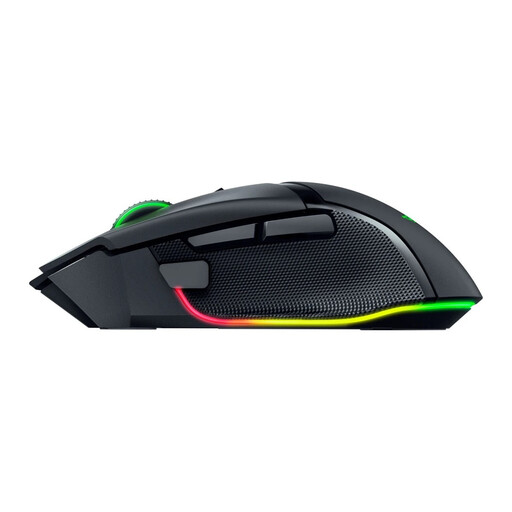
Why it suits this user: This model is aimed at players who need extra features for MMO, MOBA or RTS games. Its ergonomic shape, wireless connection and 11 programmable buttons offer plenty of customisation options.
The number of buttons, connection options and weight of around 112 grams are clearly specified. This helps you assess comfort and control before buying.
35,000 DPI optical sensor, 11 programmable buttons, 2.4 GHz/Bluetooth and USB connectivity. The product description also mentions Razer Chroma RGB lighting.
We’ve put together a complete, up-to-date list of products that meet these strict selection criteria and the current European safety regulations.
Use this quick checklist:
Electronic products are generally covered by a minimum two-year legal guarantee in the European Union, and additional rights may apply under national rules. Keep your proof of purchase and check the seller’s terms and conditions.
No. A high maximum DPI gives you more adjustment options, but many players use a lower setting. The sensor, shape, grip and polling rate often have more impact on everyday use.
It can be. A 2.4 GHz connection with a USB receiver is designed for fast wireless communication. Check the stated polling rate and battery life, and whether you can keep playing while it charges. Bluetooth is mainly useful for compatibility and energy-efficient use.
Its lifespan depends on the switches, cable, scroll wheel, how often you use it and how well you maintain it. Manufacturers sometimes state a click rating, but this is a product specification, not a guarantee of a particular lifespan. Keep the sensor and mouse feet clean, and don’t pull on the cable.
