
Racer with limited desk space
Wants to practise pit-lane entries on a single screen without the monitor and stand taking over the workspace. Measure the available space, stand and viewing distance before choosing.


For pit-lane practice at a small desk, a compact 16:9 Full HD monitor is the space-saving choice. A 27-inch QHD screen offers more pixels if your desk and PC can handle the combination, while an ultrawide only makes sense if you have room for the extra screen width and your simulator displays it properly. AOC lists the 24G4X as a 23.8-inch Full HD monitor and the CU34G2XP/BK as a 34-inch model with a 21:9 aspect ratio. Measure your desk and viewing distance from your usual racing position, then set the field of view in your simulator: a bigger screen won’t correct an incorrect setting by itself.
Wants to practise pit-lane entries on a single screen without the monitor and stand taking over the workspace. Measure the available space, stand and viewing distance before choosing.
Wants to distinguish pit information and track details, and is weighing up resolution and screen settings against available space and PC performance. iRacing Support describes information panels that appear on screen.
Is considering ultrawide for more horizontal screen space, but first checks that the desk and simulator display suit the wider aspect ratio.
Choose this if: your desk has limited space and you want to use a single screen; remember to measure the stand and viewing distance too.
Trade-off: according to AOC, the 24G4X has a resolution of 1920 × 1080 pixels, which is fewer pixels than the QHD options mentioned here.
Choose this if: you have room for a monitor around 61.5 cm wide and want more pixels for text and track details.
Trade-off: ASUS lists a maximum of 144 Hz via HDMI and 180 Hz via DisplayPort for the TUF Gaming VG27AQ3A; the stand isn’t height-adjustable.
Choose this if: you have room for the full screen width and viewing distance, and your simulator displays the wider aspect ratio properly.
Trade-off: the AOC CU34G2XP/BK has a 21:9 screen with a resolution of 3440 × 1440 pixels; extra width doesn’t guarantee that you’ll see a pit-lane entry sooner. AOC’s UK product specification doesn’t confirm availability in the Netherlands.
First measure your set-up, then assess readability from your seated position. Finally, check that your PC, connection and simulator support the picture mode you want.
| What to consider | What to look for | Who is this most important for? |
|---|---|---|
| Will the screen fit on your desk? | Compare the monitor’s width and depth, including the stand, with your workspace. Also check for VESA mounting and height adjustment if you need a different set-up. | If my desk has limited space, I want the screen and stand to fit together without taking over my workspace. Around 36% of consumers put desk fit first. |
| Are the on-screen cues easy to read? | Consider resolution and screen size together, and check the scale and position of information panels in your simulator. iRacing Support places these panels in the lower-right of the field of view. | I want to distinguish pit information and track details from my usual seating position. Around 29% of consumers make readability their top priority. |
| Can your PC deliver the picture mode you want? | Check the resolution and refresh rate your PC can achieve, as well as what’s supported by the connection you’re using and the exact model. | I want to choose a picture mode that my PC and connection can actually handle. Around 21% of consumers prioritise smoothness and connectivity. |
| Is the extra screen width worth the space? | Measure the entire set-up and check the ultrawide display and field-of-view settings in your own simulator. iRacing Support uses viewing distance when setting up a single screen. | If I want a wider racing scene, it still needs to fit on my desk and display properly. Around 14% of consumers prioritise a wider horizontal view. |
The ASUS TUF Gaming VG27AQ3A takes up 21.40 cm of depth with its stand, which isn’t height-adjustable.
Compare the full dimensions, including the stand, with your desk. Check the VESA size if you’re considering a monitor arm.
If the included stand doesn’t fit, you may need a different stand or a monitor arm.
The supported refresh rate can vary by connection, and doesn’t tell you how many frames your PC will actually produce in a racing simulator.
For the exact model, check the resolution and refresh rate supported by the port you plan to use, then compare them with your PC’s output.
A wider aspect ratio gives you more horizontal screen space, but what you see also depends on your simulator settings and field of view.
First check that the monitor fits your set-up, then adjust the display in your own simulator.
The 24G4X and CU34G2XP/BK discussed here represent a compact Full HD option and an ultrawide option respectively.
The TUF Gaming VG27AQ3A is a 27-inch QHD model for those who want more pixels and have enough space.
The G274QPF E2 is a 27-inch QHD alternative in the 16:9 category.
The UltraGear 24GS60F-B is an example of a compact 23.8-inch Full HD option.
This Joybuy selection includes compact Full HD monitors and larger QHD or 4K screens. Compare screen size and resolution with your desk, viewing distance and PC.
 No image available
A compact screen option if you want to make the most of your available desk space.
24 inches; Full HD (1080P); 144 Hz; IPS; Adaptive Sync.
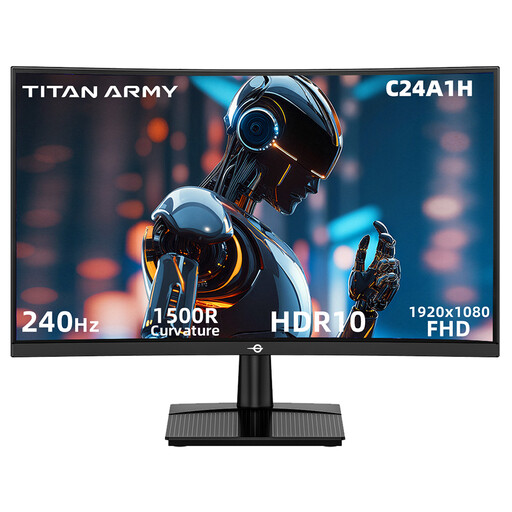 No image available
A 16:9 Full HD option to consider when comparing monitors for a compact desk set-up.
VA; Full HD; 240 Hz; EU Version.
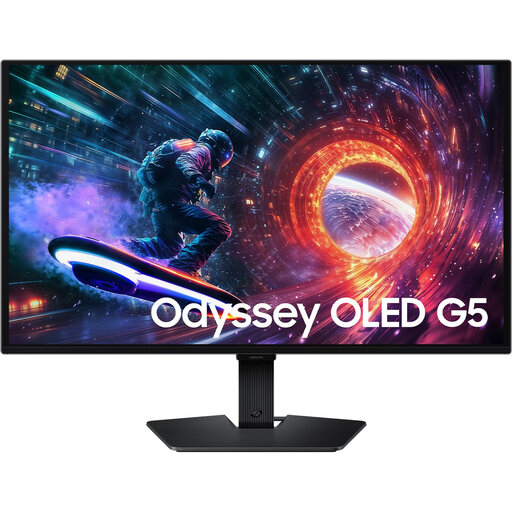 No image available
A 27-inch alternative if you have more desk space than the compact screen option requires.
27 inches; Quad HD; OLED; 180 Hz.
 No image available
A 27-inch QHD option to compare if your desk has room for a larger screen.
2560 × 1440; 180 Hz; 1 ms; HDR10; 2 × HDMI 2.0 and 1 × DisplayPort 1.4.
 No image available
A 4K option if you have room for a larger screen and want to check that your PC supports the picture mode you need.
26.5 inches; 3840 × 2160; OLED; 120 Hz. The product information recommends avoiding prolonged display of static images because of the risk of image retention.
From your usual racing position, measure the distance from your eyes to the screen and the screen’s width. iRacing Support explains how to use these measurements to set the field of view for a single screen. Then check the horizon and the readability of information panels. The controls may vary between simulators.
Check the frame rate your PC achieves in the simulator and which modes the connection supports. For the ASUS TUF Gaming VG27AQ3A, ASUS lists a maximum of 144 Hz via HDMI and 180 Hz via DisplayPort, so the maximum doesn’t apply to every connection.
For online purchases in the Netherlands, ACM ConsuWijzer states that the 14-day cooling-off period ends 14 days after the product has been delivered. Check the terms that apply to your order and handle the monitor carefully while you’re assessing it.
ACM ConsuWijzer explains that the statutory guarantee applies alongside any manufacturer’s warranty and depends on what you can reasonably expect from the product; report any unexpected fault to the seller. The European Commission states that computer monitors have an energy label on a scale from A to G. Check the label for the exact model if energy consumption is important to you.