
Replay analyst with a single work screen
You watch movement while reading timelines, notes and text. Resolution and a practical workspace matter just as much as speed.


For recorded clips, a monitor with a higher refresh rate doesn’t create extra frames; check the recording’s frame rate instead. For replays rendered again by a game engine, a higher refresh rate may be useful, provided your computer and source can supply those frames. If you also spend a lot of time looking at text and timelines, consider resolution, readability and adjustability too. Don’t judge motion performance solely by the advertised response time.
You watch movement while reading timelines, notes and text. Resolution and a practical workspace matter just as much as speed.
You track movement in replays played back in the game engine. The frames supplied by the source and measured motion performance determine whether a higher refresh rate makes a difference.
You also use the screen for office work over extended periods. Readability, adjustability and, with OLED, the risk from static images may all matter alongside the refresh rate.
Choose this option if: you play back replays in a game engine at a high frame rate and closely track moving players.
Bear in mind: Full HD offers fewer pixels for text and multiple analysis windows than QHD. Check the motion test results for the exact model too.
Choose this option if: you want to view details, text and multiple windows on the same screen as well as movement.
Bear in mind: a higher resolution puts more demand on your computer when rendering replays in a game engine. Check the connections and adjustment options for each model.
Choose this option if: you have a powerful setup, value 4K detail and won’t mainly use the screen for office windows that stay static for long periods.
Bear in mind: the source and connection determine whether 4K is possible at a high refresh rate. Static elements carry a risk of burn-in on OLED screens.
| What to consider | What should you check? | Who is this important for? |
|---|---|---|
| Motion performance | Match the refresh rate to the source’s frame rate, and check response time and overshoot test results at the settings you use. | When I assess fast movement in competitive replays, I want to know whether the source actually supplies those frames. Around 31% of consumers prioritise motion clarity. |
| Detail and text | Compare the resolution and screen size with your viewing distance, and check how text looks. A higher resolution can put more demand on your computer when rendering replays. | When I want to read details, notes and analysis windows at the same time, I look for a screen that’s comfortable to use for text too. Around 31% of consumers prioritise readability and workspace. |
| Workspace and connection | Check the screen and stand dimensions, adjustment options, and the display modes supported by your computer, connection and cable together. | When I want to position the screen to suit my desk and connect it to my computer, I want to know the dimensions and available display modes in advance. Around 23% of consumers prioritise setup and connectivity. |
| Static use and energy | For OLED, compare the maintenance features and warranty terms for the exact model. For energy use, check that model’s EU energy label. | When my analysis windows stay on screen for long periods, I want to take the risk of OLED burn-in into account. For energy use, I check the label for the specific model. Around 15% of consumers prioritise these aspects of use. |
The source’s frame rate and the screen’s refresh rate are not the same thing. Playing a recorded clip on a monitor with a higher refresh rate doesn’t add extra frames.
First work out whether you’re watching a recorded video or having a replay rendered again in a game engine. Check the source’s frame rate.
Pixel response varies depending on the transition and settings. A setting may also cause visible overshoot or slight ghosting.
Where possible, check independent test results for the specific model at the refresh rates and overdrive settings you actually use.
Fixed elements displayed for long periods can pose a risk of burn-in on OLED screens. Maintenance features don’t eliminate that risk entirely.
Compare your usage pattern with an IPS model, and read the warranty terms for the exact version sold in the Netherlands.
The XL2546X is an example of a Full HD esports model for fast action rendered in a game engine.
The G27Qi offers a QHD IPS option for a mix of gaming and analysis.
The G274QPF E2 is a QHD Rapid IPS example for those looking to combine speed with an adjustable setup.
The PG32UCDM Gen3 is a separate 4K QD-OLED model for those looking for high resolution and a high refresh rate.
The 27GS75Q-B is an example of a QHD IPS model with an adjustable stand.
This Joybuy selection features gaming monitors with QHD or 2K detail for replay analysis as well as working from home. Check the resolution, connections and adjustment options for each model to make sure they suit your computer and desk.
 No image available
A 32-inch QHD IPS screen for viewing replays, text and analysis windows all in one place.
32 inches, Quad HD, IPS and 180 Hz. The stand is listed as offering height, swivel, tilt and pivot adjustment.
 No image available
The 2K resolution and high stated refresh rate are worth considering if you view moving replays alongside work; the source determines how many frames are available.
27 inches, 2560 × 1440, Rapid IPS and 200 Hz. The product description mentions HDR support and a 178-degree viewing angle.
 No image available
A 27-inch Quad HD model for viewing detail and rendered movement on the same screen. A higher refresh rate only helps if the source supplies the frames.
2560 × 1440, VA panel, 180 Hz and FreeSync Premium. The listed connections are 2× HDMI 2.0 and 1× DisplayPort 1.4.
 No image available
This QHD IPS model is an option for viewing detail, text and replay footage on the same screen.
27 inches, 2560 × 1440, IPS and 144 Hz. The product description mentions Adaptive Sync, DisplayPort 1.4 and HDMI 2.0.
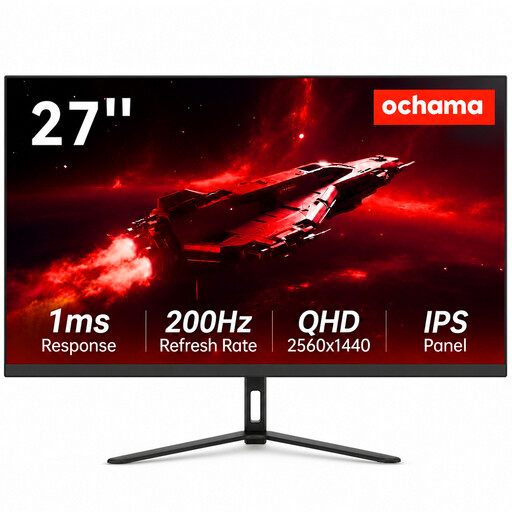 No image available
The product title mentions both gaming and office work, for those looking to use one screen for both.
27 inches, 2K and 200 Hz. The product description mentions a narrow bezel and multitasking.
A monitor doesn’t add extra frames to an existing recording. Check the frame rate of the clip or streaming service, and distinguish between video playback and a replay rendered again by a game engine. A higher refresh rate may be useful for rendered movement if the source supplies those frames.
In Windows, check the available refresh rates in the advanced display settings. Microsoft says these depend on the connected screen and the modes it supports. Check the selected resolution and connection too.
No, you don’t need an additional warranty to have statutory rights. The Dutch government says there is no fixed statutory warranty period in the Netherlands, and that the retailer is your point of contact if a product is faulty. An additional warranty may be useful if its terms provide extra rights. Online purchases from a business generally come with a 14-day cooling-off period, subject to legal exceptions.
Rules on display screen work may be relevant for employees and employers. Subject to certain conditions, Arboportaal lists a height-adjustable screen as one example. This isn’t a general product requirement for every private buyer. Monitors sold on the EU market also have an energy label, which you can use to compare information for the exact model.