Start with a screen that lets you read the interface clearly from your usual viewing distance and can be adjusted to suit you. Then check which refresh rate your computer actually supports through the connection you plan to use; a higher Hz rating or an OLED panel doesn’t automatically make a monitor more suitable. If static interface elements will remain on screen for long periods, also check the care requirements for OLED models.
Who is this relevant to?
Players who want to read the interface clearly
If you follow information on screen, you’ll want to distinguish text and symbols from your usual viewing distance and position the screen comfortably. Arboportaal lists small symbols, contrast and reflections as factors that can affect readability.
Players with long practice sessions
If you practise for long periods, an adjustable setup can make it easier to adapt your screen as needed. An adjustable monitor is no substitute for changing your posture or taking short breaks; Arboportaal also recommends looking away regularly and taking microbreaks.
Players who follow movement on screen
If you want to follow fast-moving visuals, don’t just look at the refresh rate. Check your system’s output and the connection you’re using too. RTINGS describes refresh rate and pixel response as separate aspects of motion handling.
What should you look for when choosing?
| What to consider |
What to look for |
Who is this important for? |
| Readability |
Assess the size, resolution and scaling settings from your own viewing distance; also consider reflections and contrast. |
I want to distinguish interface elements clearly from my usual viewing distance; around 31% of consumers put readability first. |
| Adjustability |
Check how adjustable the stand is and whether the monitor will fit on your desk. |
If I practise for long periods, I want to adjust the screen position to suit my setup; around 25% of consumers give adjustability top priority. |
| Motion handling |
Compare the maximum refresh rate for each connection with the frame rate your system can achieve; also look for pixel response and overshoot test results. |
I want to follow movement clearly, so I look beyond the Hz rating; around 25% of consumers put motion handling first. |
| System compatibility |
Check the resolution and maximum Hz supported by each port, as well as the connections and cables your device uses. |
I don’t want to pay for display modes my current system can’t use; around 19% of consumers prioritise system compatibility and cost. |
Common buying mistakes
-
Assuming a quoted 1 ms response time guarantees sharp motion
Pixel response and overshoot can vary depending on the settings and refresh rate. So, a quoted response time alone doesn’t tell you how moving images will look in your setup.
Look at independent test results at the refresh rates you’ll actually use for gaming.
-
Looking only at the highest Hz rating on the box
The available refresh rate can differ between HDMI and DisplayPort. Your device and the cable you use must also support your chosen resolution and refresh rate.
Compare the monitor’s port specifications with those of your computer before you decide.
-
Choosing an OLED monitor without considering static interface elements
Static images displayed for long periods can cause burn-in on OLED screens. Some models also have specific care or cover requirements.
Read the care and warranty terms for the exact model, and consider how long interface elements will remain visible during your sessions.
-
Confusing the manufacturer’s warranty with all your statutory rights
A manufacturer’s warranty is separate from your right to a product that is fit for purpose. The Dutch government says there is no fixed statutory warranty period; the retailer is your point of contact if something goes wrong.
Keep your proof of purchase and contact the retailer if you have a problem.
Relevant brands to compare
AOC
The models listed from AOC offer two different options: an adjustable QHD IPS model and a QD-OLED model. These are distinct choices, not an overall assessment of the brand.
- AOC lists a 180 Hz refresh rate and height adjustment for the Q27G4XF.
- For the AG276QZD2, AOC lists 280 Hz and a three-year burn-in warranty subject to care requirements. Check the terms for the exact model.
MSI
The MAG 272QPF E20 is a QHD Rapid IPS model you can compare for its port specifications and adjustability.
- For this model, MSI lists up to 200 Hz via DisplayPort at QHD and up to 144 Hz via HDMI at QHD, plus height adjustment.
- Check the specifications for the exact variant and connection before buying.
Philips
The Evnia 27M2N5500/01 is a QHD IPS model you can use as a reference when weighing resolution against refresh rate.
- Philips lists a 180 Hz refresh rate and FreeSync for this model.
- Claims about an improved gaming experience come from the manufacturer and don’t prove that the model is better for practising support roles.
LG
The UltraGear 27GS75Q-B is a QHD IPS model that offers several adjustment options.
- LG lists a 180 Hz refresh rate and height, tilt and pivot adjustment for this model.
- LG Netherlands marks the 27GS75Q-B as discontinued; this reference says nothing about the availability of other LG models.
Dell
The G2724D is a model-specific reference for comparing adjustability and the difference between HDMI and DisplayPort.
- Dell Netherlands lists QHD up to 165 Hz via DisplayPort and 144 Hz via HDMI, plus height adjustment.
- Dell Netherlands marks the G2724D as unavailable; the specifications listed don’t confirm current availability.
Joybuy products
This selection from Joybuy includes QHD and WQHD gaming monitors with different panel types, screen sizes and refresh rates. Compare their connections and adjustability with your own setup. For OLED models, also consider how long static interface elements will be displayed.
 No image available
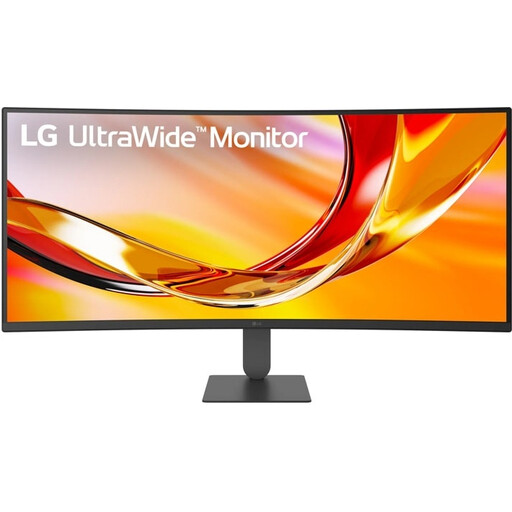
LG UltraWide 34U640B-B 34" WQHD 144Hz Curved VA Monitor
An option to consider if you’re weighing up a wide WQHD screen and adjustability for long sessions.
34-inch curved VA screen with a 21:9 aspect ratio and 3440 × 1440 resolution.
Listed features include 144 Hz, FreeSync, USB-C, and height and tilt adjustment.
View at Joybuy
 No image available
Philips Evnia 27M2N3500NF 27" QHD gaming monitor
A 27-inch IPS option for comparing interface clarity and refresh rate side by side.
IPS panel with 2560 × 1440 pixels, 144 Hz and Adaptive Sync.
DisplayPort 1.4, HDMI 2.0 and tilt adjustment are listed.
View at Joybuy
 No image available
AOC GAMING Q27G4ZDR 26.5" QHD QD-OLED gaming monitor
A QD-OLED option to consider if you’re interested in this panel type and want to factor in the care requirements.
26.5-inch QHD screen with 2560 × 1440 pixels, 240 Hz and a third-generation QD-OLED panel.
The stand offers height, swivel, tilt and pivot adjustment. Bear in mind the risk of burn-in if static images remain visible for long periods, and check the terms for the exact model.
View at Joybuy
 No image available
LG UltraGear 34GX900A-B.AEU 34" curved WQHD OLED gaming monitor
A wide OLED screen to compare if you’re considering both screen size and panel type.
34-inch curved screen with 3440 × 1440 pixels, 240 Hz and Adaptive Sync.
Height, tilt and swivel adjustment are listed. Static images displayed for long periods can cause burn-in on OLED screens, so check the model’s care requirements.
View at Joybuy
 No image available
MSI MAG 341CQP QD-OLED X28 34,18" curved UWQHD monitor
A curved QD-OLED option with a high quoted refresh rate. Check whether your system can make use of it through the connection you plan to use.
34.18-inch UWQHD screen with 3440 × 1440 pixels and 280 Hz.
G-SYNC Compatible, FreeSync Premium Pro and OLED Care 2.0 are listed. With OLED, bear in mind that static interface elements may remain visible for long periods.
View at Joybuy
Frequently asked questions
Is 200 Hz always better than 180 Hz for long practice sessions?
No, not necessarily. Check the frame rate your system can achieve, the refresh rate available through your connection, and how the screen handles motion blur and overshoot. For the MAG 272QPF E20, MSI lists up to 200 Hz via DisplayPort and up to 144 Hz at QHD via HDMI.
What can I adjust myself during a long session?
Adjust the screen position, readability and lighting to suit your setup, and vary your posture. Arboportaal also recommends looking away from the screen regularly and taking microbreaks. Following this advice doesn’t guarantee that a particular screen will prevent discomfort.
What are my rights when I buy a monitor online?
For eligible online distance purchases from a business, the Dutch government generally provides a 14-day cooling-off period. There is no fixed statutory warranty period in the Netherlands, but you are entitled to a product that is fit for purpose and can contact the retailer if something is wrong. A manufacturer’s warranty is in addition to these rights.
Do Dutch rules on display screen work also apply to gaming at home?
The obligations mentioned apply to employers and their employees; they don’t create a legal duty for gaming at home. Arboportaal does offer practical tips, such as varying your posture and taking microbreaks, which you can also follow during a gaming session at home.


