Start by choosing a monitor to suit your computer. With a compatible laptop, a monitor that supports USB-C video and provides enough USB-C power could do away with the separate charger. With a desktop, however, this feature generally won’t free up a socket. Then compare screen space, the refresh rate your computer can actually handle, built-in speakers and the energy label for the exact model. A bigger or faster screen isn’t automatically more energy-efficient or more convenient.
Who is this choice relevant to?
Laptop gamer with limited sockets
Wants video and, if the equipment is compatible, laptop power through the same monitor connection. So check that the port supports video, how much power it delivers and whether the monitor has built-in speakers. Dell Support explains that USB-C video requires DisplayPort Alt Mode or a compatible Thunderbolt connection.
Builder of a detailed zoo
Prioritises clear details and screen space over the highest possible refresh rate. LG, Dell Netherlands and Samsung Netherlands list monitors in a range of sizes and resolutions.
Desktop gamer comparing power consumption
Won’t benefit from USB-C laptop charging, so compares useful connections, performance and the energy label for each model. The European Commission explains energy labels for displays, while EPREL contains model-specific power consumption data.
What should you look for?
Start with your computer and the connections you need. Then decide how much screen space you want, and compare refresh rate and power consumption separately.
| Buying concern |
What to look for |
Who is this most relevant to? |
| Freeing up a socket |
Check that your computer supports USB-C video, that the monitor supports Power Delivery and that it can provide the power your laptop needs. |
When I’m gaming on a laptop, I don’t want to need a separate power adapter as well. The monitor must be able to transmit video and provide enough power. For around 36% of consumers, freeing up a socket is their main buying concern. |
| A clear view while building |
Compare screen size, resolution and aspect ratio. Check that your computer and game can handle your chosen settings. |
When building and managing my zoo, I want to see details clearly and have plenty of screen space. Around 29% of consumers prioritise screen space and detail as their main buying concern. |
| Smooth visuals |
Check which refresh rate is achievable at your chosen resolution and with your connection. |
If I care more about smooth visuals than extra screen space or a free socket, I want to know what my computer and game can actually deliver. Around 21% of consumers put achievable refresh rate first. |
| Power consumption |
Check the energy label or EPREL listing for the exact model. Compare SDR with SDR, and check HDR separately where relevant. |
I want to take the monitor’s power consumption into account rather than assume that USB-C automatically saves energy. For around 14% of consumers, reducing screen power consumption is their main buying concern. |
Common buying pitfalls
-
Assuming every USB-C monitor replaces a laptop charger
A USB-C connector doesn’t guarantee video output, and the monitor may not provide enough power for your laptop. If so, you’ll still need a separate laptop charger.
Before you buy, check whether your computer supports video output over USB-C or Thunderbolt, and whether the available power is enough for your laptop, even while it’s in use.
You may still need an extra mains socket for a separate laptop charger.
-
Assuming a gaming monitor has built-in speakers
Not every model has speakers. MSI says the MAG 27CQ6F has no built-in speakers, while LG lists them for the 34GX900A-B.
Check the audio details for the exact model on its product page rather than relying on the brand or product category.
Separate speakers can take up extra space and may need another power socket.
-
Confusing a high refresh rate with low power consumption or guaranteed smooth gameplay
The maximum refresh rate and energy data answer different questions. Your computer and connection also determine which display settings you can use.
Compare performance and power consumption separately, using the resolution and settings you plan to play with.
Brands worth considering
LG
The UltraGear 34GX900A-B is worth considering if you want a wide gaming display, USB-C power and built-in audio.
- LG lists a 3440 × 1440 resolution, 240 Hz, 65 W USB-C Power Delivery and 7 W speakers per channel for this model.
- Check that your laptop and game can make use of these features, and compare power consumption for the exact model separately.
Dell
The Plus series includes the S2725DC, a 27-inch QHD monitor with USB-C.
- Dell Netherlands lists 144 Hz and integrated speakers for the S2725DC.
- Check the USB-C charging power for the exact version before assuming you can leave your laptop charger at home.
MSI
The MAG series includes conventional QHD gaming monitors with a high stated refresh rate.
- MSI lists a 2560 × 1440 resolution and 180 Hz for the MAG 27CQ6F.
- The MAG 27CQ6F isn’t listed as having built-in speakers, so don’t expect this feature on this model.
Samsung
The Odyssey G5 G55C is a curved 27-inch QHD option if you’re considering this type of screen.
- Samsung Netherlands lists 165 Hz, 1000R curvature and FreeSync for the LS27CG552EUXEN.
- These specifications don’t tell you whether the model supports USB-C laptop charging or has built-in audio, so check these separately.
Philips
The Evnia 27M2N5500/01 is a 27-inch QHD gaming option to compare if USB-C power isn’t a requirement.
- Philips lists a 2560 × 1440 resolution and 180 Hz for this version.
- Check the product specifications for this version before assuming it supports Power Delivery.
Joybuy monitors for building and managing
This Joybuy selection includes monitors to suit different priorities around USB-C power, extra screen space and seeing the details as you build and manage a virtual zoo.
 No image available
MSI Pro PRO MAX 271UPXW12G
Worth comparing if you want to combine 4K detail with USB-C charging for a compatible laptop.
26.5 inches; 3840 × 2160; OLED; 120 Hz; USB-C Power Delivery up to 98 W; integrated speakers.
Your laptop must support video output over USB-C or Thunderbolt and stay within the available charging power. The monitor still needs mains power.
View at Joybuy
 No image available
LG UltraGear 34GX900A-B
An option if you want extra horizontal screen space and your computer can handle the chosen resolution.
34 inches; curved; 3440 × 1440; 240 Hz; 65 W USB-C Power Delivery; built-in speakers.
Your laptop must support video output over USB-C or Thunderbolt and have a charging requirement of no more than 65 W. The monitor still needs mains power.
View at Joybuy
 No image available
MSI MAG 341CQP QD-OLED X28
A widescreen option to consider if you want more horizontal space for the game and its controls.
34.18 inches; 21:9; 3440 × 1440; 280 Hz; USB-C with DisplayPort Alt Mode and up to 15 W Power Delivery.
Check whether 15 W is enough for your laptop’s charging needs. The monitor still needs mains power.
View at Joybuy
 No image available
MSI MAG 272QP QD-OLED X24
Worth comparing if you want QHD detail and built-in audio.
26.5 inches; 2560 × 1440; 240 Hz; USB Type-C; built-in speakers.
Check that the connections and features your computer needs are available for your chosen resolution and refresh rate.
View at Joybuy
 No image available
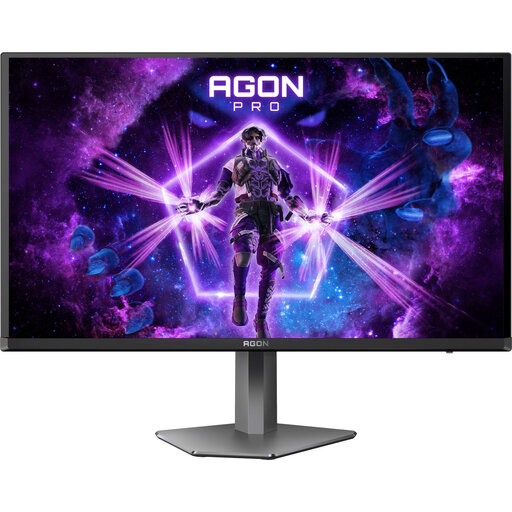
AOC AGON PRO AG276QZD2
An option to compare if you want a 27-inch QHD screen with built-in speakers.
2560 × 1440; 240 Hz via DisplayPort and 144 Hz via HDMI; built-in speakers.
The available refresh rate depends on the connection and computer you use.
View at Joybuy
Frequently asked questions
Can I leave my laptop charger at home if my monitor has USB-C?
Not just because of the connector. Check that your computer can output video over USB-C or Thunderbolt and that the monitor provides enough Power Delivery for your laptop while it’s in use. LG lists 65 W for the 34GX900A-B, but that doesn’t mean it’s enough for every gaming laptop.
How can I safely set up a system when I have few sockets?
Count the mains sockets you’ll need and consider the power load of the connected devices. The Netherlands Fire Service recommends plugging high-power appliances directly into a socket where possible, fully unwinding any cable reel and leaving enough space around equipment for ventilation.
Where can I find comparable power consumption figures?
The EU energy label for displays runs from A to G. Search for the exact model in EPREL and compare its stated power consumption under the same settings, such as SDR with SDR. HDR figures are listed separately where applicable.
What are my rights when buying a monitor online in the Netherlands?
For online consumer purchases, you generally have 14 days from delivery to change your mind, subject to legal exceptions. You also have statutory rights if a product doesn’t perform as you could reasonably expect under normal use; these rights aren’t automatically limited to the advertised manufacturer’s warranty. ACM ConsuWijzer explains these rights.


