What should you look for?
Start by weighing dark scenes against long periods of using fixed building menus. Then choose a size and refresh rate that your software and computer can actually make use of.
OLED
A good fit if: dark scenes matter more to you than having the same bright building menus on screen for long periods; OLED pixels can be switched off individually.
The trade-off: static elements displayed for long periods can cause image retention or burn-in. Check the care features and warranty terms for the specific model. RTINGS.com and LG explain these considerations.
VA LCD or VA with mini-LED
A good fit if: you want to weigh dark scenes against long periods using a fixed building interface. AOC lists a VA panel and 336 dimming zones for the Q27G3XMN/BK.
The trade-off: dimming zones alone don’t show what black uniformity or halos look like in practice; compare measurements of the exact model.
IPS LCD
A good fit if: you mainly use a fixed building interface, map and text, and deep blacks are less important to you. Philips lists an IPS panel, QHD and 144 Hz for the Evnia 27M2N3500NF/00.
The trade-off: look at contrast and black uniformity separately if you also play a lot of night-time journeys; panel type alone doesn’t guarantee a particular black level.
| Consideration |
What should you check? |
Who will value this? |
| Dark scenes |
Compare the exact model’s contrast and black uniformity, and check for halos around bright objects. |
If I build in a dark room, I want to see dark areas and bright details without distracting grey patches or halos. Around 31% of consumers say a dark picture is their top buying priority. |
| Fixed building menus |
Consider panel type and long-term use of static elements; for OLED, check the features and warranty terms for the exact model. |
If I spend a long time building with the same menus and toolbars, I want them to be easy to read and to understand the implications of static images. Around 31% of consumers prioritise long building sessions. |
| Workspace |
Compare the size, resolution and aspect ratio with your desk and software interface; check for 21:9 support before choosing an ultrawide. |
If I want to see the map, tools and railway scenery at the same time, the screen layout matters. Around 23% of consumers say extra workspace is their top buying priority. |
| Smooth journeys |
Check that your computer, graphics card, port and cable can deliver the resolution and refresh rate you want. |
If I also go on journeys, I want to know whether my computer and game can handle the display settings I want. Around 15% of consumers prioritise smooth journeys and system compatibility. |
Joybuy products
This selection includes LCD monitors for virtual railway building, with both 27-inch models and ultrawide options. Before choosing, check that the resolution and aspect ratio work with your software and computer.
 No image available
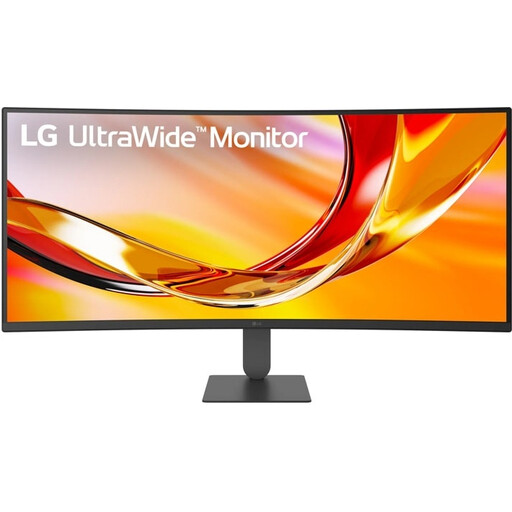
LG UltraWide 34U640B-B 34-inch WQHD 144Hz Curved VA Monitor
An ultrawide LCD option to compare if you want more room for your map and building interface; first check that your software supports 21:9 usefully.
34 inches, WQHD, 144 Hz, curved VA panel.
Joybuy
 No image available
Gawfolk GF340C-H 34-inch UWQHD Curved VA Monitor
This ultrawide LCD option could suit you if you want to view your map and building interface side by side; check the aspect ratio in your own railway software.
34 inches, 3440 × 1440, 21:9, 1500R curvature, 165 Hz and VA panel.
Joybuy
 No image available
MSI MAG 275CQDF X24 27-inch WQHD Curved Rapid VA Monitor
A 27-inch VA option to compare if you want a conventional widescreen layout for building and journeys; check the refresh rate your computer can achieve with your game.
2560 × 1440, 240 Hz, Rapid VA panel and curved screen.
Joybuy
 No image available
INNOCN 2751S PLUS 27-inch QHD mini-LED IPS Monitor
A 27-inch LCD option to compare if you’re considering mini-LED and long periods of using building menus; assess dark scenes based on the exact model.
QHD, IPS panel, mini-LED with 1152 zones and 275 Hz.
Joybuy
 No image available
Alienware AW3425DWM 34-inch Ultrawide VA Monitor
This ultrawide LCD option could give you more horizontal space for your map and building interface; check that your software displays the 21:9 layout properly.
34 inches, 3440 × 1440, 21:9, 180 Hz and VA panel.
Joybuy
Frequently asked questions
Is OLED automatically the best choice for a virtual railway in a dark room?
No, OLED isn’t automatically the right choice for every railway builder. Pixels that switch off individually can show deep blacks, but building menus that remain visible for long periods make image retention or burn-in an important consideration. Compare how much time you spend building with how much time you spend on journeys.
How can I check whether an ultrawide monitor works with my railway software?
Check the settings in your specific software to see whether the resolution and aspect ratio you want are available, and whether maps and menus remain usable. A monitor’s 21:9 specification alone doesn’t prove that the game supports it.
What can I do about temporary marks on an LG OLED monitor?
Follow the instructions for your exact model when using its pixel-cleaning features. LG describes pixel cleaning for temporary marks and notes that, on standard models, a cleaning cycle may also run automatically; this is not a guarantee against permanent burn-in.
What rights do I have in the Netherlands if my monitor bought online isn’t as it should be?
When you buy online from a business, you generally have a statutory cooling-off period, with some exceptions. According to ACM ConsuWijzer, this period ends 14 days after the product is delivered. Separately, the seller is responsible for the statutory guarantee if the product doesn’t meet what you could reasonably expect from it; a commercial manufacturer’s warranty doesn’t replace those rights.
Does a gaming monitor have an energy label?
The European Commission describes an energy label scale from A to G for electronic displays, including computer monitors. Compare the product information for the exact model; panel type alone doesn’t tell you how much energy a monitor uses.


