
Card and text reader
You mainly play turn-based games with cards and interface text, and want to choose a screen that makes this information comfortable to view. LG Netherlands and Philips Netherlands give examples of 27-inch QHD models.


For turn-based tactical games in a shared bedroom, a compact Full HD screen is a good fit when desk space is your main constraint. If you have room and your game and device support the resolution you want, consider a 27-inch QHD IPS monitor. Also plan ahead for evening light and sound: a picture setting won’t remove the potential effect of screen light on sleep, and stand dimensions and connections vary by model.
You mainly play turn-based games with cards and interface text, and want to choose a screen that makes this information comfortable to view. LG Netherlands and Philips Netherlands give examples of 27-inch QHD models.
You play while someone else is using the same room or wants to sleep, so you take screen light and sound into account. NIOSH warns that light from a computer screen around bedtime can affect sleep.
You need to fit both the screen and its stand into a limited space, so you’re comparing a more compact screen with larger QHD models. Product specifications from LG Netherlands and AOC show examples of these different screen sizes.
Start with screen size and resolution for your game’s interface. Then consider evening use, desk space and connections in relation to your room and equipment.
| What to consider | What should you check? | Who should consider it? |
|---|---|---|
| Readability | Compare screen size and resolution, and check whether text in your game and chosen settings is comfortable to read. LG Netherlands lists 27 inches and 2560 × 1440 for the 27GS75Q-B; the European AOC product page lists 23.8 inches and 1920 × 1080 for the 24G4X. | If I want to read cards and small interface elements clearly, I’ll take resolution and viewing distance into account. In this buying context, around 29% of consumers would put readability first. |
| Evening light and sound | Check the brightness settings and screen direction, and whether you can connect headphones or use another personal audio option. NIOSH warns that screen light around bedtime can affect sleep. | If someone next to me wants to sleep, I want to minimise light and sound as much as possible. Around 29% of consumers in this buying context would put disturbance in the evening first. |
| Desk space and stand | Measure your desk with the monitor stand in place, and check the adjustment options on the exact model. LG Netherlands lists height adjustment and pivot for the 27GS75Q-B; Dell Netherlands says the G2725D’s stand only tilts. | If my desk is short on space, I want to know in advance how much room the screen and stand will take up. Space would be the main consideration for around 24% of consumers in this buying context. |
| Power consumption and connection | Check the energy label and find out what resolution and refresh rate your device can deliver through the connection you plan to use. The European Commission lists consumption information in kWh per 1000 hours on the energy label; actual costs also depend on how long you use the monitor and your electricity tariff. | If I’m weighing up the purchase price and electricity consumption together, I want to compare the label with how I’ll use the monitor. Around 18% of consumers in this buying context would put running costs first. |
Philips lists the response time of the 27M2N3500NF/00 alongside Smart MBR. Philips warns that this mode limits brightness control and can cause visible flickering.
Also assess the picture using the settings you actually want to use when gaming in the evening.
Stand adjustment and the maximum refresh rate available through a connection can vary by model. Dell Netherlands lists different maximum QHD refresh rates for the G2725D via DisplayPort and HDMI.
Measure the space for the screen and stand, and check the connections on the exact model and your own device.
ASUS warns of potential burn-in if its OLED models display a static image for a long time. This warning doesn’t prove that the risk or warranty terms are the same for other brands.
Before deciding, check the maintenance features and warranty terms for the specific OLED model.
The UltraGear 27GS75Q-B is an example of a 27-inch QHD IPS monitor with an adjustable stand.
The G2725D is a 27-inch QHD IPS option where the connection and stand adjustment are worth checking.
The Evnia 27M2N3500NF/00 is an example of a 27-inch QHD IPS gaming monitor with a 144 Hz refresh rate.
The G274QPF E2 is an example of a 27-inch QHD Rapid IPS monitor with a 180 Hz refresh rate.
The 24G4X is an example of a more compact 23.8-inch Full HD IPS monitor.
This selection includes compact Full HD monitors and 27-inch QHD models to compare against your available desk space, readability needs and connection requirements.
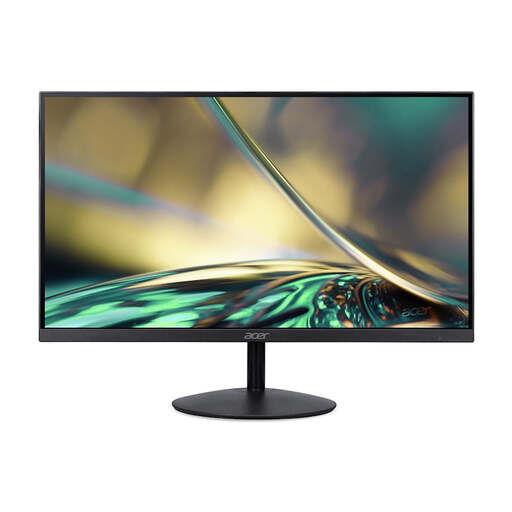 No image available
A compact Full HD option to consider if desk space is a factor.
23.8 inches, IPS and 1920 × 1080.
The product name lists 100 Hz and 1 ms.
HDMI and VGA connections.
 No image available
A 27-inch QHD option to compare if you have room for the larger screen size.
Rapid IPS, 2560 × 1440 and 200 Hz.
The product description lists a matte anti-glare screen and a 3.5 mm audio output.
 No image available
A 27-inch QHD option to assess for its panel type and available connections, as well as its size and resolution.
2560 × 1440, VA panel and 180 Hz.
The product name lists 1 ms, FreeSync Premium and HDR10.
2 × HDMI 2.0 and 1 × DisplayPort 1.4.
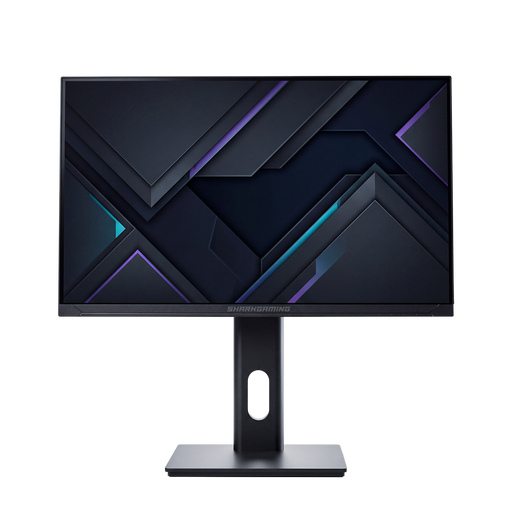 No image available
A Full HD option to consider if a more compact screen suits your desk.
23.8 inches, IPS and Full HD; the product name lists 200 Hz and 1 ms.
The product description lists an anti-glare coating, built-in speakers and a stand adjustable for height, tilt, swivel and rotation.
 No image available
A 27-inch QHD option with a headphone output to consider for a shared room.
IPS, 2560 × 1440 and 144 Hz; the product name lists Adaptive Sync and HDR10.
The product description lists a VESA mounting option.
Philips warns that Smart MBR can limit brightness control and cause visible flickering when enabled.
No, it isn’t a general requirement. First, check whether the size and resolution work well for your game’s cards and interface. If you want to make use of a stated maximum, check your device, cable and connection: Dell lists QHD 180 Hz via DisplayPort and QHD 144 Hz via HDMI for the G2725D.
That kind of setting can’t guarantee that screen light won’t affect sleep. NIOSH warns that light from a computer screen around bedtime can affect sleep. Where possible, limit light and sound, and think about what time you play. Philips also warns that Smart MBR on the 27M2N3500NF/00 can flicker and limit brightness control.
Measure the space for both the screen and the stand, and check the adjustment options on the exact model. LG lists height adjustment and pivot for the 27GS75Q-B; Dell says the G2725D’s stand only tilts.
According to the European Commission, the energy label for electronic displays includes consumption information in kWh per 1000 hours. To work out your own costs, you’ll also need to consider how long you use the monitor and your electricity tariff.
According to ACM ConsuWijzer, ordinary online purchases generally come with a statutory 14-day cooling-off period from delivery, subject to applicable exceptions. The Netherlands Authority for Consumers and Markets also says that the seller is responsible for the statutory guarantee if a product is faulty; there is no fixed general warranty period in the Netherlands. Check the seller and returns information before placing your order.