
Gaming in daylight
You play with windows or lamps nearby and notice reflections or shadow details that are hard to see. RTINGS explains how a matte coating can reduce direct reflections, while the brightness of the specific screen also matters.


Start by considering reflections, usable brightness and how well the monitor displays dark details. Then choose a resolution and refresh rate to suit your PC or console. RTINGS notes that Mini LED can generally get brighter than OLED, but bright objects against dark backgrounds can produce halos. According to RTINGS, the WOLED generation discussed generally retains deeper blacks than older QD-OLED generations in ambient light. The results still depend on the specific screen and how much light there is in your room.
You play with windows or lamps nearby and notice reflections or shadow details that are hard to see. RTINGS explains how a matte coating can reduce direct reflections, while the brightness of the specific screen also matters.
You want to make out dark details without losing the atmosphere of the game. Look at black levels and local dimming, and don’t treat OLED and Mini LED as equivalent technologies.
You want the resolution, refresh rate and VRR to suit your device and the connection you use. PlayStation explains where to check the capabilities of the connected HDMI display and the current video signal on a PS5.
A good fit if: you often play in daylight and want to compare bright HDR highlights with dark scenes.
Trade-off: bright objects can show halos; according to RTINGS, a high number of dimming zones doesn’t guarantee good local dimming.
A good fit if: OLED contrast matters to you, but you don’t always play in a completely dark room.
Trade-off: RTINGS reports that the WOLED generation discussed generally retains deeper blacks than older QD-OLED generations in ambient light; check the measurements for the specific model.
A good fit if: you can control incoming light and place a high value on OLED contrast and fast pixel response.
Trade-off: black levels can look raised in bright ambient light; RTINGS reported this with the Samsung G80SD it tested.
| What to consider | What should you check? | Who should care about this? |
|---|---|---|
| Reflections and daylight | Compare reflection and SDR brightness measurements. RTINGS notes that matte screens generally show fewer mirror-like reflections, but can also scatter light across the screen. | When I play during the day, I don’t want to see windows and lamps reflected in dark scenes. Around 36% of consumers make daylight visibility their top buying priority. |
| Dark details | Look at tests of black detail and halos with local dimming enabled; according to RTINGS, the number of dimming zones alone doesn’t predict performance. | I want to make out shadow details without losing the atmosphere of dark corridors. Around 29% of consumers give dark details and contrast top priority. |
| Motion and VRR | Check independent response-time measurements and how VRR works at the refresh rate you use. RTINGS describes VRR as a way to reduce tearing when refresh rates vary. | When I move quickly through dark environments, I want motion to stay clear and the picture to feel stable. Around 21% of consumers prioritise motion performance. |
| System and connection | Check the supported resolution, refresh rate, HDR and VRR for your device and the port you use. On the PS5, PlayStation shows the current video signal and the capabilities of the connected HDMI device. | I want to choose features my PC or console can actually use, within a budget that suits my needs. Around 14% of consumers give this system and cost match top priority. |
More zones allow for finer control, but according to RTINGS they don’t guarantee good local dimming. Halos or lost shadow detail can be especially noticeable in horror games.
Compare tests of the complete model, paying attention to halos, black detail and brightness.
RTINGS describes differences between WOLED and QD-OLED in ambient light, and found raised black levels on the Samsung G80SD it tested.
Look at measurements taken in ambient light, and assess the screen coating separately from the OLED subtype.
An HDR peak figure doesn’t tell you how bright a mostly dark image will be. A GtG figure doesn’t cover every type of motion or every setting either.
Distinguish typical brightness from HDR peak brightness, and compare independent tests at the refresh rate you want to use.
ACM ConsuWijzer distinguishes between statutory rights and any manufacturer’s or seller’s warranty. If a product is faulty, your statutory rights are against the seller.
Check what an additional warranty offer gives you beyond your existing rights.
The Q27G3XMN/BK is a 27-inch QHD model with Fast VA and Mini LED, for those weighing up resolution and contrast.
The MOBIUZ EX321UX is a 31.5-inch 4K Mini LED option with connections for PC and console.
The 27GS95QE-B is an example of a QHD OLED model with an anti-reflective finish.
The Dutch Odyssey OLED G8 G80SD is a 32-inch 4K OLED model.
These gaming monitors from Joybuy offer different resolutions, refresh rates and panel types. Match the listed features to your room and your PC or console.
 No image available
A QHD option to compare if you want to match resolution and a high refresh rate to your system.
27-inch, WQHD, Rapid IPS and 200 Hz.
 No image available
A VA panel option to compare with other panel types when weighing up QHD and a high refresh rate.
QHD, 180 Hz, VA panel, 1 ms, HDR10, FreeSync Premium, 2 × HDMI 2.0 and 1 × DisplayPort 1.4.
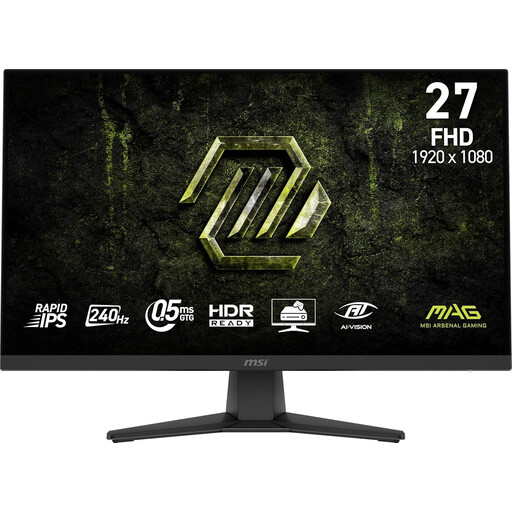 No image available
An FHD option with a high stated refresh rate to compare against what your system and games can make use of.
27-inch, 1920 × 1080, IPS, 240 Hz, AMD Adaptive Sync, HDMI and VGA.
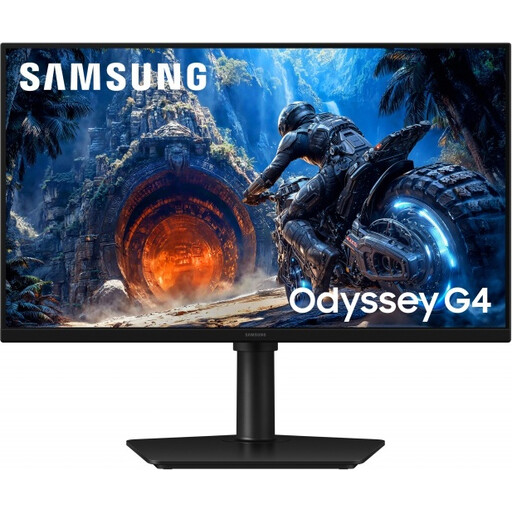 No image available
An FHD model to compare if refresh rate and variable refresh rate compatibility are high on your list.
25-inch, Fast IPS, up to 300 Hz via DisplayPort and 240 Hz via HDMI. FreeSync Premium and G-SYNC Compatible are listed.
 No image available
An ultrawide model to consider if you want a curved screen and the aspect ratio suits your games.
34-inch, UWQHD 3440 × 1440, 144 Hz, 1500R curvature and Fast VA. The title lists 400 nits HDR; this is not an SDR brightness measurement. No built-in speakers.
No. An HDR label on its own doesn’t tell you how a monitor displays dark scenes. VESA distinguishes certified DisplayHDR performance levels from a general claim of HDR support; also check tests of local dimming, black detail and reflections for the specific model.
On your PS5, go to Settings, Screen and Video, then Video Output to view the current signal and information about the connected HDMI device. PlayStation offers a 1440p test and settings for 120 Hz and VRR; the game and screen must also support the relevant feature.
If possible, move the screen or a lamp so the light source isn’t reflected directly in the screen. Then compare reflection tests for the models: according to RTINGS, matte screens generally show fewer sharp, mirror-like reflections, but can scatter incoming light across the picture.
They are different entitlements. ACM ConsuWijzer explains that, in addition to any manufacturer’s or seller’s warranty, you have statutory rights against the seller if a product doesn’t meet reasonable expectations under normal use; in the Netherlands, there is no fixed statutory two-year period for this.
For online consumer purchases in the Netherlands, there is generally a statutory cooling-off period that ends 14 days after delivery, subject to conditions and exceptions. Check the rules for trying out and returning a product carefully; this is separate from your statutory rights if a product is faulty.