
Daylight gamers
If you play in a room with windows or lamps, you’ll want to see the map clearly without distracting reflections.


For turn-based strategy games in a bright room, an IPS LCD is a sensible starting point if you spend long periods looking at the same interface. Compare how well the specific model handles reflections and its SDR brightness. RTINGS.com highlights that ambient light, reflections and brightness all affect how clearly you can see the screen. Then choose a resolution and screen size to suit your map, desk and computer. A high refresh rate alone is no reason to compromise on readability for this type of game.
If you play in a room with windows or lamps, you’ll want to see the map clearly without distracting reflections.
If you spend a lot of time looking at maps, menus and small interface elements, resolution and screen size are important considerations.
If you keep the same game interface on screen for hours, it’s worth considering the display technology, positioning and power consumption.
Start by considering visibility in your room, then work out how much map detail you need. Finally, check that the screen and connections suit your setup.
When to choose it: if you play during the day and often spend long periods looking at the same strategy game interface.
Trade-off: IPS doesn’t automatically mean reflections will be less distracting. Check the coating and SDR brightness of the specific model.
When to choose it: if HDR content matters to you as well as strategy games, and you’re considering an LCD that may offer high brightness.
Trade-off: performance varies by model; local dimming can create light halos around bright objects. RTINGS.com describes mini LED as an LCD backlighting technology, not a guarantee of a particular picture quality.
When to choose it: if contrast and motion handling are high priorities and you also play a variety of games or watch films.
Trade-off: RTINGS.com notes the risk of burn-in with repeated, prolonged static images. Also compare how the specific screen performs in a bright room and read the relevant warranty terms.
| What to consider | What to look for | Who it matters more to |
|---|---|---|
| Visibility in daylight | Compare independent reviews of direct reflections and SDR brightness for the exact model, and consider where your windows and lamps are positioned. | If I play during the day, I want to see maps and menus without distracting reflections. Visibility is the top priority for around 36% of consumers. |
| Map and text detail | Compare the native resolution and screen size with your viewing distance and computer. Check the picture mode using the connection you intend to use. | I want small interface elements and map details to be easy to read. Around 29% of consumers give map and text detail top priority. |
| Prolonged static images | Consider how long the same interface stays on screen. For OLED, check the usage and warranty terms for the specific model. | If I play long sessions with mostly the same interface on screen, I take the potential risks of the display technology into account. This is the main concern for around 21% of consumers. |
| Positioning and connection | Check for height adjustment or VESA mounting, and confirm the resolution and refresh rate supported through your computer’s port. | I need to position the screen properly in relation to a window, and I want to know whether my computer supports the picture mode I want. Around 14% of consumers put these practical considerations first. |
Direct reflections and SDR brightness also matter for standard SDR gaming scenes. An HDR specification alone doesn’t tell you how clearly you’ll see the interface in a bright room.
For the exact model, compare both its SDR brightness figures and reviews of its reflection handling in lighting conditions similar to your own.
RTINGS.com points out that repeatedly displaying the same static elements for long periods can carry a risk of burn-in.
Take the length of your strategy sessions and your other uses into account, and read the terms for the specific OLED model.
On the MSI and ASUS models reviewed, the maximum refresh rates vary by input. So the stated maximum doesn’t necessarily apply to every cable or port.
Before buying, check the connections on your computer and monitor, along with the supported resolution and refresh rate combination. MSI and ASUS specify the capabilities of each input.
The Joybuy listing describes it as QHD and 200 Hz, while the specifications section states 4K and 160 Hz (UHD) or 320 Hz (FHD).
Check the full model code and compare your preferred picture mode and connection with MSI’s specifications before deciding whether to buy.
The specifications and availability information below apply to the models described. Don’t assume they apply to other product ranges from the same brand.
The MAG 272QPF E20 is a specific 27-inch QHD IPS model to compare for its anti-reflective coating, level of detail and adjustability.
The TUF Gaming VG27AQ5A is a 27-inch QHD IPS model to compare for its screen coating, brightness and connections.
The G2724D is an example of the QHD IPS specifications and adjustment options you can compare on a specific model.
The UltraGear 27GS85Q-B is an example of a 27-inch QHD Nano IPS gaming monitor.
These Joybuy picks include gaming monitors in a range of screen sizes and resolutions for displaying maps and interfaces. Compare the size and level of detail with your setup, and check the reflection handling and SDR brightness of the exact model.
 No image available
An option to consider if you’re looking for a larger QHD screen with height adjustment for displaying maps and interfaces.
32 inches; 2560 × 1440 pixels; IPS; 180 Hz; 300 cd/m² typical brightness; height adjustable.
 No image available
A 27-inch QHD model to compare if resolution and desk positioning are important to you.
According to MSI: 2560 × 1440 pixels, 300 cd/m² SDR brightness and 0–110 mm height adjustment. At QHD, HDMI supports up to 144 Hz and DisplayPort up to 200 Hz.
 No image available
A 27-inch option to compare if you’re looking for QHD detail. Also check the panel technology and other features that matter in your room.
VA panel; 2560 × 1440 pixels; 180 Hz.
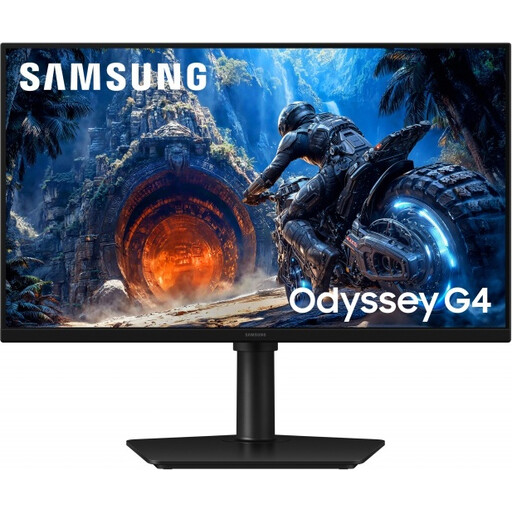 No image available
A smaller Full HD screen to compare if your screen size and viewing distance differ from those for 27- or 32-inch models.
25 inches; Full HD; Fast IPS; DisplayPort up to 300 Hz and HDMI up to 240 Hz; 300 cd/m² typical brightness; adjustable stand.
 No image available
A 27-inch QHD IPS model to compare if you want to consider map detail and screen size together.
144 Hz; 300 cd/m² brightness; HDMI 2.0 and DisplayPort 1.4; tilt-adjustable stand.
No. Start with visibility, suitable detail and a connection that supports your preferred picture mode. A higher refresh rate may be useful if you also play action games, but the maximum picture mode can vary between HDMI and DisplayPort inputs.
If possible, move or turn the screen or light source. When choosing a new monitor, compare independent reviews of both direct reflections and SDR brightness. An anti-glare label alone doesn’t prove that all reflections will disappear.
Check the EU energy label for the specific model: the European Commission lists screen energy consumption in kWh per 1,000 hours. To work out your own costs, you’ll also need your usage time and electricity tariff.
For distance purchases from a business, the Dutch government says you’ll generally have 14 days to change your mind, although there are exceptions. Check the seller’s information for your order. The cooling-off period is a consumer right, not a manufacturer’s warranty.