
Builder with limited desk space
You want to build a virtual zoo without the screen and stand taking over your workspace. That’s why size and placement are important things to consider first.


For a small desk, a compact 23.8-inch Full HD monitor is an obvious choice if its stand fits the space you have available. A 27-inch QHD screen gives you more pixels for habitats and game windows, but takes up more room and requires a computer that can handle the higher resolution. Measure the space including the stand, and check each model’s adjustment options, connections and available refresh rate.
You want to build a virtual zoo without the screen and stand taking over your workspace. That’s why size and placement are important things to consider first.
You want more screen space for habitats and the game interface, and you have room for a larger display. Resolution and whether your computer can handle it will also influence your choice.
You also use the same desk for other computer tasks, so you’ll want to consider the screen position, connections and a setup that works with your workspace.
Choose this option: if desk space and viewing distance are limited, and you want one screen for building and managing your zoo.
Bear in mind: it has fewer pixels than the 27-inch QHD model reviewed; a maximum refresh rate of 180 Hz doesn’t guarantee that your computer or game will achieve that frame rate.
Choose this option: if your desk and seating position allow for it, and you want more pixels for the game and its interface.
Bear in mind: the larger screen needs more space. Also check which resolution and refresh rate your computer can handle through the connection you choose.
| What to consider | What should you check? | Who is this important for? |
|---|---|---|
| Desk space | Measure the width and depth, then compare them with the monitor’s dimensions including the stand. Also consider your viewing position. | If I have limited space, I want to know that both the screen and stand will fit before I choose. Around 36% of consumers put available desk space first. |
| Screen space and resolution | Compare Full HD with QHD, and check that the screen size, viewing distance and computer are a good match. | If I want habitats and game windows to remain clear on screen, I consider both the number of pixels and the space the screen takes up. Around 29% of consumers prioritise building details and screen space. |
| Screen position | Check whether the stand is height-adjustable or only tilts. A VESA mount size is relevant if you want to use a compatible arm. | If I share my desk or have limited flexibility over where the screen goes, I want to be able to position it to suit me. Around 21% of consumers focus mainly on adjustability. |
| Connection and refresh rate | Check which combination of resolution and Hz is available for each input, and what your computer can deliver in the game. | If smooth visuals matter to me, I want to know which settings are supported by the port and computer I’m using. Around 14% of consumers prioritise refresh rate and connection. |
The stand takes up space too. ASUS lists the VG249Q3A as 17,40 cm deep with its stand; Dell gives the G2724D a depth of 20,02 cm.
Measure the width and depth available on your desk and compare them with the monitor’s dimensions including the stand. Check separately whether a monitor arm can be fitted.
You may need to change the monitor’s position or use a suitable monitor arm.
The refresh rate available depends, among other things, on the connection you use; the number of frames the game can produce also depends on your computer.
Check the combination of input, resolution and Hz setting for the specific model. Don’t treat stated response times as independent measurements.
According to ACM ConsuWijzer, your statutory guarantee applies in addition to any retailer’s or manufacturer’s warranty.
Check your rights with the retailer before considering additional cover.
Additional cover may be unnecessary if it simply repeats rights you already have.
According to AOC, the AOC 24G4X is a compact option with a 23.8-inch Full HD panel and a stated maximum refresh rate of 180 Hz.
According to ASUS Netherlands, the TUF Gaming VG249Q3A combines a 23.8-inch Full HD panel with DisplayPort and two HDMI inputs.
The G2724D is an example of the larger 27-inch QHD option, with an adjustable stand.
According to LG Netherlands, the UltraGear 24GS60F-B is a 23.8-inch Full HD IPS model with a stated maximum refresh rate of 180 Hz.
These product picks include compact Full HD monitors for smaller desks, as well as 27-inch QHD models for anyone who wants more pixels and has enough space.
 Image unavailable
This 24-inch Full HD model is a good fit if you’re looking for a compact screen for a small desk.
The product name lists 1080p Full HD, IPS and 144 Hz. The description mentions HDMI, DisplayPort and Adaptive Sync.
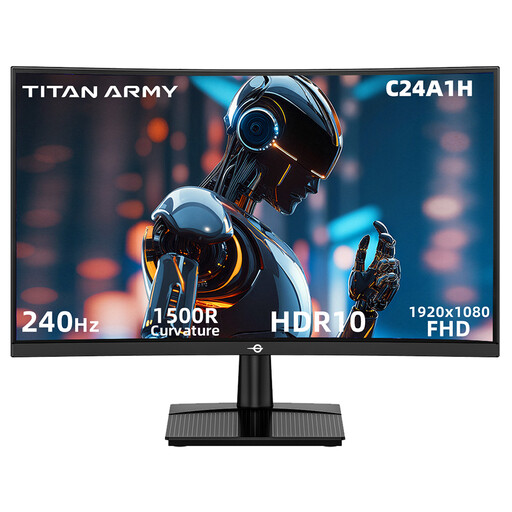 Image unavailable
This compact Full HD model is worth comparing if desk space is limited.
The product name lists a VA panel and 240 Hz. The description mentions HDMI, DisplayPort, tilt adjustment and VESA mounting.
 Image unavailable
This 27-inch QHD model is a good fit if you want more pixels and have room for a larger screen on your desk.
The product name lists 2560 × 1440 pixels, 180 Hz, FreeSync Premium, two HDMI 2.0 connections and one DisplayPort 1.4 connection.
Bear in mind that a 27-inch screen needs extra desk space.
 Image unavailable
This 27-inch QHD model is for anyone who wants more pixels and has enough room for a larger screen.
The product name lists an IPS panel and 144 Hz. The description mentions HDMI, DisplayPort and Adaptive Sync.
Check that a 27-inch screen will suit your desk and viewing position.
 Image unavailable
This larger QHD model is a good fit if you want more pixels and have room for a 27-inch screen.
The product name lists 2560 × 1440 pixels, 240 Hz and a height-adjustable stand. The stated 275 Hz is overclocked.
Check in advance that the screen size will fit your desk.
No. For the 24-inch models reviewed, 180 Hz is the monitor’s stated maximum. Check which resolution and refresh rate are supported by the input you plan to use, and what frame rate your computer can achieve in your game.
Position the monitor directly in front of you, with the top of the screen slightly below eye level, in line with the Dutch Arboportaal guidance for screen-based work. Check that your desk allows you to position the stand and use its adjustment options as needed. This is positioning advice, not a universal requirement for home use.
Compare the EU energy label for the exact monitor model, including its efficiency class. According to ACM ConsuWijzer, if a product used normally develops a fault sooner than you could reasonably expect, the retailer is responsible for providing an appropriate solution under the statutory guarantee. A manufacturer’s warranty doesn’t replace this right.
For a standard online monitor purchase in the Netherlands, you usually have a statutory cooling-off period of up to 14 days after delivery, according to ACM ConsuWijzer. There are exceptions, so check the retailer’s returns instructions.