
Gamer with limited desk space
You want to play survival horror without the screen or stand taking over your workspace. So you compare the physical dimensions first, followed by the resolution and display technology.


First, measure the available width and depth, including the monitor stand. A 23.8-inch screen is a practical option if a 27-inch model would limit your working or viewing space. If 27 inches will fit, RTINGS describes OLED as an option for deep blacks in a dark room; mini-LED VA is an alternative worth comparing, but check how it handles dark motion and prolonged static use too. For every model, also compare the connections and picture mode actually supported by your game and computer.
You want to play survival horror without the screen or stand taking over your workspace. So you compare the physical dimensions first, followed by the resolution and display technology.
You prioritise black levels and visible highlights in dark scenes, and weigh up OLED against mini-LED VA.
You consider prolonged use with a static desktop, motion handling and how long you use the monitor. This may make the risk associated with OLED more significant than it would be for gaming alone.
Choose this option if: desk space comes first and you want a smaller screen. The Philips Evnia 24M2N3200S/00 is one example, with a 23.8-inch screen and Full HD resolution.
Trade-off: the compact Full HD screen has less screen area and fewer pixels than the 27-inch QHD options reviewed.
Choose this option if: you have room for a 27-inch screen and care about contrast in dark scenes, but would rather avoid OLED if you use a lot of static content.
Trade-off: mini-LED uses dimming zones; VA panels can show smearing during fast dark transitions. Check measurements for the exact model.
Choose this option if: a 27-inch screen fits and deep blacks in a dark room matter more to you than prolonged use with static on-screen elements.
Trade-off: prolonged static images carry a risk of burn-in. Also check that your source, connection and game support the stated refresh rate.
| What to consider | What should you check? | Who should weigh this more heavily? |
|---|---|---|
| Desk space | Measure the available width and depth, then compare them with the dimensions of both the screen and the stand for the exact model. | If I want to keep space for my keyboard and a comfortable viewing distance, the screen and stand need to fit first. Around 36% of consumers put desk space first. |
| Dark scenes | For the exact model, compare independent tests of black levels, contrast and any haloing, taking the lighting in your room into account. | If visible highlights in dark rooms matter to me, I want to assess the black levels of the specific model. Around 29% of consumers give dark-scene performance top priority. |
| Motion and connections | Look at response-time measurements at your usual refresh rate and check the supported resolution and Hz for each input. | If I want to see fast movement clearly in my games, I compare measurements and the connections I plan to use. Around 21% of consumers put motion handling first. |
| Everyday use | For OLED, check the maintenance settings and the commercial warranty terms for the exact model. | If my monitor also displays a static desktop for long periods, I take that into account as well as gaming. Around 14% of consumers give prolonged mixed use top priority. |
A 27-inch screen and its stand need to fit within the available space; the diagonal measurement doesn’t tell you how much desk depth the stand takes up.
Before buying, measure the available space and compare it with the dimensions of the complete model, including the stand.
Panel technology and motion handling vary. Philips states that Smart MBR on the 24M2N3200S/00 affects brightness control and can cause visible flicker; the stated 0.5 ms is a Smart MBR specification, not an independent measurement.
Look for tests of the exact model covering contrast, HDR and dark transitions, and check which settings apply to any response-time figures.
Displaying the same interface elements for long periods is a known burn-in risk with OLED. Burn-in protection features do not make that risk disappear.
Consider your work and gaming use separately, and read the maintenance instructions and warranty terms for the exact model.
A Joybuy listing for the Samsung Odyssey OLED G6 G60SD states 240 Hz in the title and 360 Hz in the description.
Before buying, check the full model number and specifications with the manufacturer and retailer; don’t assume either figure is correct without checking.
These models illustrate different screen sizes and panel options; a brand mention alone says nothing about availability or whether a monitor will suit your desk.
The models mentioned cover a compact 23.8-inch Full HD IPS option and a 27-inch QHD IPS option.
The Q27G3XMN/BK is a 27-inch QHD mini-LED VA option for those with room for a 27-inch screen.
The Odyssey OLED G6 G60SD is a 27-inch QHD OLED option for those who prioritise black levels.
The G2725D is an example of a 27-inch QHD Fast IPS alternative.
These Joybuy options include compact gaming monitors and 27-inch models to consider if your desk has enough room for one.
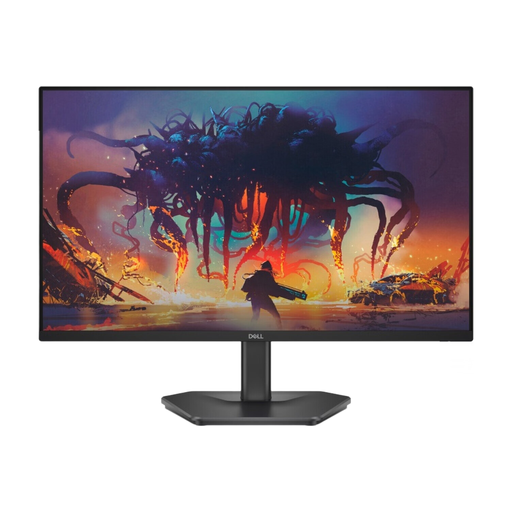 No image available
A 24-inch gaming monitor to compare if desk space is limited.
The product name states 200 Hz.
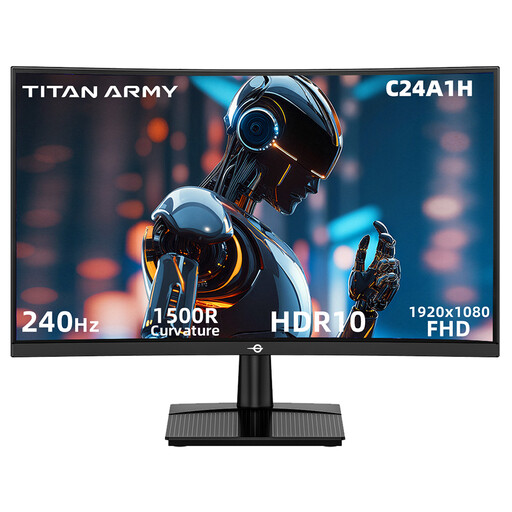 No image available
A compact gaming monitor to compare if you’re looking for a smaller screen.
The product name states 23.6 inches, a VA panel, FHD and 240 Hz.
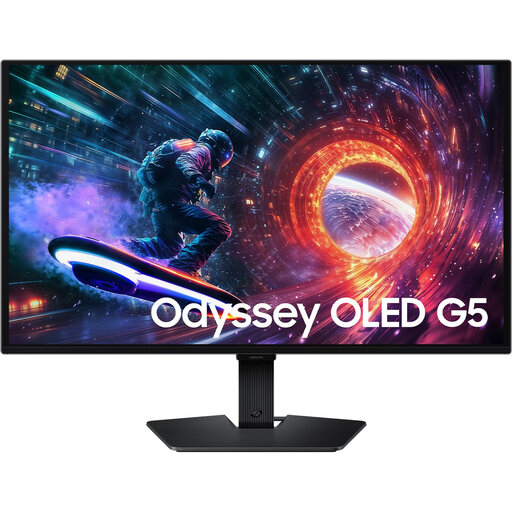 No image available
A 27-inch OLED option to compare if it fits and black levels are a priority.
The product name states QHD and 180 Hz. Prolonged static images carry a risk of burn-in with OLED, so consider how you use your monitor every day too.
 No image available
A 27-inch mini-LED option to compare if your desk has enough room.
The product name states QHD, 275 Hz, 1 ms, 1152 zones and an IPS display. Check what the 1 ms refers to for the exact model and which picture mode the connection you’re using supports.
No. An HDR label alone doesn’t tell you how a specific model displays dark scenes. Compare tests of contrast, black levels and any haloing for the exact model, and take the lighting in your room into account.
Before buying, measure the available desk depth and width, then compare them with the dimensions of the screen including its stand. The screen’s diagonal measurement doesn’t tell you how much desk space the stand takes up.
Check the care features and instructions for the specific model, especially if you often leave a static desktop on screen for long periods. OLED remains susceptible to burn-in with prolonged static content; protection features don’t rule out this risk.
No. According to ACM ConsuWijzer, the statutory guarantee doesn’t have a fixed duration of two years; with normal use, it depends on what you can reasonably expect from the product. A manufacturer’s or retailer’s warranty is separate.
For a consumer purchase made online, ACM ConsuWijzer says you generally have a statutory 14-day cooling-off period after delivery. Check the applicable terms and exceptions; the cooling-off period is separate from the remedy for a faulty product.