
Gamer with limited desk space
Wants to keep room for a keyboard and mouse, so needs to balance screen width, stand depth and viewing distance. AOC and GIGABYTE’s compact models show why the dimensions of the whole set-up matter.


Start by measuring the available desk width and depth, and take your viewing distance into account: 23.8 inches is the compact option, while a 27-inch QHD monitor will only fit if there’s enough room for its stand too. Then choose between Full HD and QHD, refresh rates and panel types based on what your PC or console can handle and which image details matter to you.
Wants to keep room for a keyboard and mouse, so needs to balance screen width, stand depth and viewing distance. AOC and GIGABYTE’s compact models show why the dimensions of the whole set-up matter.
Wants to see game worlds and text more clearly, and is therefore comparing a compact QHD screen with a larger QHD screen. AOC and LG list models with a resolution of 2560 × 1440 pixels.
Pays particular attention to dark scenes and compares stated contrast ratios. A contrast figure is a model specification, not an independent assessment of image quality in every game.
Best for: a small workspace where a compact screen takes priority and Full HD suits what your PC or console can handle.
Trade-off: Full HD has fewer pixels than QHD; the GIGABYTE GS24F14A supports 175 Hz when overclocked, alongside a standard refresh rate of 144 Hz.
Best for: anyone looking for a compact screen who values a higher pixel count, provided their PC can handle QHD at the desired refresh rate.
Trade-off: check that small text is comfortable to read at your viewing distance and that the stand fits on your desk.
Best for: a larger picture, if your measured desk width, stand depth and viewing distance leave enough room.
Trade-off: the LG 27GS75Q-B is 613.5 mm wide and 253.7 mm deep with its stand, so measure the whole set-up.
Best for: anyone with enough space who values the stated contrast ratio for dark scenes.
Trade-off: Dell lists 165 Hz via DisplayPort and 144 Hz via HDMI for the S2722DGM; these are model specifications, not independent measurements of gaming performance.
Measure the available space, including the stand, before comparing resolution or refresh rate. The percentages below indicate which primary need may carry more weight for consumers making this choice.
| What to consider | What to look for | Who might prioritise this? |
|---|---|---|
| Desk space | Measure the width and depth of the whole set-up, including the stand, and allow for your viewing distance and input devices. | If I want to keep using my keyboard and mouse beside the screen, the stand needs to fit too. Around 31% of consumers make space their top priority. |
| Image detail | Compare Full HD 1920 × 1080 with QHD 2560 × 1440, and check which resolution your computer can handle at the desired refresh rate. | If I want to see landscapes and in-game text in more detail, I’ll compare QHD options in a size that fits my desk. Around 25% of consumers prioritise image detail. |
| Smooth motion | Check the refresh rate for each connection and resolution, and distinguish standard rates from overclocked rates. | If smooth camera movement matters to me, I want to know which refresh rate my own PC or console can handle through the connection I’ve chosen. Around 19% of consumers make smooth motion their top priority. |
| Dark scenes | Compare the stated contrast ratios of the exact models; don’t judge HDR claims by the label alone. | If I mainly play in dark fantasy settings, I want to know what the manufacturer says about the contrast of the specific model. Around 13% of consumers prioritise dark scenes. |
| Stand and set-up | Check whether the stand tilts or adjusts in height, and whether your screen will sit in the right place without needing an extra riser. | If I’d rather not need a different stand or monitor arm, I want to know in advance whether the supplied set-up will work on my desk. Around 12% of consumers make this their top priority. |
The stand and your preferred viewing distance take up space too. The LG 27GS75Q-B is 253.7 mm deep with its stand.
Measure the available width and depth, then compare them with the dimensions of the complete monitor set-up before choosing between 23.8 and 27 inches.
You may need a different stand, a monitor arm or a rearranged desk if the supplied set-up doesn’t fit.
The available refresh rate can depend on the connection and settings. What’s more, the monitor doesn’t determine how many frames your PC or console can render in a game.
Check the refresh rate for your resolution and connection, and don’t compare standard rates with overclocked rates.
Response-time claims can use different measurement methods. LG lists HDR10 for the 27GS75Q-B, but that label alone doesn’t tell you what HDR images will look like in a game.
When comparing response times, make sure they use the same measurement method, and don’t judge HDR by a logo or number alone.
The models mentioned offer a compact Full HD option and a compact QHD option.
The UltraGear 27GS75Q-B is a 27-inch QHD IPS model with height adjustment.
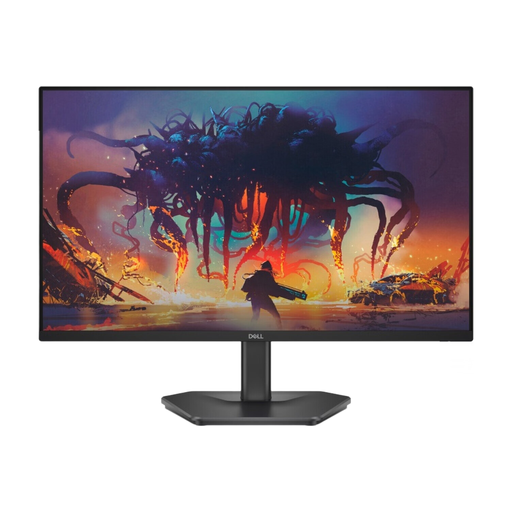
The curved S2722DGM is a 27-inch QHD VA model.
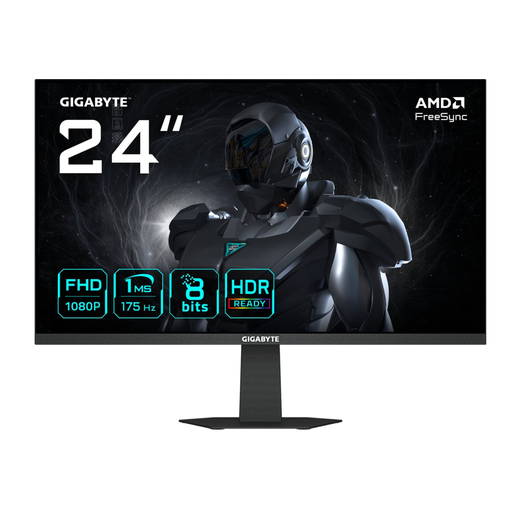
The GS24F14A is a compact Full HD IPS option with a stated set-up depth of 152 mm.
The Evnia 24M2N3200NF/00 is a 23.8-inch Full HD IPS model.
This selection of Joybuy products includes portable and compact gaming monitors, with a range of resolutions and stated refresh rates.
 No image available
The portable 16-inch model may suit you if you’re looking for a compact screen; check that the kickstand and positioning work on your desk.
According to the product name: 16 inches, 16:10, Full HD, IPS and 144 Hz. The name also lists FreeSync, HDR, 2 USB-C ports, Mini HDMI, stereo speakers and a built-in kickstand.
 No image available
The stated 24-inch size makes this a compact option; measure its footprint before deciding whether it will fit on your desk.
The product name lists a refresh rate of 200 Hz.
 No image available
This 24-inch Full HD model is worth comparing if a compact size matters; check that its connections are compatible with your computer or console.
The product name lists 1920 × 1080, IPS, 144 Hz, Adaptive Sync, HDMI, DisplayPort and a tilting screen.
 No image available
The compact Full HD size may be a good fit if desk space is your priority; bear in mind that the stand isn’t height-adjustable.
GIGABYTE lists 23.8 inches, 1920 × 1080, IPS and a standard refresh rate of 144 Hz. The 175 Hz rate is an overclocked value. The stand tilts, and the stated depth with the stand is 152 mm.
 No image available
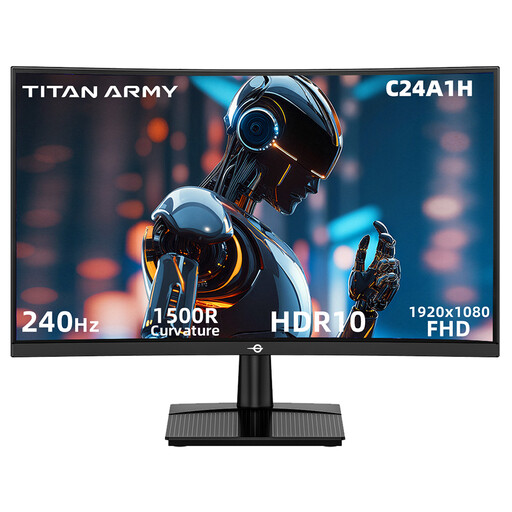
This model may be worth considering if a Full HD VA screen with a high stated refresh rate suits your preferences; check the dimensions and connections for your set-up.
The product name lists a VA panel, Full HD, 240 Hz and a 16:9 aspect ratio.
Measure the available width and depth, then compare them with the dimensions including the stand, not just the screen diagonal. Also consider your viewing distance: the Occupational Safety and Health Administration generally recommends 50–100 cm between your eyes and the screen. This isn’t a legal minimum for gaming at home.
Check the connection, resolution and display settings, as the maximum can vary by connection. For example, Dell lists 165 Hz via DisplayPort and 144 Hz via HDMI for the S2722DGM; GIGABYTE lists 175 Hz for the GS24F14A only in overclock mode.
For online purchases in the Netherlands, you generally have a statutory cooling-off period of up to 14 days after delivery. ACM ConsuWijzer explains this period; check the applicable returns policy before buying, and distinguish between your statutory rights and any more generous offer from the seller.
No, you don’t have to pay for an extended warranty. According to ACM ConsuWijzer, you have statutory warranty rights in addition to any commercial warranty. If a product breaks sooner than you could reasonably expect under normal use, contact the seller to find a solution. There is no single fixed statutory warranty period for monitors in the Netherlands.