
Builder with limited desk space
You share a desk or room and want to check first whether the screen and stand will fit your space. ASUS and Philips describe compact 23.8-inch Full HD models as examples to compare.


Start by checking the space available for the screen and stand: 23.8-inch Full HD is a compact option, while 27-inch QHD gives you more pixels if your desk and gaming device can handle it. A 27-inch 4K or QD-OLED model is another option if extra detail or a particular panel matters to you. Before buying, check the stand’s dimensions and whether your device can support the resolution and refresh rate you want through your chosen connection.
You share a desk or room and want to check first whether the screen and stand will fit your space. ASUS and Philips describe compact 23.8-inch Full HD models as examples to compare.
You have room for a larger screen and are weighing up extra pixels against what your gaming device can support. ASUS lists a resolution of 2560 × 1440 for the VG27AQ3A; LG lists 3840 × 2160 for the 27G810A-B.
You share the screen or room with someone else, so you also consider connections, adjustability and readability. ASUS says the VG27AQ3A has no height adjustment; Arboportaal highlights reflections, light sources and readability as factors to consider when working with screens.
First measure the space available for the screen and stand. Then compare resolution and readability, and finally check the connections and adjustment options for everyone who uses the room.
| What to consider | What should you look for? | Who is this most important for? |
|---|---|---|
| Space for the screen and stand | Measure the available width and depth, then compare them with the dimensions of the exact model, including the stand. | If I share a desk, I want to know whether both the screen and stand will fit in my space. Around 36% of consumers prioritise getting the right fit. |
| World details and readability | Compare Full HD, QHD and 4K at the screen size that suits you. ASUS lists 2560 × 1440 for the VG27AQ3A; LG lists 3840 × 2160 for the 27G810A-B. | If details in my sandbox world matter to me, I want a resolution that suits my available space and device. Around 29% of consumers prioritise image detail and readability. |
| Connection and refresh rate | Check the resolution and Hz combination supported by each input. ASUS specifies up to 144 Hz via HDMI and 180 Hz via DisplayPort for the VG27AQ3A. | If I want to know which screen mode my PC or console can run, I check the port, cable and output of my device. Around 21% of consumers make compatibility and smooth motion their top priority. |
| Adjustments for shared use | Check the height adjustment, stand and reflections. Arboportaal highlights distracting light sources and poor readability as factors to consider when working with screens. | If two people use the same setup, I want to position the screen comfortably and read text clearly. Around 14% of consumers prioritise comfortable use in a shared space. |
For the ASUS VG27AQ3A, the maximum refresh rates specified by ASUS differ between HDMI and DisplayPort.
Check the resolution and Hz combination for each input, and compare it with the output of your own device.
On a shared desk, the stand also needs to fit alongside the other user’s belongings.
Compare the dimensions of the exact model, including the stand. If you are considering a monitor arm, check the mounting compatibility and weight capacity first.
If the stand supplied does not fit, you may need a suitable alternative stand or monitor arm. Check beforehand that it is compatible with the screen.
ACM ConsuWijzer distinguishes between a manufacturer’s or seller’s warranty and your statutory guarantee rights.
Keep your proof of purchase and, if a fault develops, remember to consider your rights in relation to the seller as well.
The TUF models reviewed include examples of both compact Full HD and 27-inch QHD monitors.
The Evnia 24M2N3200A/01 is a compact Full HD model to compare with other 23.8-inch options.
The UltraGear 27G810A-B reviewed is a 27-inch 4K IPS model for anyone considering extra pixels.
The AW2725D reviewed is a 27-inch QHD QD-OLED model for anyone specifically considering this panel type.
The 24G4X is an example of a compact Full HD Fast IPS option; the product page consulted is not specifically for the Netherlands.
These Joybuy models suit a compact Full HD gaming setup in a shared bedroom.
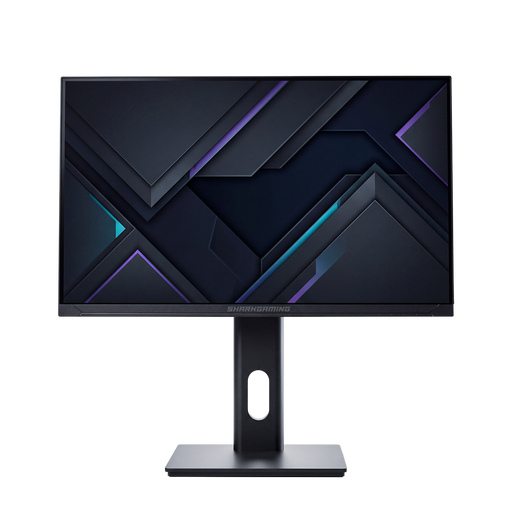 No image available
A compact option if you want Full HD and an adjustable stand for a shared setup.
The product information lists a 23.8-inch Full HD IPS screen, 200 Hz, HDMI and DisplayPort, plus height, tilt, swivel and pivot adjustment.
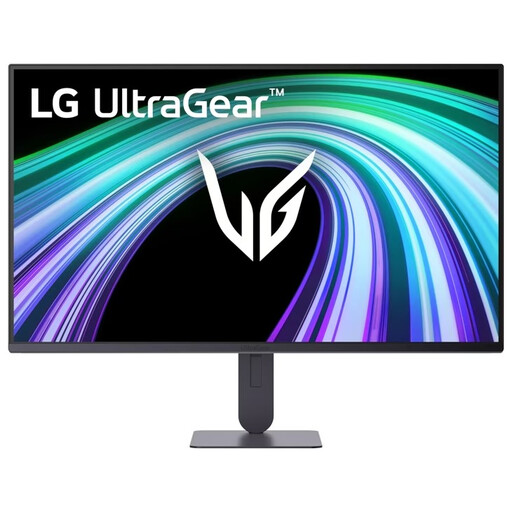 No image available
A compact Full HD option to consider if you want a stand with height adjustment.
The product information lists a 23.8-inch Full HD IPS screen, 144 Hz, Adaptive Sync, DisplayPort, height and tilt adjustment, and VESA mounting.
 No image available
A 24-inch option if Full HD and a tilt-adjustable monitor stand suit your setup.
The product information lists 144 Hz, Adaptive Sync, and HDMI and DisplayPort connections.
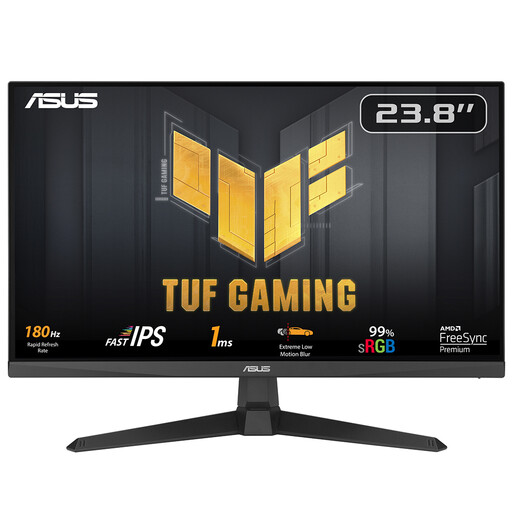 No image available
A compact Full HD option to compare if 23.8 inches better suits the space available on your desk.
ASUS lists a 1920 × 1080 resolution for this model; the product information also lists IPS, 180 Hz, FreeSync and VESA mounting.
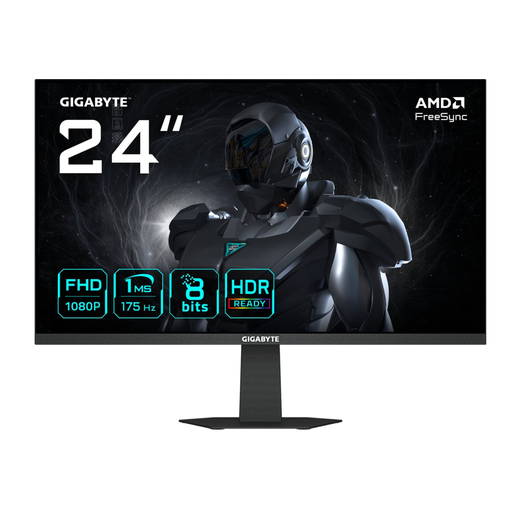 No image available
A compact Full HD option if you do not need height adjustment and can position the monitor somewhere suitable.
The product information lists a 23.8-inch IPS screen, 175 Hz, FreeSync and tilt adjustment; it also says the stand has no height adjustment.
Measure the available width and depth in your space, then compare them with the dimensions of the exact model, including the stand. ASUS lists the VG27AQ3A as 61.50 cm wide and 21.40 cm deep, including the stand; these measurements apply to this model, not to every 27-inch monitor.
It depends on the model and connection. ASUS specifies up to 144 Hz via HDMI and up to 180 Hz via DisplayPort for the VG27AQ3A. Also check your screen settings, cable and the output of your own device.
Position the screen so text remains readable, without distracting reflections or a light source in your field of vision, and check whether the stand can be adjusted comfortably for both users. Arboportaal mentions these factors in relation to screen work; this is not a legal measurement requirement for a home gaming setup.
According to ACM ConsuWijzer, online purchases generally come with a cooling-off period of up to 14 days after delivery; check the legal exceptions and the returns process. You also have statutory guarantee rights if a product does not do what you could reasonably expect under normal use. A manufacturer’s warranty does not determine your statutory rights on its own.
According to the European Commission, computer monitors are covered by EU energy-labelling and ecodesign rules for electronic displays, subject to applicable exceptions. The energy label uses a scale from A to G; check the label for the specific model.