
If you’re building a virtual factory
You want to see production lines and small interface elements clearly, so you’re comparing Full HD with QHD. The resolutions and screen sizes mentioned are listed by AOC Netherlands and Dell Netherlands.


Choose a compact 23.8-inch Full HD screen if you want to leave space free on a shared desk; a 27-inch QHD screen gives you more pixels for fine details and menus. Then compare the stand, adjustability and connections. The resolution and refresh rate available also depend on your PC and the port you use, as the specifications from AOC Netherlands, Dell Netherlands and Samsung Netherlands show.
You want to see production lines and small interface elements clearly, so you’re comparing Full HD with QHD. The resolutions and screen sizes mentioned are listed by AOC Netherlands and Dell Netherlands.
You want the monitor and stand to fit without taking up unnecessary desk space. Measure the space available and compare it with the dimensions of the model you’re considering.
You want to position the monitor appropriately and consider light and your roommate when setting it up. Arboportaal advises on viewing direction in relation to windows when working with screens; this advice does not measure disturbance in a bedroom.
Start with the space available and how easy your game interface is to read. Then compare the stand and screen position, and finally check which resolution and refresh rate your PC can deliver through the connection you plan to use.
| What to consider | What to look for | Most relevant to |
|---|---|---|
| Clarity of detail | Compare the interface at the resolution you want and check whether your PC supports it. | If small factory details and menus need to remain easy to read, you’ll want to see how the interface looks on your screen. Around 33% of consumers prioritise readability. |
| Desk space | Measure the width and depth, then compare them with the monitor including its stand; check the height adjustment too. | If you share a desk, you’ll want the monitor to fit without unnecessarily restricting the space available to the other person. Around 27% of consumers give physical fit top priority. |
| Lighting and positioning | Consider where light from the window falls and whether you can position the monitor as you’d like. Also discuss what lighting and usage arrangements work for your roommate. | If you play in a shared room in the evening, you’ll want to position the screen appropriately and consider the lighting for both you and your roommate. Around 20% of consumers prioritise lighting and screen position. |
| PC and connection | Check your PC’s output, cable, monitor port and settings for the resolution you want. | If you want to use a specific resolution and refresh rate, you’ll need to know what your PC can handle through the port you’ve chosen. Around 20% of consumers prioritise compatibility. |
The diagonal doesn’t tell you how much space the stand takes up or how high the screen sits. According to ASUS, the ASUS VG27AQ3A has no height adjustment; check each model individually.
Measure the available desk space and compare it with the dimensions including the stand. Also check which adjustment options the exact model offers.
Depending on your setup, you may need a different stand or a monitor arm, or you may need to rearrange your desk.
The available refresh rate can vary by port. For the G2725D, Dell lists a maximum of QHD 180 Hz via DisplayPort and 144 Hz via HDMI.
Before relying on the maximum Hz rating, check the ports on your monitor and PC, the cable and the settings for your chosen resolution.
LG Netherlands lists the 27GS75Q-B as discontinued. Its specifications can be used as a point of comparison, but they don’t mean a specific offer is still available.
Check the status of the specific offer before choosing a model.
Your statutory rights exist alongside any retailer or manufacturer’s warranty. An additional warranty product does not replace those statutory rights.
Read what additional cover includes and check its terms and exclusions. ACM ConsuWijzer explains that your statutory rights exist alongside the retailer’s warranty.
AOC Netherlands describes the 24G4X as a compact 23.8-inch Full HD model.
The specifications of the Dell G2725D provide an example of a 27-inch QHD model.
Samsung Netherlands describes the Odyssey G5 G50D as a 27-inch QHD model with Fast IPS.
The ASUS VG27AQ3A is an example of a 27-inch QHD monitor.
The LG 27GS75Q-B can serve as a point of comparison for a 27-inch QHD IPS model.
These Joybuy products are 27-inch QHD gaming monitors for anyone comparing extra pixels for details and menus; some product titles also mention a height-adjustable stand.
 No image available
For anyone who wants to view factory details and menus on a 27-inch QHD screen.
27 inch; QHD 2560 × 1440; Rapid IPS; 200 Hz.
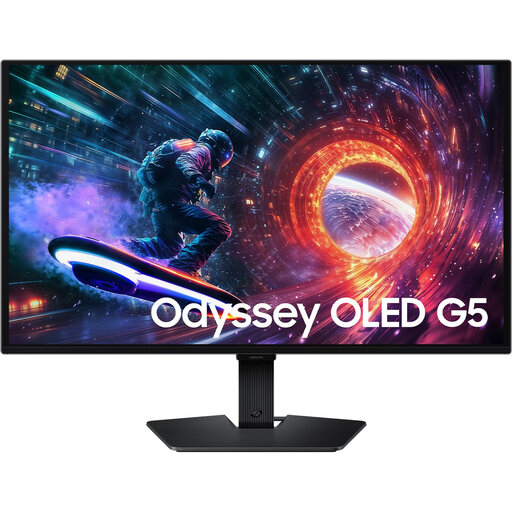 No image available
For anyone comparing a 27-inch Quad HD gaming monitor with an OLED panel.
27 inch; Quad HD 2560 × 1440; OLED; 180 Hz.
 No image available
For anyone comparing a 27-inch QHD monitor and matching its connections to their PC.
27 inch; QHD 2560 × 1440; 180 Hz; VA panel; HDMI 2.0 and DisplayPort 1.4.
 No image available
For anyone comparing a 27-inch QHD model with a height-adjustable stand.
27 inch; Mini LED; QHD 2560 × 1440; 275 Hz; height-adjustable stand.
 No image available
For anyone comparing a 27-inch QHD monitor with a height-adjustable stand.
27 inch; QHD 2560 × 1440; 240 Hz, overclocked to 275 Hz; Fast IPS; HDMI 2.0 and DisplayPort 1.4; height-adjustable stand.
Check where the light from the window is coming from and try to position your viewing direction parallel to the window. Arboportaal recommends this for working with screens and suggests using blinds as a possible solution; it is not a legal requirement for setting up a private bedroom.
The maximum refresh rate can vary by connection. For the G2725D, Dell lists QHD up to 180 Hz via DisplayPort and up to 144 Hz via HDMI; also check what your PC can support and which resolution you have set.
Check the energy label and consumption information for the exact model; don’t estimate your personal electricity costs based on screen size alone. Samsung lists energy label F for the G50D variant reviewed, but this doesn’t determine your personal annual costs.
For a standard online consumer purchase in the Netherlands, you generally have a statutory 14-day cooling-off period after the product is delivered, according to ACM ConsuWijzer. Check the applicable terms before buying and handle the product carefully if you want to assess it.
No, your statutory rights exist alongside any retailer or manufacturer’s warranty. ACM ConsuWijzer explains that if a product breaks sooner than you could reasonably expect under normal use, the retailer must offer an appropriate solution free of charge; there is no single fixed statutory warranty period for every monitor.