Who is this choice relevant to?

Evening gamer looking for atmosphere and contrast

If you mainly play story-driven games in a dark room, compare OLED and well-tested mini-LED models for their black levels and handling of bright effects. RTINGS explains the differences between these screen technologies.

Daytime gamer with long sessions

If you often play with light coming in, or keep the same interface on screen for a long time, consider brightness, reflections and the differences between LCD and OLED. Arboportaal highlights factors such as glare and ambient light when it comes to screen-based work; RTINGS discusses the differences between OLED and mini-LED.

Console or PC gamer with one main system

If you want to make the most of resolution, HDR, VRR and refresh rate, check what your system, game and connection support. Sony explains the requirements for 120 Hz output on PS5.

What should you look for in a gaming monitor?

OLED

Best for: playing in a dark room when deep blacks and contrast are your priorities.

Bear in mind: static elements displayed for long periods can cause burn-in; some models show VRR flicker when frame rates vary.

Mini-LED LCD

Best for: use in ambient light, or if you keep the same interface on screen for a long time.

Bear in mind: local dimming varies by model and can create halos around bright objects. The number of dimming zones alone isn’t enough to judge picture quality.

IPS LCD without proven effective local dimming

Best for: anyone looking for a suitable resolution and screen size who doesn’t consider the deepest blacks or high-quality HDR essential.

Bear in mind: an HDR label on its own tells you little about the HDR picture you’ll actually see.

What to consider What to look for when buying Who should pay particular attention?
Dark scenes and HDR Look for a test of contrast, HDR and local dimming on the exact model; don’t rely solely on an HDR logo or the number of dimming zones. I mainly play in the evening and want to make out dark scenes and bright effects clearly. Around 33% of consumers put contrast and HDR at the top of their buying concerns.
Visibility during long sessions Check reflections, brightness and adjustability. For OLED, also look into maintenance features and any burn-in terms and conditions. I often play in daylight or leave the same interface on screen for a long time, and want to know which screen type suits me. Around 27% of consumers give visibility and long-term use top priority.
Connection and performance Check the resolution, HDR, VRR and Hz supported by your system and game, and by the monitor’s HDMI or DisplayPort input. I want my console or PC to be able to use the monitor’s features. Around 20% of consumers put system compatibility first.
Size and sharpness Measure your desk space and viewing distance, then compare the screen size and resolution with what your system can handle. I want a screen that fits on my desk and looks sharp enough from where I sit. Around 20% of consumers make size and sharpness their main buying concern.

Common buying mistakes

  • Relying only on the HDR logo or the number of mini-LED dimming zones

    The HDR picture you see also depends on local-dimming performance. RTINGS notes that more dimming zones don’t guarantee a good picture on their own.

    Compare an independent HDR and local-dimming test for the exact model.

  • Choosing a high Hz rating without checking your gaming device

    The resolution and refresh rate you can use depend on the device, game, connection and settings. Sony says that 120 Hz output on PS5 requires a game that supports that frame rate.

    Before buying, check which resolution and Hz your system supports through the input you plan to use.

  • Confusing OLED maintenance with the warranty

    Displaying the same static images for a long time can cause burn-in on OLED screens. Any manufacturer’s warranty cover and your rights as a customer are separate matters.

    Read the terms and instructions for the exact model. The Rijksoverheid explains that in the Netherlands, what you can reasonably expect from a product is taken into account, and that the retailer is your point of contact if a product is faulty.

Brands worth considering

Gigabyte

The MO27Q2A is a 27-inch QHD QD-OLED model covered by Tweakers for anyone comparing OLED contrast in a more compact setup.

  • Tweakers discusses the response times and connections of this specific model.
  • The same review mentions less convincing colour reproduction, blacks that look lighter in ambient light, and coloured fringes around text. These points don’t automatically apply to other models from the brand.

AOC

The models reviewed offer different panel options: the Q27G4ZR as a QHD IPS option and the Q27G3XMN as a QHD VA mini-LED model.

  • Tweakers discusses the Q27G4ZR as an IPS alternative; RTINGS reports effective local dimming on the separately tested Q27G3XMN.
  • RTINGS reports black smearing and distracting VRR flicker at varying frame rates on the Q27G3XMN. This test result doesn’t apply to the Q27G4ZR.

ASUS

The ROG Swift OLED PG32UCDP is a tested 32-inch 4K WOLED option for anyone considering a larger screen.

  • RTINGS gives this model a positive assessment for black levels and motion clarity.
  • RTINGS reports VRR flicker in dark scenes when frame rates vary. The extra-fast mode uses a lower resolution.

MSI

According to MSI, the MPG 321URX QD-OLED is a 32-inch 4K QD-OLED model with features and connections for PC and console.

  • MSI lists OLED Care 2.0 and burn-in cover for this model.
  • These are statements from MSI; check the terms and conditions for the specific version you’re considering.

LG

The 27GM950B-B offers a 27-inch IPS mini-LED option with a high resolution as an alternative to OLED.

  • RTINGS notes effective local dimming and a separate mode with a lower resolution and higher refresh rate.
  • RTINGS reports some blur during fast motion; the review says nothing about the model’s current availability.

Joybuy monitors for cinematic games

This selection includes OLED monitors for dark scenes and mini-LED LCD models for anyone who also plans to play in ambient light. Compare the specifications and check that the connections and modes suit your PC or console.

AOC GAMING Q27G4ZDR, 26.5-inch QHD QD-OLED monitor

AOC GAMING Q27G4ZDR, 26.5-inch QHD QD-OLED, 240 Hz

The QD-OLED label makes this model worth comparing for games with dark scenes.

The product name lists a resolution of 2560 × 1440 and Adaptive-Sync. OLED screens can suffer burn-in if the same static elements are displayed for long periods.

View at Joybuy
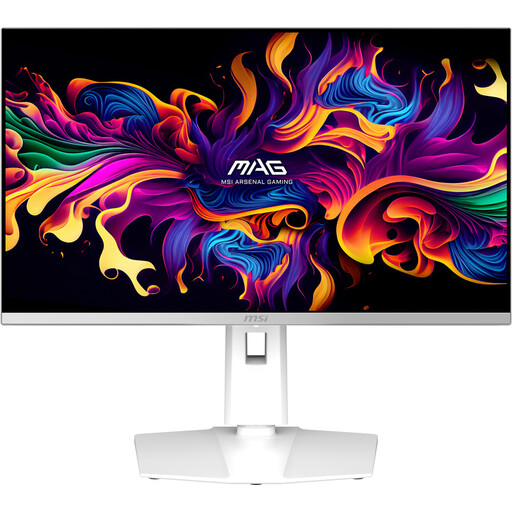
MSI MAG 272QPW QD-OLED X28, 27-inch QHD monitor in white

MSI MAG 272QPW QD-OLED X28, 27-inch QHD, 280 Hz, white

The QD-OLED panel makes this model an option worth comparing for story-driven games with dark scenes.

The product name lists QHD and 280 Hz. OLED screens can suffer burn-in if the same static elements are displayed for long periods.

View at Joybuy

LG Ultragear 27GX704A-B.AEU, 27-inch QHD OLED monitor

LG Ultragear 27GX704A-B.AEU, 27-inch QHD OLED, 240 Hz

The OLED panel makes this model worth comparing for games with dark scenes.

The product name lists QHD, 240 Hz, HDMI 2.1 and DisplayPort 1.4. Check which features your system supports through the input you choose. OLED screens can suffer burn-in if the same static elements are displayed for long periods.

View at Joybuy

INNOCN 2751S PLUS, 27-inch QHD IPS mini-LED monitor with 1152 dimming zones

INNOCN 2751S PLUS, 27-inch QHD IPS mini-LED, 275 Hz

The mini-LED label makes this model worth comparing if you play in ambient light.

The product name lists QHD, IPS and 1152 dimming zones. The number of dimming zones alone doesn’t guarantee good HDR performance; compare a test of this exact model.

View at Joybuy

KTC M27P6, 27-inch 4K mini-LED gaming monitor with dual display modes

KTC M27P6, 27-inch 4K mini-LED, 160 Hz or FHD 320 Hz

The mini-LED label makes this model worth comparing if you also play in ambient light.

The product name lists 4K at 160 Hz or FHD at 320 Hz. Check which mode and resolution your system and game can use. The number of dimming zones alone doesn’t guarantee good HDR performance.

View at Joybuy

Frequently asked questions

Do 120 Hz, VRR and HDR work automatically on a PS5?

No. Check what both the PS5 and the connected screen support. Sony says that 120 Hz output requires a game that supports 120 Hz. Also check that your chosen resolution, HDR and VRR are supported with the settings and connection you’re using.

How should you set up a monitor for long gaming sessions?

Position the screen so that reflections and poor ambient lighting don’t affect readability, and adjust its height to suit your seating position. Take regular breaks from sitting and looking at the screen. Arboportaal’s guidance is about screen-based work and doesn’t set a legal maximum gaming time for people at home.

Does your statutory guarantee end when the manufacturer’s warranty expires?

No. The expiry of the manufacturer’s warranty doesn’t automatically end your rights as a customer. According to the Rijksoverheid, there is no fixed statutory guarantee period in the Netherlands; what you can reasonably expect from the product matters. Check the separate terms and conditions for any OLED burn-in cover.

How much does it cost to run a monitor for long periods?

Power consumption depends on factors including the model, the SDR or HDR mode you use and how many hours you use it for. Compare the EU energy label and registered data for the models you’re considering. According to the European Commission, the label also shows information about HDR power consumption.

Does a monitor need an energy label in the Netherlands?

According to the European Commission, computer monitors generally fall under EU energy labelling rules for electronic displays. Check the label for the specific model; this general rule doesn’t confirm that a particular offer complies.
