Start with legible text and sufficient contrast, not the highest refresh rate. A VA LCD is worth considering for use in a dark room; OLED delivers deep blacks, but fixed game interfaces that remain visible for long periods need extra consideration because of the risk of burn-in described by RTINGS.com. Choose ultrawide only if the games you play support the aspect ratio and interface effectively, and check which resolution and refresh rate your PC can handle through your chosen connection.
Who should consider this choice?
If you read lots of text and menus
If you spend a long time looking at timetables, labels and control panels, text legibility at your viewing distance and your game’s scaling options are important considerations. RTINGS.com notes that text clarity does not depend on resolution alone and can vary from person to person.
If you mainly play in a dark room
If you care more about black levels and contrast than competitive top speeds, it’s worth comparing panel types and the performance of the exact model. RTINGS.com generally describes VA as offering higher contrast than IPS.
If you want to see more of the map at once
An ultrawide screen may be worth considering if you need more room for your network overview, but its usefulness depends on how each game displays its interface. The Transport Fever 2 manual from Urban Games describes adjustable interface scaling; check other games individually.
What should you look for when choosing?
First, compare text legibility and contrast in your gaming environment. Then consider whether your game would benefit from a wider screen, and whether your PC supports the picture mode you want through your chosen connection.
| What to consider |
What should you check? |
Who should consider this? |
| Text legibility |
View text from your intended viewing distance and check the scaling options in the game you play. |
If I want to read small timetables, labels and menus clearly, I look at both text rendering and scaling options. Around 31% of consumers prioritise the legibility of maps and menus. |
| Contrast in the dark |
Compare the black levels of the exact model; treat quoted contrast figures as manufacturer information, not independent measurements. |
If I usually play in a dark room, black levels matter more to me than a high refresh rate. Around 31% of consumers put contrast first. |
| Screen space and ultrawide |
Check the aspect ratio, supported resolutions and menu placement for each game; also consider your desk and viewing distance. |
If I want to see more of my network at once, I’ll choose ultrawide only if my games’ interfaces display usefully on it. Around 23% of consumers give map visibility top priority. |
| Long periods of static images |
For OLED, read the usage instructions and warranty terms for the exact model; also check which signal mode your PC and connection support. |
If I play long sessions with the same map and menus on screen, I want to take the potential risk of burn-in into account. Around 15% of consumers prioritise performance with static images displayed for long periods. |
Common buying mistakes
-
Prioritising a high refresh rate over legibility and contrast
A high Hz rating won’t make small labels easier to read or improve poor black levels. The maximum signal mode can also vary between connections.
First, check text rendering, contrast and the signal mode your PC can deliver. Then compare refresh rates.
-
Assuming ultrawide gives you more usable space in every railway game
A wide screen and an interface that makes good use of the extra space are not the same thing. A larger screen also takes up more desk space.
Check the aspect ratio, resolution and menu placement in the games you actually play.
If the interface doesn’t make good use of the extra width, a larger screen can take up unnecessary desk and user space.
-
Treating every Odyssey G5 monitor as the same model
The 34-inch Samsung Odyssey G5 LC34G55TWWPXEN differs from the 32-inch IPS LS32FG502EUXEN. A shared series name alone doesn’t confirm that the models have the same specifications.
Compare the full model number and specifications, not just the product series.
-
Assuming the manufacturer’s warranty covers all your statutory rights
A limited manufacturer’s warranty is not the same as your statutory rights against the retailer. According to ACM ConsuWijzer, the retailer is your point of contact if a product does not do what you could reasonably expect under normal use.
Keep your proof of purchase and check both the manufacturer’s warranty terms and your statutory rights.
Brands and models to consider
MSI
The MAG 27CQ6F is a 27-inch WQHD model with Rapid VA, worth comparing if you’re looking for a standard widescreen monitor.
- MSI lists a resolution of 2560 × 1440 and a typical contrast ratio of 5000:1 for this model.
- According to MSI, the model supports up to 180 Hz via DisplayPort and 144 Hz via HDMI 2.0. These are manufacturer specifications, not independent measurements or features of all MSI monitors.
Samsung
The Odyssey G5 LC34G55TWWPXEN is a 34-inch ultrawide model to consider if map visibility matters to you.
- Samsung Netherlands lists a resolution of 3440 × 1440, 1000R curvature and 165 Hz for this model.
- The extra width is only useful if your game’s interface displays properly. These specifications apply to this model, not every Odyssey G5.
LG
The UltraGear 27GX704A-B is a 27-inch OLED model for people who care about black levels.
- LG Netherlands lists a resolution of 2560 × 1440 and a refresh rate of 240 Hz for this model.
- RTINGS.com describes a risk of burn-in with prolonged exposure to the same static elements. So be sure to check the terms and usage instructions for the exact model too.
Dell Alienware
The AW2725Q is a 27-inch 4K QD-OLED model to consider when weighing up resolution and black levels.
- Dell lists a 4K resolution and 240 Hz for this model.
- Check whether your PC can handle the resolution you want, and factor in the OLED risk if fixed game interfaces remain visible for long periods. These specifications don’t apply to the entire Alienware range.
AOC
The Q27G3XMN/BK is a 27-inch QHD VA LCD model with mini-LED backlighting.
- AOC lists 336 dimming zones and 180 Hz for this model.
- These model specifications alone don’t show how noticeable dimming effects will be with your game’s interface.
Gaming monitors at Joybuy
These models offer options for QHD gaming, contrast in a dark room, ultrawide screen space, mini-LED and OLED. Check each model and game to find the combination of text rendering, aspect ratio and connections that suits the way you play.
 No image available
AOC Q27G42XNE 27-inch QHD gaming monitor
A 27-inch QHD option to compare if map details and legible menus matter to you; check how text looks from your viewing distance.
Specifications: 2560 × 1440, 180 Hz, 1 ms, FreeSync Prem., HDR10, two HDMI 2.0 ports and one DisplayPort 1.4 port.
View at Joybuy
 No image available
CRUA 32-inch QHD curved gaming monitor, 1500R
A 32-inch curved QHD option if you’re considering a larger screen; check that the size suits your desk and viewing distance.
Specifications: 2560 × 1440, 165 Hz, Adaptive Sync and 1500R curvature.
View at Joybuy
 No image available
INNOCN 2751S PLUS 27-inch QHD Mini-LED gaming monitor
A 27-inch QHD option with mini-LED backlighting to compare if contrast in dark scenes matters to you.
Specifications: 2560 × 1440, IPS, 1152 dimming zones and up to 275 Hz.
View at Joybuy
 No image available
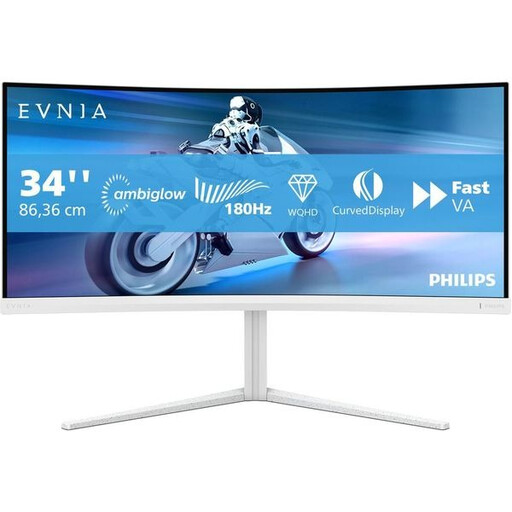
Philips Evnia 34-inch UWQHD curved VA gaming monitor
An ultrawide option if you want more room for your network overview; check whether your games’ interfaces make good use of the extra width.
Specifications: 3440 × 1440, 180 Hz, Adaptive Sync and a VA panel.
View at Joybuy
 No image available
LG UltraGear 27GX704A-B.AEU 27-inch QHD OLED gaming monitor
A QHD OLED option to consider if deep blacks matter to you; bear the risk of burn-in in mind during long gaming sessions with fixed menus on screen.
Specifications: 2560 × 1440, 240 Hz, DisplayHDR 400 True Black, G-SYNC Compatible, FreeSync Premium Pro, two HDMI 2.1 ports and one DisplayPort 1.4 port.
View at Joybuy
Frequently asked questions
Is 4K necessary for legible menus?
No, 4K isn’t automatically necessary for legible menus. Assess the text on your chosen screen size and at your viewing distance, and check whether your game lets you scale the interface. The Transport Fever 2 manual from Urban Games describes adjustable interface scaling; this doesn’t automatically apply to every railway game.
Why don’t I always get the maximum refresh rate listed?
The available mode can depend on the connection, your PC’s output and the cable you’re using. For example, MSI lists up to 180 Hz via DisplayPort and up to 144 Hz via HDMI 2.0 for the MAG 27CQ6F, both at 2560 × 1440. Check the combination of your exact monitor, PC and cable.
What should I consider when playing long sessions with fixed menus on an OLED screen?
Check the usage instructions and warranty terms for the exact model, and don’t assume OLED is free from burn-in risk. RTINGS.com describes a risk associated with prolonged exposure to the same static elements; how much this matters to you will also depend on how you use the monitor.
What warranty applies if my monitor develops a fault too soon in the Netherlands?
According to ACM ConsuWijzer, the retailer is your point of contact for the legal guarantee if a product does not do what you could reasonably expect under normal use. A limited manufacturer’s warranty does not take away that right; the circumstances of the fault will affect the assessment.
Can I assess the picture and text on a monitor I’ve bought online at home?
According to ACM ConsuWijzer, for online consumer purchases you will generally have a statutory 14-day cooling-off period after delivery. Check the applicable terms for trying out and returning the product; any more generous store policy is separate from the statutory standard.


