
Gamer with limited desk space
You play close to your desk and share a bedroom. Screen size, positioning and a way to listen privately may matter more than maximum specifications.


Start by considering the space available on your desk, your viewing distance and how you’d like to listen privately. Then check that the monitor, connection and picture mode work with your console or PC and game. A compact Full HD screen, a larger QHD screen and an OLED screen each involve different trade-offs. A higher maximum refresh rate is only relevant if your equipment and game support the mode you want, and with OLED it’s worth considering the terms relating to burn-in.
You play close to your desk and share a bedroom. Screen size, positioning and a way to listen privately may matter more than maximum specifications.
You want to check first which resolution and refresh rate your console, monitor and football game support together.
You want to balance sharpness and smoothness with your PC’s performance. A higher resolution or refresh rate is only useful within the settings and capabilities of your set-up.
Start with the dimensions and your viewing distance, then check the picture modes and connections that your console or PC and game actually support.
| What to consider | What to look for | Who is this important for? |
|---|---|---|
| Space, positioning and sound | Check the screen dimensions with the stand in place, and whether it has the headphone connection you want. | If I play close to a small desk and share the room, I want to know whether the screen will fit and how I can listen privately; around 33% of consumers prioritise space and shared use. |
| Console compatibility | Check the supported resolution and refresh rate for each connection; on a PS5, test the available 1440p modes. | If you want to use a specific picture mode on your own console and game, that combination matters more than the maximum figure on the box; around 25% of consumers prioritise console compatibility. |
| Sharpness and smoothness on PC | Compare the native resolution and refresh rate of the connection you’re using with your PC’s output and game settings. | If I want to balance sharpness and smoothness on PC, I look at what my own system can handle; around 25% of consumers prioritise PC performance and picture settings. |
| Panel choice and warranty | With OLED, factor in the stated risk of burn-in and check the warranty terms for the exact model and region. | If you want to assess your panel choice and any additional cover carefully, clear terms are helpful; around 17% of consumers prioritise panel choice and aftercare. |
PlayStation links 120Hz output to games that support that frame rate. On PC, usable settings also depend on the game and your system’s performance.
Check the source, game and connection together before choosing a refresh rate.
Models vary in height adjustment and built-in speakers. In a shared bedroom, the available positioning or a headphone connection could be decisive.
Measure the space with the stand in place and check how to connect private audio. You may need a different set-up or a separate audio solution.
Tweakers highlights the risk of burn-in with OLED. Gigabyte states that warranty terms for cover may vary by region.
Compare OLED with LCD for your needs and check the terms for the exact model in the Netherlands.
According to the Dutch government, your statutory guarantee may still apply after the manufacturer’s warranty has expired.
Check what additional cover includes and contact the seller first if there’s a fault.
The TUF Gaming VG249Q3A is a compact Full HD option for a smaller desk.
The UltraGear 27GS75Q-B is an example of a 27-inch QHD IPS monitor with an adjustable stand.
The Gaming Q27G4ZR is a 27-inch QHD IPS option featured in Tweakers’ Netherlands comparison.
The MO27Q2A is an example of a 27-inch QHD QD-OLED monitor.
The Evnia 27M2N3501PA/00 is a 27-inch QHD IPS option.
These models are compact Full HD gaming monitors for smaller desks; check the connections and features of each model to find the right fit for your set-up.
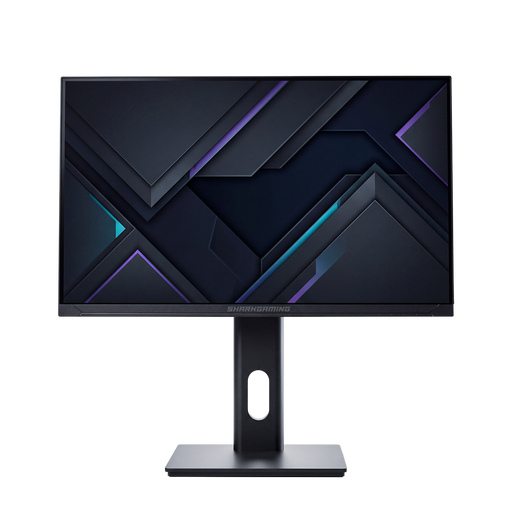 Image unavailable
The 24-inch Full HD format is ideal if you’re looking for a compact screen.
IPS panel, 200 Hz, 1 ms, HDMI and DisplayPort.
 Image unavailable
A 23.8-inch Full HD model for a compact set-up; the description also lists a headphone output.
144 Hz, HDMI and DisplayPort. According to the product description, the stand can be adjusted for height and tilt.
 Image unavailable
The 24-inch Full HD format is a compact option; the product name describes a tilt-adjustable screen.
IPS panel, 144 Hz, Adaptive Sync, HDMI and DisplayPort.
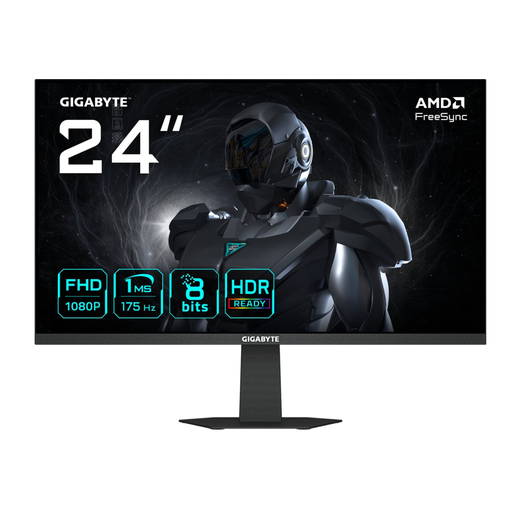 Image unavailable
This 23.8-inch Full HD model is a compact option for a smaller desk.
IPS panel, 175 Hz, FreeSync and HDMI 2.0.
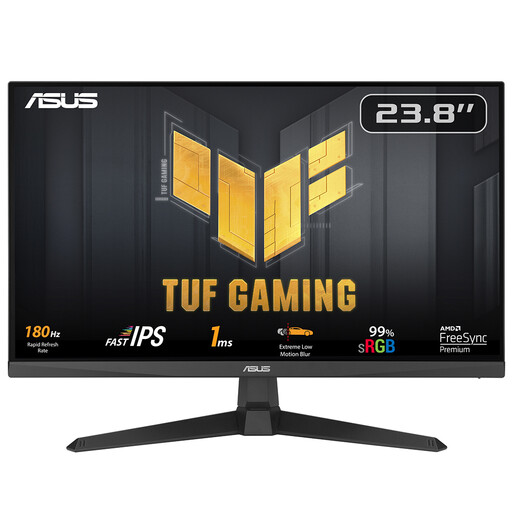 Image unavailable
This 23.8-inch Full HD model could suit a compact set-up; ASUS lists a headphone connection and built-in speakers.
1920 × 1080, up to 180 Hz and two HDMI 2.0 ports. The stand isn’t height-adjustable.
No. According to PlayStation, 120Hz output works with games that support a 120Hz frame rate. With a QHD monitor, test 1440p output and the available modes in the PS5 settings, and check that your specific game supports them.
Check the active monitor, resolution, refresh rate and frame rate limit in the game. Electronic Arts describes these settings for FC 26 on PC; choose a resolution that suits your system’s performance.
Plan to use private audio rather than assuming you’ll use the monitor’s speakers, and check where to connect your headphones. ASUS lists speakers and a headphone connection for the VG249Q3A; LG lists a headphone output but no built-in speakers for the 27GS75Q-B.
For eligible distance purchases, the Dutch government generally provides a 14-day cooling-off period. If a product is faulty, the seller remains your point of contact for your statutory guarantee; check what any additional cover includes.
The European Commission states that computer monitors are covered by the energy labelling rules for electronic displays, with a scale from A to G. For a specific model, check its energy label or EPREL details.