
Player tackling dark missions
If you usually play with the lights off, you’ll want to make out details in the shadows without distracting patches of uneven blacks. RTINGS identifies contrast and black uniformity as important factors in dark scenes.


For co-op shooters in a dark room, OLED is worth considering if deep blacks and fast pixel transitions matter to you. VA LCD offers an alternative with high contrast in dark scenes, but check the exact model for smearing during dark motion. IPS LCD may be a better fit if wide viewing angles matter more when playing together. RTINGS explains the differences between panel types; also check that your PC or console, game and connection support your preferred resolution and refresh rate.
If you usually play with the lights off, you’ll want to make out details in the shadows without distracting patches of uneven blacks. RTINGS identifies contrast and black uniformity as important factors in dark scenes.
If you track fast-moving opponents, don’t just look at the stated refresh rate: consider how the specific screen handles motion, too. RTINGS explains that slow pixel transitions can cause motion blur or inverse ghosting.
If you’re watching together from different positions or playing on a console, viewing angles and the display mode supported by your device are important considerations. RTINGS compares the viewing angles of IPS and VA LCDs, while PlayStation Support outlines the requirements for 120 Hz output on a PS5.
Choose this if: you value both deep blacks and fast pixel transitions in a dark room.
Trade-off: Fixed HUD elements that remain on screen for long periods make panel care and image retention worth considering. RTINGS describes image retention after prolonged static images.
Choose this if: you value contrast in dark scenes and are considering an LCD screen.
Trade-off: RTINGS notes that some VA screens show dark smearing behind moving objects. Check independent measurements for the exact model.
Choose this if: wide viewing angles matter when playing together, or you’re looking for an LCD screen with good motion handling.
Trade-off: RTINGS describes IPS as generally offering wider viewing angles than VA, but typically lower native contrast. Black uniformity varies by model.
| Concern | What to check before buying | Who is this important to? |
|---|---|---|
| Visibility in dark scenes | Look at independent contrast and black uniformity measurements for the exact model, and assess dark images in the room where you play. | If I play in a dark room, I want to make out shadows and bright details without distracting patches of black; around 36% of consumers prioritise dark-scene performance above all else. |
| Fast motion and dark transitions | Compare independent tests of response time and overshoot at both the high and lower refresh rates you use; a minimum factory figure isn’t a real-world test. | In fast-paced firefights, I want to track opponents without distracting trails; around 29% of consumers prioritise motion clarity. |
| Display mode on your PC or console | Check the combination of device, game, cable, monitor port, resolution and refresh rate. Check VRR support for the connection you’ll be using. | Before I order, I want to know whether my PC or console can actually output my preferred display mode; around 21% of consumers prioritise device compatibility above all else. |
| Running costs and panel care | Read the panel-care guidance and information for the exact model; compare the EU energy label information for the screens you’re considering. | If I play for long periods with fixed HUD elements on screen, I want to know what panel care is recommended and what conditions apply to the model; around 14% of consumers prioritise running costs and long-term use. |
Dark pixel transitions and overshoot can perform differently from what a stated minimum in milliseconds suggests.
Compare independent measurements of the exact model at different refresh rates.
The resolution and refresh rate you can use also depend on your device, game, connection and selected display mode. On some models, the highest refresh rate is available only at a different resolution or in an overclocked mode.
Before buying, check the combination of resolution, Hz, port and source device you actually plan to use.
Panel-care features and the manufacturer’s terms don’t guarantee that prolonged static images will have no effect.
Read the terms for the exact model and follow the manufacturer’s panel-care instructions.
The ROG Swift OLED PG32UCDM Gen3 is a 32-inch 4K QD-OLED model for anyone weighing up dark-scene performance and a high refresh rate.
The Odyssey OLED G6 G60SD is a 27-inch QHD OLED model for anyone considering a more compact screen.
The MAG 27CQ6F with Rapid VA and MAG 274QRF QD E2 with Rapid IPS represent two different LCD options.
The Evnia 27M2N3500PF/00 is a QHD IPS model for buyers who value fast motion on an LCD screen.
The UltraGear 32GX870B-B offers a 32-inch 4K OLED option, with separate 4K and Full HD modes.
The Joybuy models below are OLED monitors suited to dark scenes and fast-paced shooter action. If you play with fixed HUD elements on screen, check the panel-care guidance for the exact model and make sure your PC can run your preferred resolution and refresh rate.
 No image available
OLED display technology and the stated refresh rate make this worth considering if dark scenes and fast-paced shooter action matter to you.
34 inches; WQHD 3440 × 1440; 240 Hz; 0.03 ms GtG; MLA+; Adaptive-Sync, G-Sync Compatible and FreeSync Premium Pro.
Fixed HUD elements that remain on screen for long periods are still worth considering in relation to image retention.
 No image available
The QD-OLED designation and stated refresh rate make this worth considering if you’re weighing up dark-scene performance and fast action.
34.18 inches; UWQHD 3440 × 1440; 280 Hz; 0.03 ms GtG; G-SYNC Compatible and FreeSync Premium Pro.
Fixed HUD elements that remain on screen for long periods are still worth considering in relation to image retention.
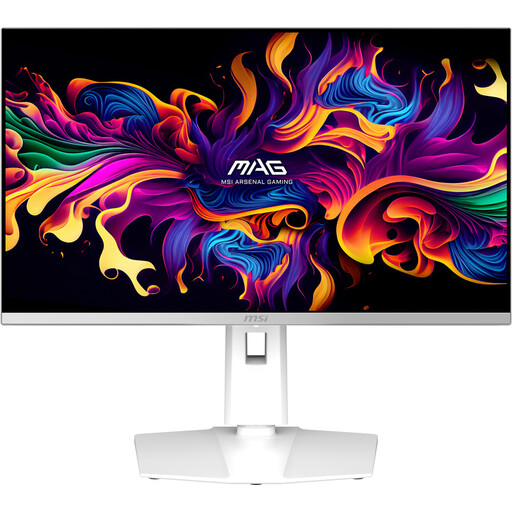 No image available
This 27-inch QD-OLED model is worth considering if you’re looking for a more compact screen for dark scenes and fast action.
QHD 2560 × 1440; 280 Hz; 0.03 ms GtG; HDMI 2.1; FreeSync Premium Pro.
Fixed HUD elements that remain on screen for long periods are still worth considering in relation to image retention.
 No image available
The QD-OLED designation and WQHD resolution make this a model to compare if you want to view dark scenes on a more compact screen.
26.5 inches; WQHD 2560 × 1440; 240 Hz; 0.03 ms; 400 cd/m²; DisplayHDR True Black 400; Adaptive Sync.
Fixed HUD elements that remain on screen for long periods are still worth considering in relation to image retention.
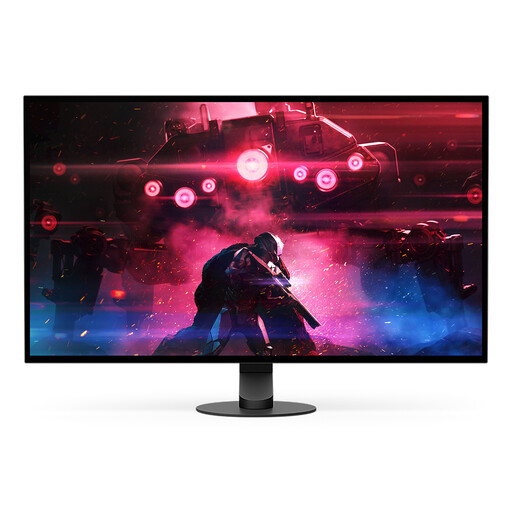 No image available
This OLED model is worth considering if dark scenes matter to you. Check that your preferred display mode is compatible with your PC and connection.
26.9 inches; 2560 × 1440 pixels; Quad HD.
According to the product information, the stated 480Hz mode at 1440p requires DisplayPort 2.1 and a PC GPU with DSC. After use, leave the monitor in standby so it can refresh its pixels. Fixed HUD elements that remain on screen for long periods are still worth considering in relation to image retention.
A higher maximum refresh rate on the monitor won’t automatically increase PS5 output: the 120 Hz setting works with a screen and game that support 120 Hz. PlayStation Support also recommends checking the preferred resolution and VRR separately for the connection you’re using.
No. It depends on where people are sitting and which picture qualities matter most. RTINGS describes IPS panels as generally offering wider viewing angles than VA; if everyone has their own screen, contrast in dark scenes or motion handling may matter more. Assess the exact model for your setup.
Follow the instructions and panel-care features provided by the manufacturer of the exact model. ASUS describes a feature for the PG32UCDM Gen3 that switches to a black screen when nobody is present, with the aim, according to ASUS, of reducing the risk of burn-in. This doesn’t make prolonged static images risk-free.
For a typical online consumer purchase, you generally have up to 14 days after delivery to change your mind, subject to applicable exceptions. ACM ConsuWijzer explains that the legal guarantee means the seller must, under the applicable terms, put right at no cost a product that develops a fault sooner than could reasonably be expected under normal use. In the Netherlands, there isn’t one fixed statutory two-year guarantee period that applies to every product.
The European Commission states that electronic displays, including computer monitors, receive an energy label on a scale from A to G. Check the label information for the model you’re considering; don’t infer its rating from the panel type.