For co-op shooters in a shared bedroom, a compact Full HD screen is a sensible option if you each use your own screen and desk space is limited. If you’re sharing one screen, viewing angle, positioning and screen size matter more. Then check which resolution and refresh rate your PC or console actually supports through the chosen port and in the game: the stated maximum isn’t automatically available on every connection or in every game.
Who is this guide for?
Two players, one screen
You sit side by side and want to follow the action from both seats. So look at the viewing angle, positioning and how much desk space the screen and stand take up. LG and BenQ describe panel features that matter when viewing from different positions.
Shooter player with a small desk
You use your own screen in a shared room and want to leave some space free. Compare a compact Full HD screen with larger QHD models; AOC and LG offer examples of both sizes.
PC or console player looking for a high refresh rate
You want smooth motion, but first you need to check which resolution and refresh rate your device, game and connection support together. MSI and PlayStation describe relevant product specifications and output settings.
What should you consider when choosing?
Start with your setup: a compact Full HD model could suit a small desk when you’re using your own screen, while watching together means paying attention to positioning and viewing angle. Then check the combination of device, connection and game before focusing on a refresh rate figure.
| What to consider |
What should you check? |
Who is this most important for? |
| Smooth motion |
Compare the refresh rate and panel; don’t treat a GtG response time as a measure of total input lag. |
If fast camera movements matter to me, I want to know which display mode my source and game can really handle; around 33% of consumers cite motion performance as their main reason for buying. |
| Watching together |
Check whether the game supports local co-op on one screen and assess the picture from both seats. |
When we play side by side, I want both of us to see the screen clearly; shared viewing is the main requirement for around 25% of consumers. |
| Bedroom space |
Measure the available width and depth, and check the dimensions of the screen and stand. |
If I share my desk with someone else, I want to know first whether the screen and stand will fit; space is the deciding factor for around 25% of consumers. |
| Connection and device |
Check the supported resolution and refresh rate for each port you’ll use, then compare them with your PC or console’s output and the game. |
If I want to connect my existing PC or console, I want to know which display mode will actually work; compatibility is the main reason for buying for around 17% of consumers. |
Common buying mistakes
-
Assuming the highest refresh rate is guaranteed to be available
The usable combination depends on the source, game and connection. For example, PlayStation says that 120Hz output is designed for compatible screens and games that support 120 Hz.
Compare the monitor’s exact input specifications with your PC or console and the game you play.
-
Measuring only the screen diagonal
In a shared bedroom, the stand, adjustability and both seating positions also determine whether you can set up the monitor practically.
Measure the available space and check the dimensions and adjustment options of the exact model.
-
Assuming an OLED warranty or response-time claim applies to every model
ASUS describes OLED care and warranty terms for the specific PG27AQWP-W. A stated GtG figure is also not the same as an independent measurement of total input lag.
Check the terms and measurement definitions for the model you’re considering.
Brands to consider
AOC
The 24G4X is an example of a compact Full HD IPS option for your own screen on a small desk.
- AOC lists a 23.8-inch screen and a maximum refresh rate of 180 Hz for this model.
- These are the manufacturer’s specifications, not an independent performance measurement.
LG
The UltraGear 27GS75Q-B is an example of a 27-inch QHD IPS screen with an adjustable stand.
- LG lists height adjustment and a 180 Hz refresh rate for this model.
- LG marks the 27GS75Q-B as discontinued; don’t assume it’s available just because specifications are listed.
MSI
The G274QPF E2 is a QHD Rapid IPS model you can compare in terms of screen size and stated speed.
- MSI lists a resolution of 2560 × 1440 and a refresh rate of 180 Hz.
- Any competitive advantage claimed by MSI is the manufacturer’s claim, not an independently verified conclusion.
BenQ
The MOBIUZ EX270QM is a 27-inch QHD model for anyone considering a higher stated refresh rate.
- BenQ lists a 240 Hz refresh rate and built-in sound for this model.
- In a shared bedroom, built-in sound is a matter of preference, not automatically an advantage.
ASUS
The ROG Swift OLED PG27AQWP-W is a fast QHD OLED option, but it won’t necessarily suit every co-op setup.
- ASUS lists 540 Hz at QHD and OLED care features for this model.
- The model-specific warranty terms mention panel burn-in; check the terms before buying.
Joybuy products for this setup
These models include compact Full HD monitors and larger QHD options for shared viewing setups; check which resolution and refresh rate your device supports through the connection you’ve chosen.
 No image available
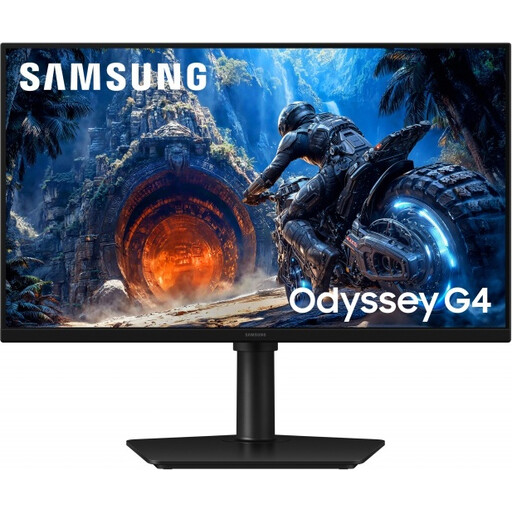
Samsung Odyssey G4 G40H 25-inch Full HD monitor
A compact option for your own screen on a desk with limited space.
25 inches, Full HD and Fast IPS; up to 300 Hz via DisplayPort and 240 Hz via HDMI. The stated 1 ms GtG applies in Extreme Mode.
FreeSync Premium and G-SYNC Compatible are listed for compatible devices.
View on Joybuy
 No image available
Philips Evnia 27M2N3500NF 27-inch QHD monitor
A larger screen to consider if you’ll be watching together and have room for a 27-inch model.
QHD, IPS and 144 Hz; Adaptive Sync is listed. Connections include HDMI 2.0 and DisplayPort 1.4.
The stated viewing angles are 178° horizontally and vertically.
View on Joybuy
 No image available
LG UltraGear 27G610A-B 27-inch QHD monitor
A 27-inch QHD option for anyone weighing up screen size and refresh rate together.
IPS, 200 Hz, HDMI 2.0 and DisplayPort 1.4 are listed for this model.
The description mentions a wide viewing angle and ergonomic adjustments; check that it has the adjustment options you need for your setup.
View on Joybuy
 No image available
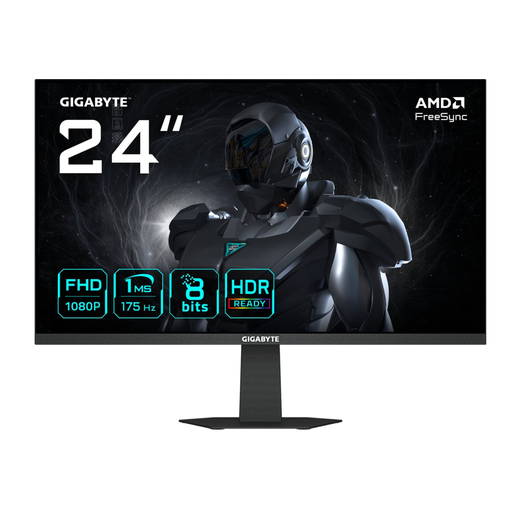
GIGABYTE GS24F14A 23.8-inch Full HD monitor
A compact size to compare if you’re using your own screen on a small desk.
Full HD, IPS and 175 Hz are listed for this model; FreeSync is also mentioned.
The stated viewing angle is 178°.
View on Joybuy
 No image available
MSI MAG 272QP QD-OLED X24 26.5-inch QHD monitor
A QD-OLED option to compare if you’re weighing up the panel type and conditions of use.
26.5 inches, QHD and 240 Hz; Adaptive Sync is listed. The stand is adjustable.
Check the terms for the exact model and whether it suits the way you’ll use it.
View on Joybuy
Frequently asked questions
Does a gaming monitor make a shooter suitable for local co-op on one screen?
No. First check whether the specific game and platform support local co-op. Then choose a screen based on where you’ll sit and the space available for one shared screen.
Can I use 120 Hz with a PS5?
PlayStation says that 120Hz output can be enabled for a compatible screen and games that support 120 Hz. Also check the chosen monitor’s HDMI support; this isn’t guaranteed to work in every game.
What should I measure for a monitor in a shared bedroom?
Measure the available width and depth, including space for the stand, and decide where both players will sit. Then check which display mode the connection used by your PC or console supports.
What is the cooling-off period for a monitor bought online in the Netherlands?
ACM ConsuWijzer says that online purchases are generally covered by a statutory cooling-off period, which ends 14 days after delivery. Check the official terms and exceptions; the cooling-off period is separate from your rights if a product is faulty.


